Jeju Wind Power to Be Sent Directly to Green Hydrogen Production ... First Direct PPA for a Commercial Facility in Korea
- Input
- 2026-09-01 14:40:31
- Updated
- 2026-09-01 14:40:31
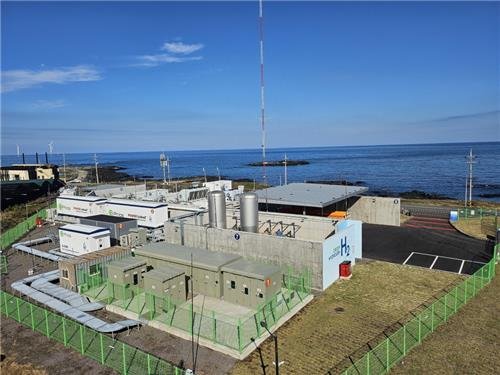
[Financial News, Jeju = Reporter Jung Yong-bok] Electricity generated by wind power in Jeju has begun flowing directly to a nearby Green Hydrogen production facility. It is the first case in Korea in which a commercially operating Green Hydrogen production facility secures renewable energy through a formal direct Power Purchase Agreement (PPA).
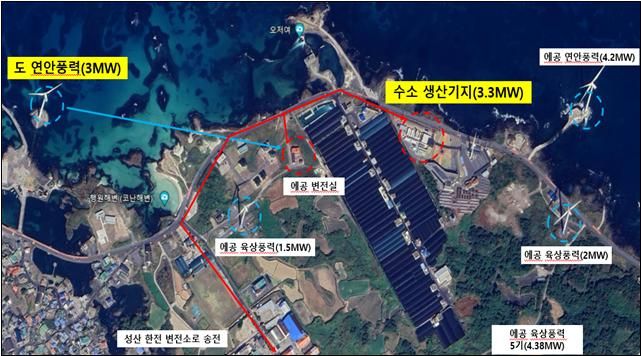
According to Jeju Special Self-Governing Province on the 1st, Jeju Island and JEC signed a PPA to directly supply electricity generated from the 3 MW Haengwon coastal wind farm to the nearby 3.3 MW Haengwon Green Hydrogen production facility, and power supply began that day.
It is also the first direct PPA signed in Jeju. A direct PPA is a system in which a renewable energy generator and an electricity user sign a supply contract and trade electricity directly, without going through the power market. The system was introduced in Korea in September 2022.
The significance of this deal lies in the fact that it has turned the already connected wind power and hydrogen production facility into a formal power trading relationship under the system.
Since 2023, the Haengwon Green Hydrogen production facility has been linked and operated through the JEC substation, which serves as the same connection point as the nearby wind complex. In practice, it produced Green Hydrogen using wind power, but because there was no separate PPA between the turbine and the hydrogen facility, the arrangement was formally structured as purchasing grid electricity from KEPCO.
With this contract, a direct trading relationship has been established in which the hydrogen facility purchases renewable electricity generated by Haengwon coastal wind power. In other words, the physical power flow and the contractual power procurement structure now match.
Jeju Island completed the first direct PPA after going through the relevant procedures, from selecting the operator to signing the contract and filing and approving the power trading notification. Power-related institutions and private renewable energy suppliers also took part in the process.
Jeju Island expects the contract to help lower Green Hydrogen production costs. The plan is to reduce the facility's electricity expenses by directly receiving renewable power and then pass those savings on to hydrogen production costs.
The island also plans to pursue Clean Hydrogen Certification in Korea. Since the power procurement structure now formally shows that Green Hydrogen was produced based on actual renewable energy, the arrangement will also be used in future certification procedures.
The direct PPA is also tied to the expansion of renewable electricity trading in Jeju. As the government moves to phase out the Renewable Portfolio Standard (RPS), Jeju Island plans to use this case as a model for expanding direct trading among renewable energy generators on the island.
Jeju's renewable energy facilities currently total about 1.2 GW. The island expects that if direct transactions between generators and electricity users increase, it will secure new sales channels for renewable energy and connect them to new energy industries such as power brokerage.
Jeju Island is also seeking to link the project with its special zone policy for distributed energy. After supply begins, it plans to analyze actual operating data, including grid usage fees, and use the findings as material to propose government incentives for revitalizing the distributed energy special zone.
However, it remains to be seen how much the direct PPA will improve the economics of Green Hydrogen. The key indicators for whether the project will expand are expected to be the actual reduction in electricity costs, including contract prices and grid usage fees, and changes in the production cost per kilogram of hydrogen.
Cho Seon-hee, director of Jeju Island's Climate and Energy Bureau, said, "This contract, which directly links wind-generated electricity to hydrogen production, has laid the groundwork for lowering Green Hydrogen production costs," and added, "We will foster new energy industries such as power brokerage and create jobs so that the results can lead to higher income for residents."
[email protected] Jung Yong-bok Reporter