“I Signed Up in a Hurry When I Heard It Paid 12% a Year”—Why People Are Flocking to a Product That Pays Just 60,000 Won in Interest
- Input
- 2026-09-02 05:00:00
- Updated
- 2026-09-02 05:00:00
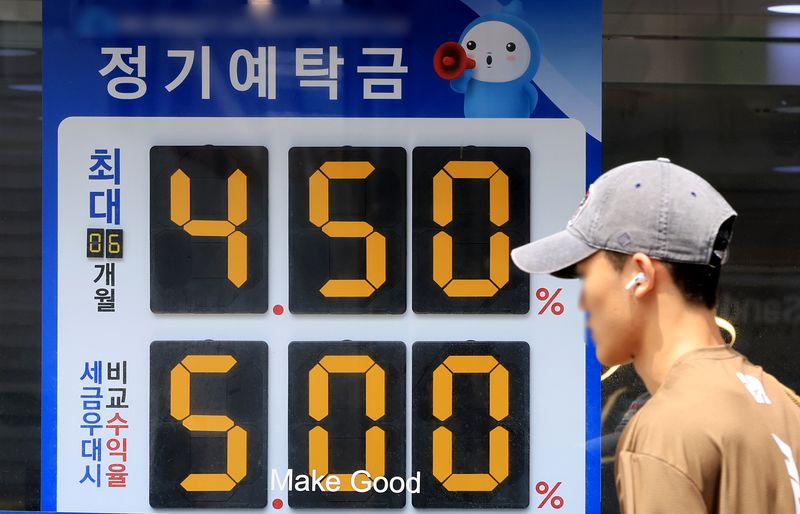
[Financial News] “You can’t compare it with stocks if you look only at returns. But at least you won’t end up in the red.”
Kang Seon-hwa, a 37-year-old office worker using a pseudonym, recently signed up for a high-interest special installment savings product offered by a bank. “It was a hassle to meet the preferential-rate requirements, such as getting a new card to qualify for the maximum interest rate,” Kang explained. “But compared with the stress of investing in stocks, it’s manageable.”
Why Are Banks All Rolling Out ‘Double-Digit’ Installment Savings Products?
Commercial banks have recently been competing to launch special installment savings products that offer base rates of 2% to 3%, plus preferential rates tied to customers’ transaction records. Representative products include KB Kookmin Bank’s ‘KB Card Ssudam Jeokgeum’ (up to 12%), Shinhan Bank’s ‘Shinhan Jeokgeum 9dan’ (up to 9%), Woori Bank’s ‘Our Wish Jeokgeum’ (up to 8.29%), and Hana Bank’s ‘Hana Savings from Today’ (up to 7.7%).
A clear shift in the flow of funds lies behind the flood of these products. According to figures compiled by the Bank of Korea’s Economic Statistics System (ECOS), the balance of won-denominated time deposits at deposit-taking banks rose by more than 37 trillion won, from 1,095.2512 quadrillion won at the end of January this year to 1,132.5026 quadrillion won at the end of June. This month, the combined balance of time deposits at the five major banks—KB Kookmin, Shinhan, Hana, Woori, and Nonghyup—is reportedly believed to have surpassed 1,000 trillion won for the first time.
By contrast, the balance of regular installment savings fell by more than 800 billion won over the same period, from 63.4640 trillion won to 62.6589 trillion won. Funds are pouring into deposits, where customers place a lump sum at once, while installment savings—which require monthly contributions—are being overlooked.
From a bank’s perspective, installment savings are a relatively less attractive source of funding. However, because signing up for such products can lead to other transactions, including salary transfers, card payments, and automatic transfers, banks can expect a customer lock-in effect through high-interest special offers. That is why banks have recently been rolling out a series of special products offering high rates alongside increases in deposit rates.
Why Are the Advertised Rate and the Amount Actually Received So Different?
KB Kookmin Bank’s recently launched ‘KB Card Ssudam Jeokgeum’ advertises a maximum annual rate of 12%. That is nearly three times the 3% to 4% average rate for regular installment savings at commercial banks. However, even if a customer deposits the monthly maximum of 300,000 won for six months and meets all preferential-rate conditions, the interest received at maturity amounts to only about 63,000 won before tax and around 50,000 won after tax.
The key lies in how interest on installment savings is calculated. With a deposit, a lump sum is placed at once, so the advertised rate applies to the entire principal for the full term. With installment savings, however, each monthly contribution earns interest for a different period. Money deposited in the first month earns interest for the entire term, while money deposited in the final month earns only one month’s interest. As a result, the effective rate on installment savings is generally only about half the advertised rate.
Moreover, the ‘maximum rate’ is merely an upper limit that applies only when all preferential-rate conditions are met. KB Kookmin Bank offers an additional 6 percentage points (p) to customers who have not used a card in the past six months, provided they issue a new card and spend a specified amount. Customers who also meet the conditions for the average account balance and their first salary transaction receive an additional 2 percentage points for each condition.
Shinhan Bank likewise requires customers either not to have held a deposit, installment savings account, or housing subscription account during the previous six months, or to use a Shinhan card for a specified period, in order to receive the maximum preferential rate. If even one of these conditions is missed, only the base rate—typically in the 2% to 3% range—applies. Some products, such as Jeonbuk Bank’s ‘JB Super Seed Savings,’ even add the preferential rate only if the customer wins a lottery.
The Financial Services Commission (FSC) is also aware of the issue. The financial authorities said complaints continue to arise when consumers sign up for special deposit or installment savings products after looking only at the maximum rate without checking the preferential-rate conditions, then fail to meet those conditions and become involved in disputes. The FSC urged consumers to carefully review the preferential conditions in the product information documents.
Why Are People Flocking to Them Anyway?
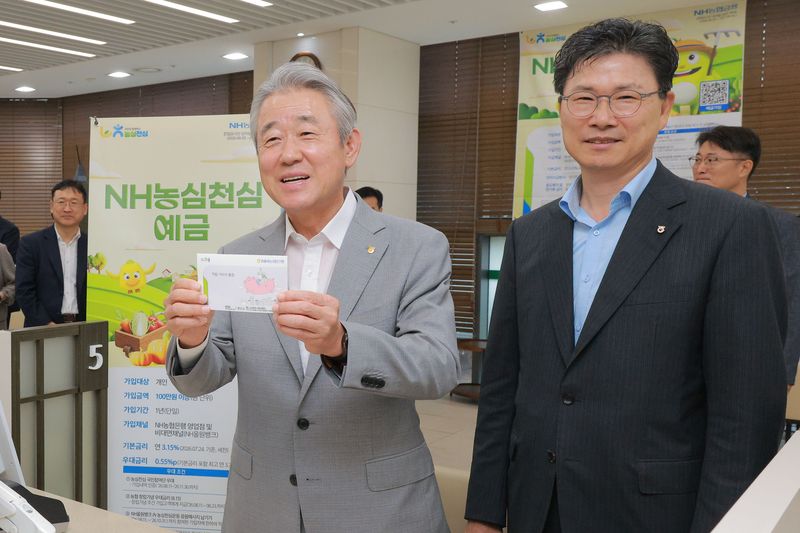
Despite their poor value when judged solely by the amount of interest paid, special installment savings products have continued to sell out as soon as they are launched. Shinhan Bank’s ‘Shinhan Jeokgeum 9dan’ sold 100,000 of its 200,000-account allocation within two weeks of launch, while Nonghyup Bank’s ‘NH Nongshim Cheonsim Savings’ exhausted its 10,000-account allocation just two days after launch. Several structural factors beyond simple interest income are at work.
One major factor is the return to safe assets among investors exhausted by stock-market volatility. Funds that flowed into the stock market during the first-half rally in semiconductors and leveraged ETFs have recently been clearly moving back to banks as volatility increases. In one example, while investor deposits—funds waiting to enter the stock market—fell below 100 trillion won, the time-deposit balance at the five major banks increased by more than 1.4 trillion won in just nine business days.
The psychological comfort of a risk-free product that guarantees 100% of the interest without losses is another factor. For consumers, the certainty that there is no risk of losing the principal may be more valuable than the amount itself—50,000 won after tax. Investors worn out by the recent roller-coaster stock market may respond more strongly to the assurance that they will not lose money than to how much they can earn.
The short maturity period can also work in the products’ favor. Most special products have short terms of six months to one year, which is welcome for people who are reluctant to tie up a lump sum for a long time. They are suitable for managing money that is being held in anticipation of investment opportunities. Thus, while high-interest special installment savings products have clear limitations as a way to grow a lump sum, they are considered an attractive personal-finance option for safely managing spare funds and maintaining saving habits during periods of high stock-market volatility.
[email protected] Kim Hee-sun Reporter