Law Firms to Mount Three-Pronged Response to Cartel Cases Amid Prosecutorial Restructuring... "Calls Grow to Improve Leniency Program" [Law Firm NOW]
- Input
- 2026-09-01 14:46:55
- Updated
- 2026-09-01 14:46:55
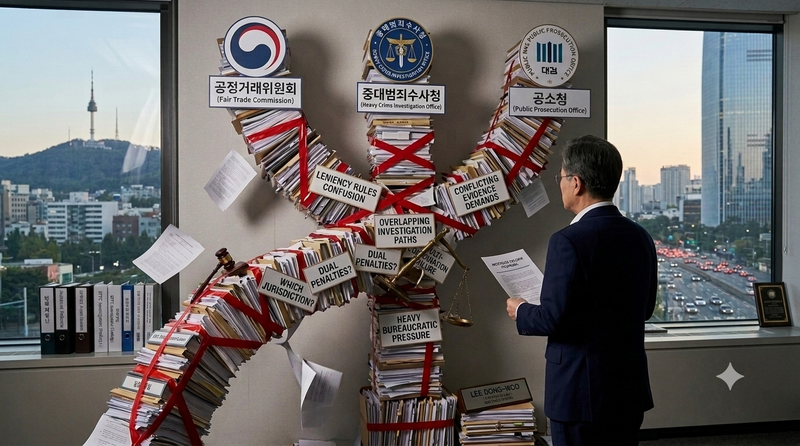
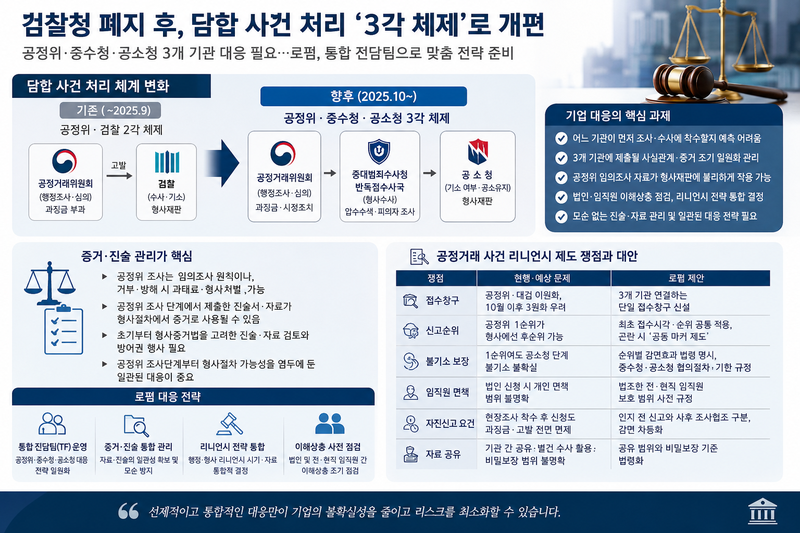
[Financial News] With the Supreme Prosecutors' Office of the Republic of Korea (SPO) set to be abolished in October and the Serious Crime Investigation Agency and Public Prosecution Office to launch, major law firms representing companies in cartel cases are quickly preparing tailored strategies. What was once a dual structure involving the Korea Fair Trade Commission (KFTC) and prosecutors will shift to a system handled across three agencies: the KFTC, the Serious Crime Investigation Agency, and the Public Prosecution Office. Law firms in Korea are moving to reorganize integrated response teams that combine their fair trade and criminal law practices.
According to the legal community on the 1st, cartel cases had previously followed a linear process in which the KFTC investigated and reviewed the case, imposed fines, and, only if it filed a complaint, the matter proceeded to a prosecutors' investigation and criminal trial. Going forward, the KFTC will handle administrative investigations and sanctions such as fines, the anti-monopoly investigation bureau of the Serious Crime Investigation Agency will conduct criminal investigations including searches and seizures and suspect questioning, and the Public Prosecution Office will decide whether to indict and will maintain the prosecution.
In particular, the long-standing formula of 'KFTC complaint first, prosecutors' investigation later' has recently been breaking down, and cases in which prosecutors launch preemptive investigations and then request a KFTC complaint are increasing. In fact, the Fair Trade Investigation Division of the Seoul Central District Prosecutors' Office exercised the prosecutor general's authority to request a complaint in February, before the KFTC's review had ended, in a flour and sugar cartel case, indicting 52 people, including 16 companies and 36 individuals, including CEOs. Investigations continued in April with a starch sugar price-fixing case worth 1 trillion won, in July with four major refiners, and in August with seven petrochemical companies. Criminal investigations that do not wait for KFTC action have become the pattern.
Jin Ho-sik, a lawyer at YK Law Firm, said, "For companies, it has become difficult to predict which agency will begin an investigation first, or in what order the KFTC and investigative authorities will handle a case," adding, "The old practice of waiting for the KFTC's investigation and review results before setting a response strategy is no longer sufficient."
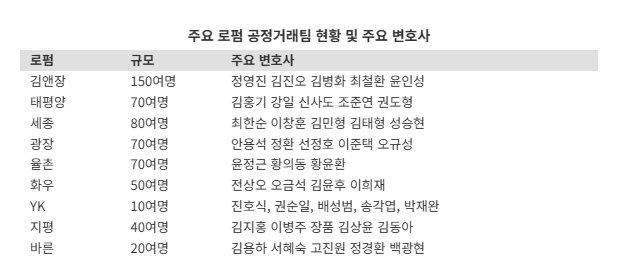
He said the restructuring of investigative agencies makes it necessary to respond through a dedicated team built around an integrated task force. Kim Hong-gi, a lawyer at BKL, said, "If the cartel response system is divided into the KFTC's administrative investigations, the Serious Crime Investigation Agency's criminal investigations, and the Public Prosecution Office's indictment and prosecution functions, companies must be prepared for the possibility that procedures by multiple agencies will proceed simultaneously or sequentially on the same facts."■ KFTC administrative investigations could also affect criminal trialsThe most sensitive issue in practice is evidence law. KFTC administrative investigations are, in principle, voluntary, but refusal or obstruction can lead to fines or criminal penalties. By contrast, criminal investigations by the Serious Crime Investigation Agency are subject to strict warrant requirements and the constitutional right to remain silent.
Barun Law's Kim said, "Statements or materials voluntarily prepared and submitted during a KFTC investigation can later raise issues in criminal proceedings regarding the voluntariness of a confession, as well as the admissibility and probative value of evidence," adding, "From the earliest stage of an investigation, it is necessary to review statements and materials and exercise defense rights with criminal evidence law in mind."
Evidence and statements collected during the KFTC's voluntary investigation stage could later work against a company in a criminal trial, making a consistent response throughout the process increasingly important.
Jung Hwan, a lawyer at Lee & Ko, explained, "In cartel cases, the same meetings, emails, messenger conversations, bidding materials, and employee statements can be used both to determine administrative sanctions and criminal liability," adding, "Companies need to manage the materials submitted to each agency and employee statements so that they do not conflict with one another, and they must prepare with the possibility of later criminal proceedings in mind from the KFTC investigation stage."
In addition, companies need to take steps such as early checks for conflicts of interest between the corporation and current or former employees, and integrated decisions on the timing and materials for administrative and criminal leniency applications. Law firms also agreed that the problem of overlapping investigations and the leniency program need institutional reform.
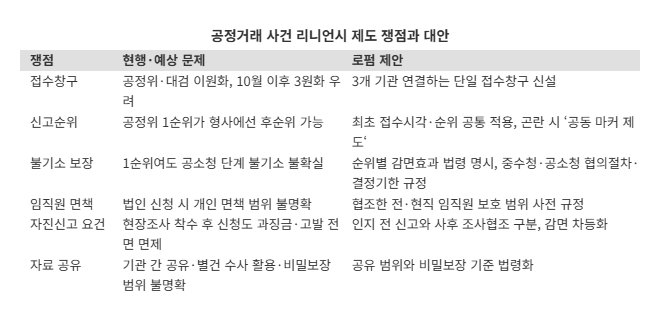
At present, KFTC leniency offers exemptions from fines, corrective orders, and complaints, while criminal leniency offers non-indictment or reduced sentencing as incentives. The problem is that the two agencies separately determine the order of filing and whether to grant reductions. A company that is first in line at the KFTC could be lower in priority at the prosecution level. From October, the prosecutors' role in criminal leniency will also be split between investigations by the Serious Crime Investigation Agency and indictments by the Public Prosecution Office.
Sang Oh Jeon, a lawyer at Hwawoo, said, "Even under the old system, there were conflicts because the leniency ranking differed between the KFTC and prosecutors," adding, "Going forward, the procedures for filing and determining leniency rankings should be clarified. Referring to overseas examples, one option would be for the Serious Crime Investigation Agency, as the investigative body, to receive the filing and immediately notify the Public Prosecution Office, while the Public Prosecution Office makes the final decision on whether to grant immunity from indictment."
In particular, the KFTC currently can exempt the first- and second-ranked applicants from complaints if certain requirements are met, while criminal leniency grants immunity from indictment only to the first-ranked applicant and indicts the second-ranked one. As the scope of immunity differs by agency, the rules on immunity across agencies also need to be standardized.
Jin said, "A single intake window connecting the KFTC, the Serious Crime Investigation Agency, and the Public Prosecution Office should be established so that one filing time and reporting order can apply equally to both administrative and criminal procedures," adding, "If a single window is difficult to create, then at least a 'joint marker system' should be introduced, under which the time and order of the first filing with one agency are recognized identically by the others."
[email protected] Lee Hwan-ju Reporter