KRW 13.9009 Trillion in National Funds Reflected in Next Year’s Government Budget for Jeonnam-Gwangju Issues
- Input
- 2026-09-01 14:04:31
- Updated
- 2026-09-01 14:04:31
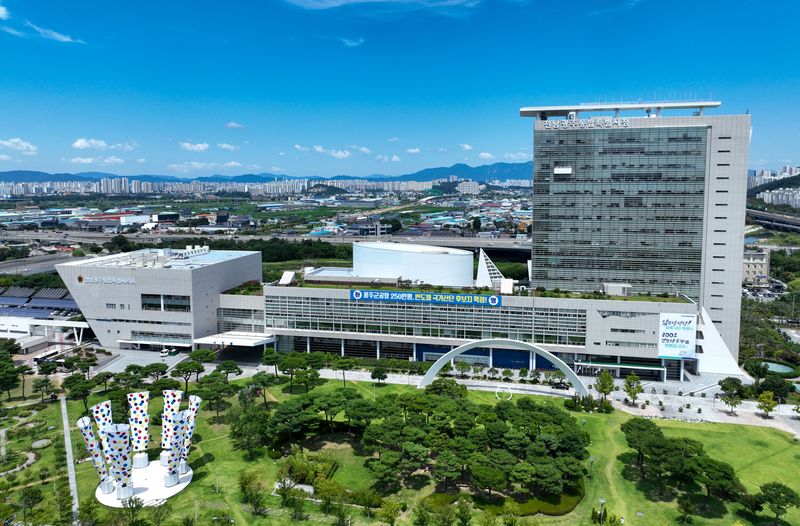
[Financial News, Jeonnam-Gwangju = Reporter Hwang Tae-jong] Jeonnam-Gwangju Integrated Metropolitan City (Gwangju Metropolitan City) said on the 1st that KRW 13.9009 trillion in national funds for local issues was reflected in next year’s government budget.
The city said the figure was confirmed on the 1st.
It added that the budget includes a large amount of funding for future growth industries such as artificial intelligence (AI), semiconductors and energy. The amount is KRW 820.5 billion, or 6.3%, higher than the 2026 government budget proposal of KRW 13.0804 trillion secured in August last year.
Mayor Min Hyung-bae said, "This government budget proposal is meaningful because it is the first national budget result jointly prepared and achieved by Jeonnam and Gwangju, which became one after 40 years." He added, "We will connect Jeonnam’s energy, agriculture, fisheries and tourism resources with Gwangju’s capabilities in AI, future mobility and the cultural industry so that the power of integration leads to investment, companies and jobs."
According to Gwangju Metropolitan City, the amount secured by sector for AI, data centers, semiconductors and physical AI, among other advanced future industries, stands at KRW 1.0564 trillion. New projects total KRW 132 billion, including KRW 66.8 billion for building an AI data center testbed, KRW 23.1 billion for the Honam region science and technology innovation support project, KRW 4.5 billion for humanoid-based manufacturing AI transformation (M.AX), and KRW 5 billion for developing technology to strengthen safety management at AI-based hydrogen charging stations. Ongoing projects include KRW 115.1 billion for creating an AI transformation (AX) demonstration valley, KRW 6 billion for building an advanced semiconductor packaging demonstration center, and KRW 1.97 billion for establishing a national NPU-exclusive computing center in Gwangju.
The main industries of petrochemicals, steel and shipbuilding received KRW 131.2 billion. Key projects include KRW 36.8 billion for developing innovative technologies for a major transformation in the K-chemical industry, KRW 3 billion for building an AI-based safety management system for chemical industrial complexes, KRW 2 billion for developing AI- and robot-based automation technology for manufacturing large steel structures, and KRW 1.8 billion for establishing an AX support center for the steel and metal industries.
The agriculture, fisheries and livestock sector was allocated KRW 2.468 trillion. New projects include KRW 1 billion for modernizing the processing facility for K-Tea Boseong matcha, KRW 600 million for building a next-generation AI seafood processing factory, and KRW 1.6 billion for creating a hub fishing port at a national fishing port. Ongoing projects include KRW 117.8 billion for a pilot basic income program for rural areas, KRW 4.5 billion for a global business center for agricultural AX, and KRW 4 billion for an agricultural AX demonstration center.
A total of KRW 1.7176 trillion was included for social overhead capital (SOC). Major projects include KRW 141.3 billion for Phase 2 of the Honam High-Speed Railway, KRW 111 billion for connecting Hwatae and Baekya in Yeosu via National Route 77, KRW 89.9 billion for electrifying the Gwangju Songjeong-Suncheon section of the Gyeongjeon Line, KRW 48.6 billion for Gwangju Metro Line 2, and KRW 32 billion for expanding the Honam Expressway between Donggwangju IC and Gwangsan IC.
The culture and tourism sector was allocated KRW 453.2 billion. Major projects include KRW 400 million for creating a K-cultural content tech town, KRW 1.2 billion for supporting half-price travel to island regions, KRW 1 billion for a project to promote historic and cultural zones, KRW 9.9 billion for conserving tidal flats as a UNESCO World Natural Heritage site, and KRW 600 million for a modern history and culture hub belt in the Yangnim area linked to the Asia Culture Center (ACC).
In addition, a total of KRW 5 trillion was reflected as a fiscal incentive for the integrated metropolitan city, including KRW 1.5 trillion in the semiconductor Special Account and KRW 3.5 trillion in Jeonnam-Gwangju integration support funds. This has also laid the financial foundation to cover initial integration costs and support future industries and balanced regional development.
Gwangju Metropolitan City said it plans to secure more than KRW 500 billion in additional funding during the National Assembly’s budget review stage, including more than KRW 350 billion for the three major mega projects and SOC issues, and more than KRW 150 billion for balanced regional development, livelihoods and safety. It aims to finalize a budget of at least KRW 14.4 trillion. Major projects include KRW 13.2 billion for building infrastructure for the mega project AI data center, KRW 10 billion for activating the national AI cluster, KRW 14 billion for a pilot domestic NPU demonstration center, KRW 15 billion for demonstration and commercialization support for AI optical semiconductor advanced packaging, and KRW 5 billion for a high-power semiconductor module demonstration and evaluation platform.
Mayor Min Hyung-bae said, "We will also secure additional funding for key projects such as AI, semiconductors and SOC, which were not sufficiently reflected in the government proposal, and successfully complete the first national budget for the integrated metropolitan city."
[email protected] Hwang Tae-jong Reporter