Broker Leaked Information on Hwang Ui-jo Search and Seizure... Conviction of Leaking Officer Overturned
- Input
- 2026-09-01 13:50:59
- Updated
- 2026-09-01 13:50:59
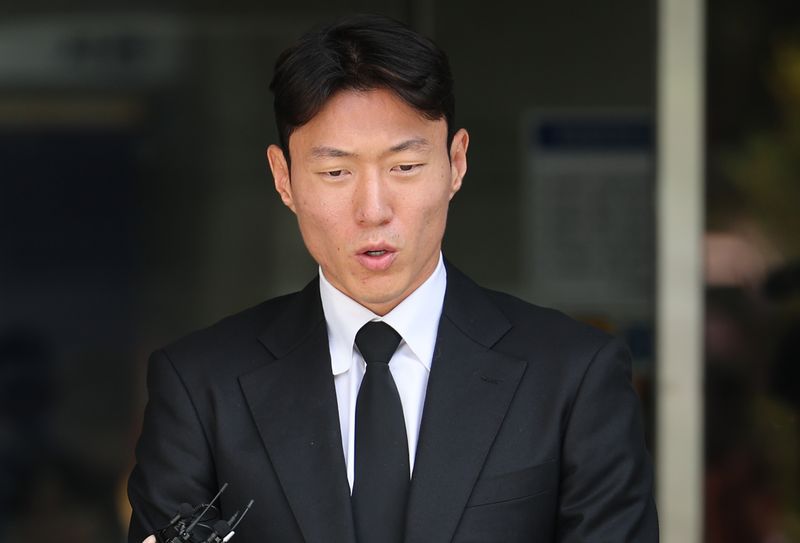
According to the legal community on the 1st, the Supreme Court's First Division, led by Justice Suh Kyeong-hwan, recently overturned in July the lower court ruling that had sentenced Police Superintendent A to one year in prison on charges of leaking official secrets, and sent the case back to the Seoul Central District Court.
A was indicted and detained in July 2024 on charges of telling his acquaintance, lawyer B, about the investigation into Hwang's illegal filming case in January 2024, while working in the Cyber Investigation Division of the Seoul Metropolitan Police Agency. Prosecutors believe the information was passed from B to broker C.
The investigation began with claims from Hwang's side. At the time, Hwang was under investigation for illegal filming, and his side alleged that a broker approached him, demanded money in exchange for helping to suppress the investigation, and disclosed the location and timing of the search and seizure. That led to an investigation into how the information was leaked.
The trial court acquitted A. It found no direct evidence that A had leaked the information and said the circumstantial evidence alone was not enough to establish the charge. The court also ruled that the motive for leaking the information was unclear.
The appeals court, however, overturned that ruling and sentenced him to one year in prison. It said that, given the relationship between the two men, it could infer a motive for A to leak the information to B, and cited phone records showing contact among the people involved around the time the search and seizure information was leaked. The appeals court, however, closed the case after holding only one hearing, without conducting separate evidence review.
The Supreme Court took issue with that process. The bench said, "If no new objective grounds have emerged that could affect the formation of the court's view, then to overturn the trial court's judgment on appellate review, there must be reasonable grounds to find the trial court's assessment of the evidence clearly wrong or its fact-finding reasoning markedly unreasonable, such as being contrary to common experience." It added, "Without such exceptional circumstances, the trial court's factual findings should not be overturned lightly."
The court also emphasized, "To find guilt based only on circumstantial evidence, the proof must be overwhelmingly strong enough to conclude that the defendant committed the offense."
The bench noted that there was no direct evidence at all that A had leaked the search and seizure information, and that the people involved had also testified that no leak or transfer had taken place. It then said, "Rather than immediately overturning the trial court's ruling, the appeals court should have gone through proper procedures, such as questioning B and C again as witnesses and conducting additional evidence review, before carefully determining whether the defendant could be found to have leaked the information under the relevant legal principles."
The Supreme Court concluded that the lower court, which closed the case after a single hearing and found the charges guilty without such procedures, had "misunderstood the principles of trial-centered procedure, direct examination, and the legal standards governing appellate review and adjudication, and failed to conduct the necessary review."
Meanwhile, Hwang received a final sentence in September last year of one year in prison, suspended for two years, on charges of illegal filming.
[email protected] Kim Dong-gyu Reporter