Civil servants' pay to rise 3.9% next year... entry-level Grade 9 salary to exceed 3 million won a month
- Input
- 2026-09-01 13:42:41
- Updated
- 2026-09-01 13:42:41
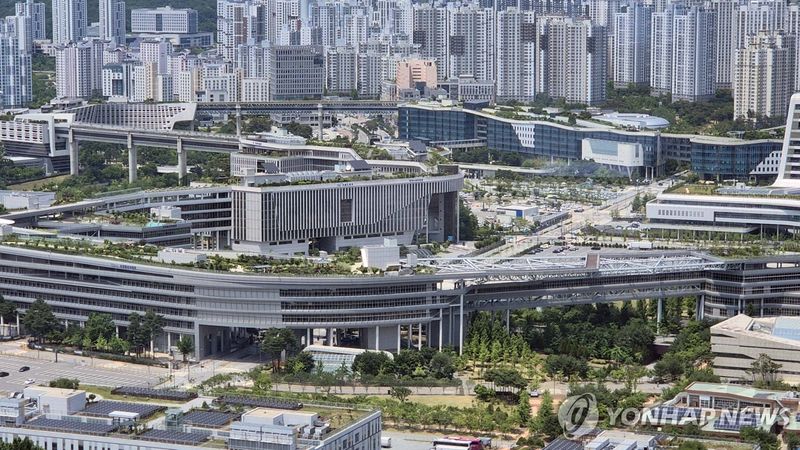
Financial News — Civil servants' pay will rise by 3.9% next year. It is the highest increase since 2011. Once the raise is reflected, the monthly pay of entry-level Grade 9 civil servants, including allowances, is expected to reach the government's target of around 3 million won. On the 1st, the government held a State Council of South Korea meeting at Cheong Wa Dae, chaired by President Lee Jae Myung, and deliberated and approved the 2027 budget bill containing these measures.
Next year's civil servants' pay increase was set at 3.9%. It marks the third consecutive year of a raise in the 3% range, following 3.0% last year and 3.5% this year. The 2026 increase is the highest since 5.1% in 2011. That year, a large increase was introduced to normalize civil servants' pay, which had been frozen during the global financial crisis.
The increase is higher than next year's minimum wage hike of 3.7%, and also above the inflation forecasts for next year from the government and the Bank of Korea (BOK), which stand at 2.2% and 2.3%, respectively.
Jo Yong-beom, vice minister at the Ministry of Planning and Budget, said, "We took into account the gap between public- and private-sector pay increases, as well as the minimum wage hike." He added, "We reflected the widening gap with the private sector as private-sector wage increases have risen."
The government expects that if the 3.9% increase is applied, the monthly pay of a Grade 9, first-step civil servant, including salary and allowances, will rise to around 3 million won. The move is intended to improve treatment for younger civil servants and narrow the pay gap with the private sector.
Earlier, at the end of June, labor representatives at the Civil Servants' Pay Commission demanded a 7.1% increase in next year's civil servants' pay. They calculated the request by adding 3.2 percentage points, based on economic growth and inflation forecasts, to reflect the fact that civil servants' pay stood at only 83.9% of the level at private companies with 100 or more full-time employees.
After further talks involving labor, government, and experts, the Civil Servants' Pay Commission reached an agreement on a range of 3.4% to 3.9%. The government reflected the upper end of that range, 3.9%, in next year's budget bill.
The government also decided to raise wages for nonregular public-sector workers. Starting next year, it plans to pay public-sector nonregular workers a 'fair wage' equal to 118% of the minimum wage.
It also included 73 billion won in the budget for a 'fair compensation' allowance for fixed-term workers employed for less than one year, as compensation for job insecurity. The measure follows President Lee Jae Myung's statement in February that the government would provide fair wages above the minimum wage level in public-sector employment.
The Korean Government Employees' Union (KGEU) issued a statement on the day, saying it "views the 3.9% increase as meaningful." It also called the government's decision to reflect the upper end of the first agreement reached by labor, government, and experts since the Civil Servants' Pay Commission was launched in 2019 a "clear step forward."
However, the union said civil servants' pay still remains in the low 80% range compared with the private sector and called for further improvements in treatment. It said, "As a result of years of real wage declines and one-sided demands for sacrifice, civil servants' pay still stands at only the low 80% range compared with the private sector," and argued that low pay is driving more young and junior civil servants to leave.
The union also urged the government to improve allowances discussed by the Civil Servants' Pay Commission, including abolishing the reduction rate for overtime pay and making various allowances, such as the fixed meal allowance and rank-based support allowance, more realistic.
[email protected] Lee Bomi Reporter