[Park Dong-chang’s Barefoot Walking Studies] <35> The Era of K-Healing Tourism for People Around the World Is Dawning
- Input
- 2026-09-03 21:00:44
- Updated
- 2026-09-03 21:00:44
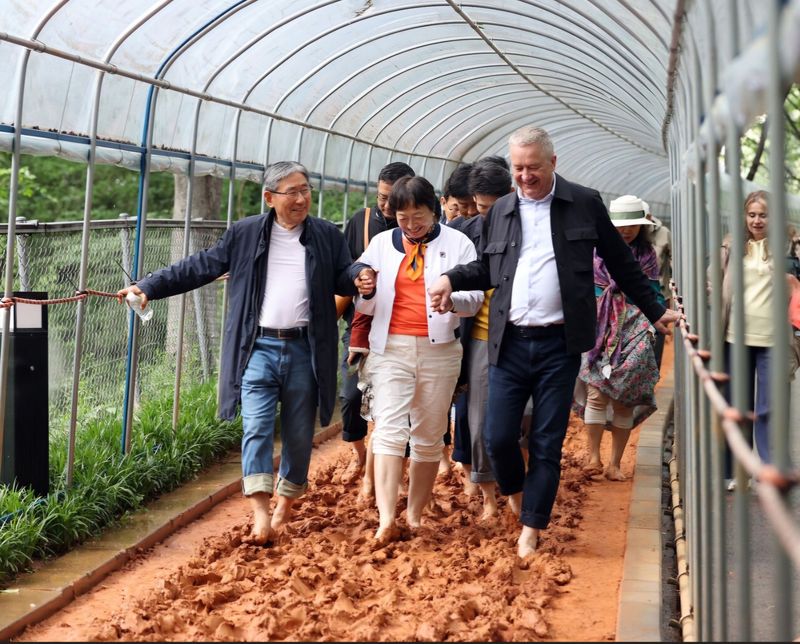
The history of barefoot walking in South Korea has now surpassed 20 years. It began in May 2006, when I introduced the movement through my first book, The Joy of Walking Barefoot. The starting point was followed in September of the same year by the creation of the country’s first 14-kilometer red-clay barefoot walking trail on Gyejoksan Mountain in Daejeon Metropolitan City.
After retiring from the financial sector, I launched the Barefoot Walking Forest Trail Healing School in 2016 at Daemosan in Seoul’s Gangnam-gu. The free forest-trail barefoot walking program marked the beginning of my full-scale public education efforts.
The barefoot walking movement that began at Daemosan spread across the country almost instantly. Among those who walked barefoot with me, reports of recovery from various cancers—including thyroid, blood, and prostate cancer—began to emerge one after another. Remarkable improvements were also reported in chronic headaches, atopic dermatitis, high blood pressure, high blood sugar, and hyperlipidemia.
Word-of-mouth accounts of seemingly miraculous recoveries from difficult chronic conditions—including Parkinson’s disease, dementia, Alzheimer’s disease, and hemiplegia caused by cerebral hemorrhage—as well as psychosomatic conditions such as insomnia, depression, panic disorder, and obsessive-compulsive disorder, further fueled the movement. Barefoot walking eventually became the country’s leading exercise for promoting public health.
As the barefoot walking craze grew, complaints poured in from people who could not find suitable paths near their homes. In response, the Barefoot Walking National Movement Headquarters, which I lead, worked through local councils to promote the enactment of ordinances supporting the revitalization of barefoot walking. Local government heads then followed suit by creating barefoot paths, establishing a virtuous cycle.
As a result, as of August 2026, 206 of the country’s 243 local governments have enacted or revised related ordinances. More than 2,000 barefoot walking paths and foot-washing facilities have also been established nationwide. Thanks to this barefoot walking infrastructure, unparalleled anywhere else in the world, South Korea now offers an environment where anyone can protect their health by walking along a red-clay trail near home.
Legislative activity has also been vigorous. Bills have been proposed to require or support the creation of barefoot walking paths under the Housing Act, the Act on Urban Parks, Green Areas, Etc., and the Forest Recreation Act. In September last year, 35 lawmakers from both the ruling and opposition parties jointly signed and introduced the Bill on Supporting the National Barefoot Walking Movement, aimed at providing national support for the barefoot walking movement that citizens have led over the past decade.
The efforts of Kim Yun-duk, a National Assembly member and former Minister of Land, Infrastructure and Transport, were particularly decisive. Having practiced barefoot walking himself and recovered his health, he was convinced that barefoot walking is the simplest, most affordable, and safest way to promote health. He specified “barefoot walking paths” as healing-tourism resources under the Healing Tourism Industry Promotion Act. As a result, barefoot walking entered the legal and institutional sphere for the first time in South Korea—and, according to the article, anywhere in the world.
Building on this development, the Barefoot Walking National Movement Headquarters will hold the Policy Forum on Promoting the Healing Tourism Industry at 2 p.m. on the 22nd in the main conference room of the National Assembly Members’ Office Building. The event will be co-hosted by around 10 lawmakers from both parties, including Jung Joon-ho, Cho Gye-won, Joo Ho-young, and Baek Jong-heon. Experts, professors, and representatives of related organizations from fields including forests, oceans, agriculture, food, meditation, yoga, arts healing, general tourism, and medical tourism will gather to discuss the future direction of genuine K-healing tourism.
At the heart of the forum is the solemn goal set out in the Healing Tourism Industry Promotion Act: “improving quality of life through the recovery and promotion of physical, mental, and social health.” It is important to note that “barefoot walking paths” have been designated as a new healing-tourism resource to achieve that goal. This reflects the recognition that genuine healing of the body and mind occurs when people remove their shoes, walk barefoot, and connect with the earth. It is also firmly supported by the lawmakers’ lofty legislative intent to share this message with the entire nation and, ultimately, people around the world.
The implication is that the various healing programs in forests, at the coast, on farms, and in meditation, yoga, and the arts—previously conducted separately while participants wore shoes—should now converge on barefoot walking paths to build a new K-healing tourism infrastructure. If these activities are carried out while participants walk barefoot and connect with the earth, the many physical, mental, and social healing effects attributed to barefoot walking could also occur across all of these fields.
If that happens, not only South Koreans but also international visitors to the country will be able to experience what the author describes as the remarkable miracle of genuine healing on South Korea’s barefoot walking paths.
Visitors will be able to tour forest landscapes while walking barefoot, experience coastal paths and tidal flats barefoot, participate in agricultural healing programs in rural areas, and take part in meditation-based healing during temple stays—all while walking barefoot. In this way, they will experience genuine healing unlike anything they have encountered before.
Just as numerous cases of recovery from disease have continued to be reported through barefoot walking in South Korea over the past decade, foreign tourists who visit the country’s barefoot walking paths and the K-healing tourism infrastructure built around them are expected to report that walking barefoot relieved their insomnia, lowered their blood pressure and blood sugar, and even helped cure cancer, atopic dermatitis, tinnitus, rhinitis, periodontitis, and arthritis.
If these accounts spread by word of mouth throughout the world, South Korea could soon see the number of international visitors rise from the current annual figure of approximately 20 million to 30 million or even 50 million. A win-win situation and synergy effect could also be expected as the number of medical tourists, currently around 2 million a year, rises sharply as well.
The golden age of K-healing tourism—built on more than 2,000 barefoot walking paths woven across South Korea like a web, the country’s beautiful mountains and rivers, and coastal routes along its three surrounding seas—is therefore no longer a distant prospect.
This will become a powerful new growth engine for future generations concerned about job losses in the AI era. Barefoot walking, which will drive that growth, will offer the best alternative for preserving human dignity, health, and genuine happiness while promoting physical, mental, and social well-being amid the technological overconfidence of the AI era.
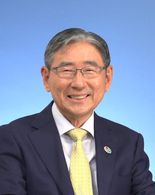
Park Dong-chang, chairman of the Barefoot Walking National Movement Headquarters
[email protected] Jung Soon-min Reporter