CIO Assigns Complaint Against Chief Justice Cho Hee-dae Over Written Nomination Controversy to Investigation Division 1
- Input
- 2026-09-01 12:51:31
- Updated
- 2026-09-01 12:51:31
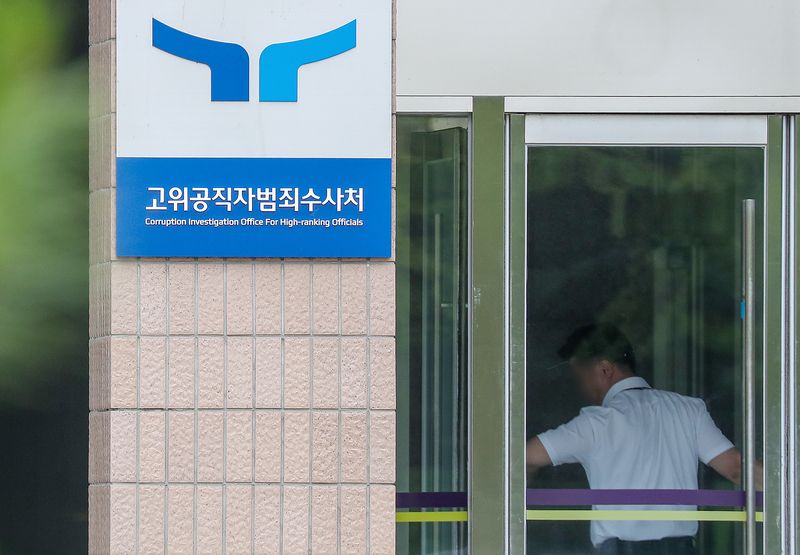
[Financial News] The Corruption Investigation Office for High-ranking Officials (CIO) has assigned a complaint filed against Chief Justice of the Supreme Court of Korea Cho Hee-dae over the controversy surrounding the written nomination of Supreme Court justices to Investigation Division 1, led by chief prosecutor Na Chang-su, and has begun a full-scale probe.
At a regular briefing held on the morning of the 1st at the Government Complex in Gwacheon, a CIO official said, "We assigned the case, in which a civic group filed a complaint against Chief Justice Cho, to Investigation Division 1 on the 27th of last month," adding, "The alleged charges are abuse of authority and dereliction of duty."
Earlier, Citizens' Action for Establishing Judicial Justice filed complaints last month against Chief Justice Cho and Minister of the National Court Administration Noh Gyeong-pil. Cho is suspected of having recommended the appointments of the successors to former Supreme Court Justice Rho Tae-ak and Supreme Court Justice Lee Heung-gu in writing, rather than through the customary in-person process.
Citizens' Action for Establishing Judicial Justice argued, "By ignoring precedent and unilaterally recommending Judge Son Bong-gi as a Supreme Court Justice candidate in writing, he obstructed the President's legitimate exercise of personnel authority," and added, "He also deliberately neglected his duties by failing, without just cause, to recommend a successor to former Justice Rho to the President for more than seven months, so he should also be held liable for dereliction of duty."
Separately, the CIO said that regarding its appeal in the so-called first recognized case, involving a superintendent general who received bribes worth 700 million won, it filed the appeal because it could not accept parts of the lower court rulings, including dismissal of charges, some acquittals, and illegally obtained evidence.
A CIO official said, "In this superintendent general bribery case, the first trial found that the office had investigative authority over the bribe giver, but the second trial reached the opposite conclusion," adding, "This happened because the rules are not clear. This area also needs to be reorganized." The official continued, "At present, we can investigate and prosecute judges, prosecutors, and officials at the rank of superintendent general or higher who directly received bribes, but there is no rule establishing a basis to investigate bribe givers."
The CIO also reiterated that prosecutors at the Public Prosecution Office and military prosecutors may request additional investigations from the CIO, rather than supplementary investigations. Until now, the CIO has said that requests for supplementary investigations between prosecutors are not consistent with the system.
The CIO official explained, "We need to improve the procedures related to additional investigations," adding, "We submitted to the National Assembly the idea of creating a mechanism that would allow consultations on related matters when such a request comes in."
[email protected] Yuseonjun Reporter