Police investigative powers are expanding, but objections to non-referral decisions are rising, and 1 in 5 reinvestigations end in referral
- Input
- 2026-09-01 13:42:29
- Updated
- 2026-09-01 13:42:29

[Financial News] While the police have been given broader investigative powers, objections to non-referral decisions are rising even faster. About one in five cases sent back for reinvestigation end up being referred to prosecutors, prompting calls to strengthen the completeness of initial investigations and post-case oversight.
According to data submitted by the National Police Agency to Rep. Kang Myung-gu of the People Power Party, a member of the National Assembly's Security and Public Administration Committee, police issued 580,774 non-referral decisions last year. That was up 49.2% from 389,178 cases in 2021.
Objections to non-referral decisions also increased. The number of objections rose from 27,262 in 2021 to 38,456 in 2022, 42,698 in 2023, and 50,117 in 2024, before reaching 56,165 last year. That means the figure more than doubled in four years.
The objection rate relative to all non-referral decisions also climbed, from 7.0% in 2021 to 9.7% last year, and reached 11.5% through July this year. As of July, objections had been filed in 40,774 of 355,981 non-referral cases.
Thousands of cases each year also see the police's initial judgment changed after prosecutors request reinvestigation. Prosecutors may ask police to reinvestigate if they determine that a non-referral decision was unlawful or inappropriate. Last year, prosecutors requested reinvestigation in 12,898 cases, and police changed their decision to referral in 2,749 of them, or 21.3%.
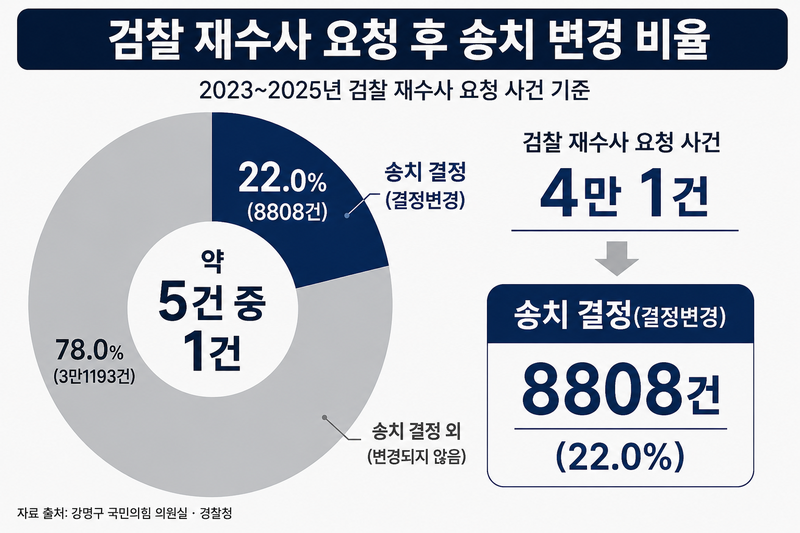
In 2023, 3,036 of 12,698 reinvestigation requests, or 23.9%, were changed to referral. In 2024, 3,023 of 14,405 cases, or 21.0%, were also converted to referral. Over the three years from 2023 through last year, 8,808 of 40,001 reinvestigation requests, or 22.0%, ended with a different conclusion, shifting from non-referral to referral.
The same trend is continuing this year. Through July, 1,540 of 7,789 cases that underwent prosecutor-requested reinvestigation were changed to referral, or 19.8%.
Controversy over police non-referral decisions has continued into recent months. In December last year, Chae Dan-bi, 19, who worked part-time at a bar in Ansan, filed a complaint with police, saying she was raped by a man in his 40s after drinking and losing consciousness. Her blood alcohol concentration, measured about seven hours after the incident, was 0.085%.
Based on CCTV footage inside the bar and statements from the owner and others present, police concluded that Chae was not in a state where she could not resist and decided not to refer the case. However, the CCTV secured by police covered only six of the eight cameras, some footage was missing, and Chae's account reportedly differed from the owner's. Police made the non-referral decision after questioning Chae only once.
The controversy over whether the police's initial investigation and non-referral judgment were appropriate continued after Chae died on Feb. 18, 53 days after the incident, leaving a note asking that an objection be filed against the non-referral decision.
Ensuring victims' rights in non-referral cases has also emerged as a key issue in internal police reform discussions. The Police Investigation Reform Committee held its sixth meeting the previous day and approved its first recommendation, which calls for establishing victims' substantive participation in criminal justice procedures.
The committee recommended that the law explicitly guarantee victims the right to be notified of case acceptance, progress and outcomes, as well as the reasons for major decisions. To that end, it proposed revising the current Crime Victim Protection Act into a basic law on the status, protection and support of crime victims, along with related laws including the Criminal Procedure Act of the Republic of Korea.
It also called for expanding the scope of state-appointed counsel for victims to include submitting opinions and evidence, accessing investigative records, challenging non-referral and non-indictment decisions, participating in trials, and seeking compensation for damages.
These discussions are expected to become even more important ahead of criminal justice reform in October. With the revised Criminal Procedure Act of the Republic of Korea limiting prosecutors' direct and supplementary investigations and shifting the structure so that police are asked to conduct supplementary probes, the responsibility to thoroughly establish the facts at the police stage will grow significantly.
Until now, prosecutors' requests for reinvestigation and supplementary investigation have served as a post hoc check on police work. After the reform, it will be even more important for police to secure the completeness of their own investigations and establish internal mechanisms to review them.
There are also calls to make post-review procedures for non-referral cases more substantive. That means improving victims' access to investigative records and setting out procedures so that cases with objections can be reexamined in practice, including review by managers and meetings of a deliberation committee.
Yeom Gun-woong, a professor in the Department of Police and Fire Administration at Yuwon University, said, "As the police gain greater investigative power, internal checks remain insufficient." He added, "If this continues, trust in police investigations could fall and objections may rise sharply, so it is urgent to put in place checks and supplementary safeguards."
[email protected] Kim Ye-ji Reporter