Next Year, the Number of National Civil Servants Will Increase by 3,851, Including 1,139 Teaching Staff and 700 Labor Inspectors
- Input
- 2026-09-01 13:44:18
- Updated
- 2026-09-01 13:44:18
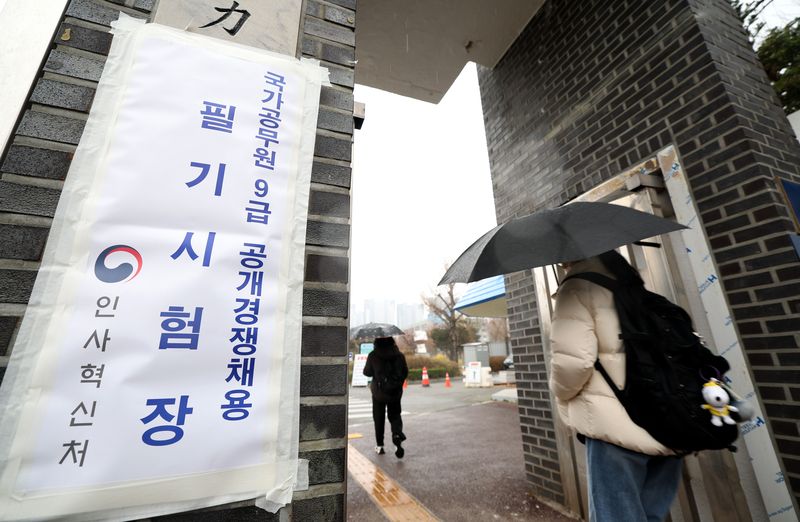
[Financial News] The government is pushing to increase the number of national civil servants by 3,851 next year, including 1,139 teaching staff, 700 labor inspectors, 354 Korea Coast Guard (KCG) officers, and 215 police officers. The expansion will focus on frontline personnel in areas closely tied to daily life, such as special education, industrial safety, and investigations into drugs and cybercrime. It will also add 105 patent examiners in advanced industries.
The Ministry of the Interior and Safety (MOIS) said on the 1st that it finalized the scale of the 2027 regular staffing increase for national civil servants and reflected it in the government budget proposal. The final figure will be confirmed in December after deliberation by the National Assembly.
Among the major expansions, the largest is in teaching staff. The government will add 1,139 positions, including special education teachers to respond to the growing number of students with special needs, non-subject teachers such as health and counseling staff who handle student health and counseling, and professors at national universities who support essential regional medical services and the training of talent in advanced fields.
In industrial settings, the government will add 700 labor inspectors. Of these, 540 will be assigned to industrial safety and 160 to labor inspection. The government is also pursuing a plan to gradually increase the number of labor inspectors by 3,050 from 2025 to 2028. After adding 1,000 each in 2025 and 2026, it plans to add 700 next year and 350 in 2028.
Public safety personnel will also be expanded. The National Police Agency will add 215 officers, focusing on investigations into drug and cybercrime cases as well as complaints and criminal accusations. Two provincial and metropolitan police agencies will establish investigation review officers, while five police stations will create investigation divisions to strengthen internal oversight and investigative capabilities.
The Korea Coast Guard (KCG) will add 354 personnel. This includes 222 crew members for 35 new vessels, 12 personnel for the newly established Central Maritime Special Rescue Unit, and 23 investigators for maritime drug crimes.
In the areas of drug and crime response, the government will add 72 probation and electronic monitoring personnel for high-risk offenders, as well as 64 probation and rehabilitation staff for drug offenders at correctional institutions. It will also increase caregiving staff by 17 to support vulnerable groups, including people with disabilities.
To respond to disasters, the government will establish a Central Forest Disaster Situation Room and assign three personnel to manage wildfire and landslide situations. It will also reinforce response capacity with three personnel for chemical accidents in industrial complexes and one dedicated staff member for zoonotic disease prevention measures.
Support personnel for advanced industries will also be expanded. The government will reinforce dedicated AI units and staff in the defense industry and the Ministry of Land, Infrastructure and Transport, while adding 105 patent examiners in advanced fields. The goal is to shorten patent review times and help companies secure rights to core technologies.
It will also add 26 personnel for trade and foreign exchange transaction inspections and investigations, along with nine staff members to track down and recover overseas hidden assets of high-value tax delinquents. A new official responsible for managing national projects will be created to oversee projects involving large budgets or closely linked to public livelihoods. The Labor Relations Commission will also add 47 investigators in response to revisions to the Trade Union and Labor Relations Adjustment Act.
However, the government explained that it is not simply increasing the staffing levels of all organizations across the board. It will offset and reassign organizations and personnel in areas where workloads have declined or functions have been reduced to areas with new staffing needs, and it will allocate temporary staffing for work that requires personnel only for a limited period.
Minister of the Interior and Safety Yun Ho-jung said, "We have prioritized reinforcing personnel in frontline areas that protect people's lives and safety, including labor and public safety." He added, "We will secure momentum for state affairs in AI and advanced technology fields, while continuing to improve government efficiency through regular organizational reviews and personnel reallocation."
[email protected] Lee Bo-mi Reporter