National Museum of Korea to Charge Admission Starting Next Year..Departure Tax Also Likely to Rise to the 20,000 Won Range [2027 Budget Plan]
- Input
- 2026-09-01 11:43:21
- Updated
- 2026-09-01 11:43:21
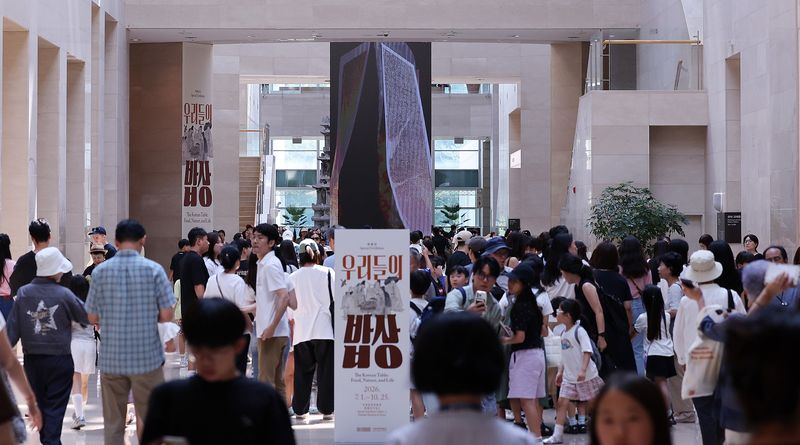
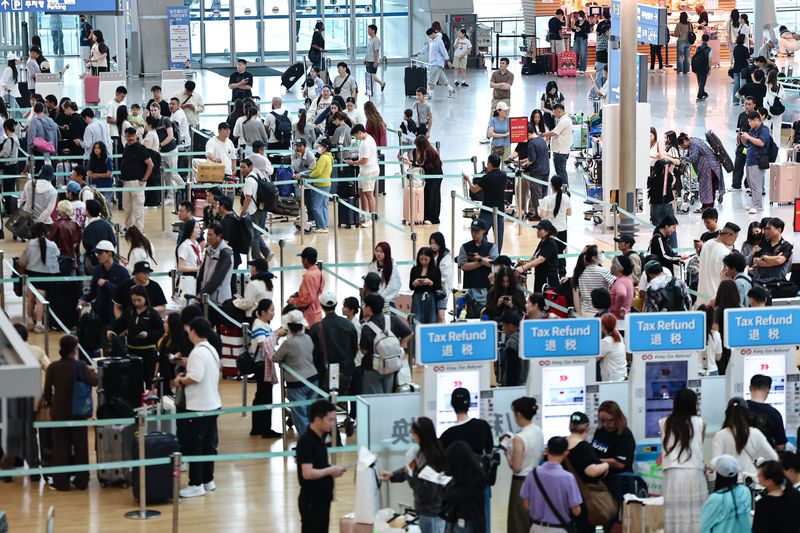
[Financial News] Admission to the National Museum of Korea will become paid starting next year, 19 years after it was made free in 2008. The fee is expected to be set at less than 10,000 won for adults. In addition, the departure tax charged when leaving the country by air is being pushed to rise more than twofold, from the current 7,000 won per person to around 20,000 won.
On the 1st, the Ministry of Planning and Budget said that as it prepares the 2027 budget, it will normalize user fees and charges that have been frozen for a long time, including admission fees for the National Museum of Korea, royal palaces and tombs, and the departure tax, in line with the fiscal principles of beneficiary pays and benefit sharing.
The ministry said it plans to bring fees that are far lower than private-sector rates or have remained low for years despite changing conditions up to an appropriate level.
As a result, admission to the National Museum of Korea is expected to become paid next year. The fee is likely to be set between 5,000 won and 10,000 won for adults. Discounts or free admission are expected to apply to infants, teenagers, and seniors. Tokyo National Museum in Japan charges about 1,000 yen, or roughly 9,500 won, for adults.
A ministry official said, "The plan to make admission to the National Museum of Korea paid next year has been decided in line with the beneficiary-pays principle," adding, "We are discussing the timing of implementation with relevant agencies."
President Lee Jae-myung also raised the need to charge admission for the National Museum of Korea during a briefing by the Ministry of Culture, Sports and Tourism in December last year, saying, "If it is free, it may lose its stature and feel cheap."
The National Museum of Korea switched from a 2,000 won admission fee for adults to completely free admission in May 2008, and that policy has remained in place ever since. At the time, the goal was to lower the barrier to museums and promote a culture of viewing exhibitions. Since then, conditions have changed dramatically. With the K-pop boom and growing interest in Korean culture, the museum has become a must-visit destination for foreign tourists. Last year, visitor numbers exceeded 6 million, a record high, ranking third in the world. From January to June this year, attendance rose by nearly 40% from a year earlier to 3.8 million, setting another all-time high.
In addition, admission fees and usage charges for the four major royal palaces, including Gyeongbokgung Palace and Deoksugung Palace, as well as the Royal Tombs of the Joseon Dynasty and national facilities, which are currently free or very inexpensive, will also be raised significantly.
Admission fees for the royal palaces and tombs are expected to nearly double from the current 1,000 won to 3,000 won for adults.
The departure tax charged when leaving the country from an airport will also be increased.
The increase is expected to more than double the current 7,000 won per person to 20,000 won, taking into account economic growth and levels in major countries. If the departure tax is raised, it will be the first increase since the system was introduced in 1997, and it will come about two and a half years after the 2024 cut from 10,000 won to 7,000 won.
At present, all domestic and foreign travelers departing through airports pay a departure tax of 7,000 won per person, which is included in the price of their airline tickets. This followed the July 2024 decision to lower the departure tax from 10,000 won to 7,000 won in an effort to ease the burden on households.
The government believes the current 7,000 won departure tax is too low in terms of fairness with other countries. Japan sharply raised its international tourism tax, or departure tax, from 1,000 yen to 3,000 yen, or about 28,000 won, starting in July. Hong Kong raised its departure tax by 67% to 200 Hong Kong dollars, or about 37,000 won, in October last year.
Park Chang-hwan, director-general for budget coordination and review at the Ministry of Planning and Budget, said, "Koreans also pay departure taxes when they leave the country overseas, and those countries generate substantial revenue and reinvest it in their own citizens," adding, "We are normalizing the charge to strengthen the beneficiary-pays principle and fairness."
A revision to the Tourism Promotion Act has already been proposed that would raise the departure tax, or airport usage fee, to between 20,000 won and 30,000 won.
[email protected] Reporter Jeong Sang-gyun Reporter