Institute for International Maritime Affairs' research volume on "Italy’s Regional Theory" draws attention
- Input
- 2026-09-01 09:57:12
- Updated
- 2026-09-01 09:57:12
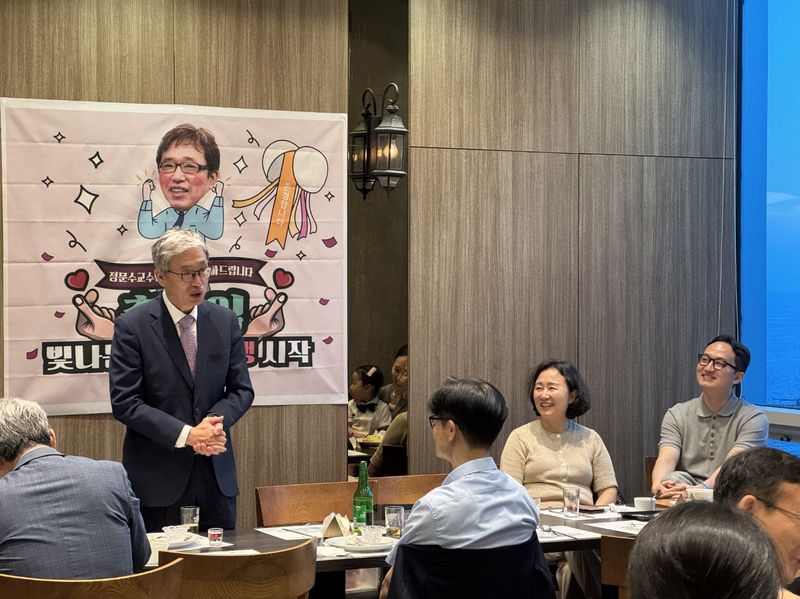
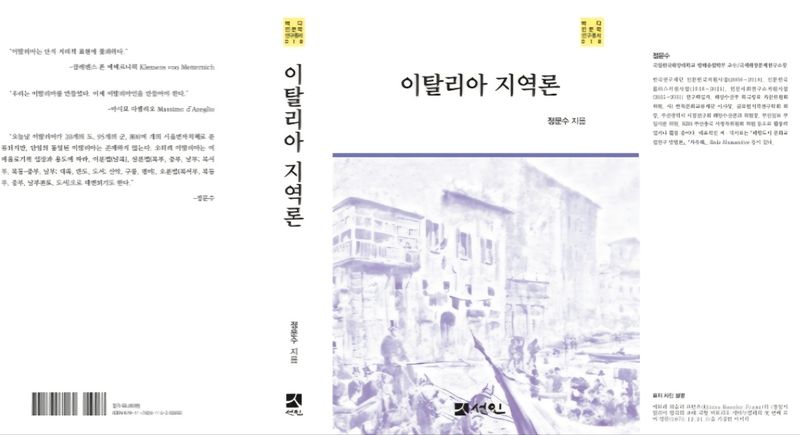
[Financial News] The 18th volume of the Sea Humanities Research Series, "Italy’s Regional Theory," published last month by the Institute for International Maritime Affairs at KMOU, is drawing attention.
According to the institute on the 1st, Jeong Moon-su, who led Humanities Korea and Humanities Korea Plus projects with support from the National Research Foundation of Korea (NRF) from 2008 through last year, wrote the book by bringing together the results of his work over the years. (Book Publishing Seon-in, 581 pages).
The book is divided into four parts: "The Achievements and Limits of Semi-feudal Reform in Southern Italy," "Risorgimento: The Italian Unification Movement," "Italies," and "Sea Port Cities - Rome, Livorno, Venice."
Parts 1 and 2 empirically demonstrate through case studies how the land bourgeoisie, or galantuomini, emerged as economic, social, and political power holders through anti-feudal reforms such as the confiscation and sale of church land.
The process of establishing private ownership of land shows that gentrification in today’s urban redevelopment is either the same phenomenon or its prototype.
Part 3 covers "Italian Regionalism," "Relations Between Local and Central Government: Local Autonomy and Decentralization," "The Southern Question," and "Third Italy and Linguistic Diversity."
Director Jeong said, "Although Italy today is divided into 20 provinces, 95 counties, and more than 800 municipalities, there is no single unified Italy," adding, "Rather, Italy is often described according to ideological positions and purpose in binary terms (north and south), ternary terms (north, center, and south; northwest, northeast-center, and south; mainland, peninsula, and islands; mountains, hills, and plains), or five-part terms (northwest, northeast, center, southern mainland, and islands)."
Part 4 argues that the vast Roman Empire was sustained as a sea port civilization through maritime routes and nine artificial harbors built over time.
At Venice’s maritime festivals, including Carnival of Venice, the Feast of Saint Mark, the Ascension Festival, the Wedding of the Sea, the Jesus Festival, historical regattas, and the Festival of the Virgin Mary, he captures the cultural hybridity and historical, or temporal, hybridity that characterize open spaces and sea port cities.
He also calls for modern reenactments of maritime festivals to reflect distinctive programming, a higher level of sophistication, and active participation by residents.
"Italy’s Regional Theory" traces Jeong Moon-su’s academic path from his appointment as a professor at KMOU in 1991 to his retirement last month. It shows a shift in research from the formation of the nation-state to the disintegration of the nation-state, the so-called nation-state theory. In other words, it reflects a paradigm shift in which sea port cities and maritime regions, rather than the nation-state, are treated as the basic units of analysis.
Jeong said, "This book is the product of my doctoral dissertation, the Humanities Korea-supported agenda 'Cultural Interaction Studies of Sea Port Cities,' the Humanities Korea Plus-supported agenda 'Sea Humanities' group research, and international collaborative research with the Council of World Maritime Culture Research Institutes (WCMCI). It is also the result of lectures on 'Italy’s Regional Theory' and the students’ presentations, questions, and answers."
[email protected] Byun Ok-hwan Reporter