Sazze Partners Invests in Airbility to Advance Anti-Drone Kill Chain [fn Market Watch]
- Input
- 2026-09-01 09:36:16
- Updated
- 2026-09-01 09:36:16
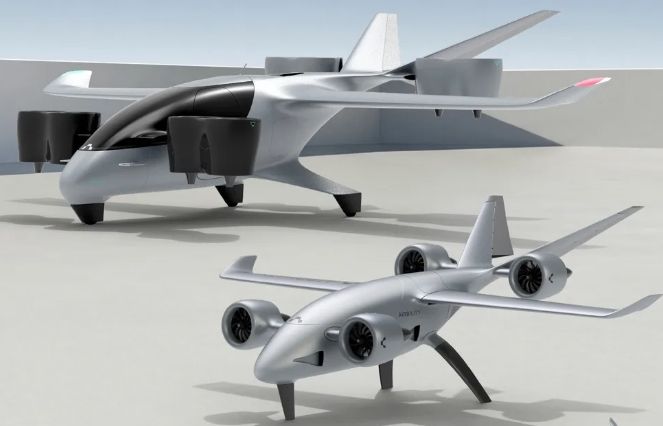
[Financial News] Sazze Partners, a Silicon Valley venture capital firm, has backed Airbility, a South Korean deep-tech aerospace and defense company, in its efforts to advance its counter-drone (C-UAS) kill chain. The firm is betting on Airbility's strategy to solve the 'cost asymmetry' problem, where hundreds of times more money is spent to take down a single drone, by using an air-to-air hard-kill approach.
According to the investment banking industry on the 1st, Airbility secured 6.5 billion won in Series A funding led by Sazze Partners. Existing shareholder StoneBridge Ventures joined the round again as a follow-on investor, while Industrial Bank of Korea (IBK) came in as a new shareholder. Existing investors including Samho Green Investment, Mashup Ventures, Base Ventures, and 500 Global also took part. The company has now raised a cumulative 10.5 billion won.
This is Sazze Partners' first defense investment. Since its founding in 2018, the firm has invested in more than 100 companies across AI, software, and consumer sectors. It is also known as an early investor in Upstage Co., Ltd. and the lead investor in its Series C round. The market is paying close attention to the fact that a Silicon Valley VC focused on consumer and AI businesses is making its first move into defense.
Airbility will use the funds to advance its C-UAS kill chain and build mass-production capabilities based on an air-to-air hard-kill system that directly intercepts hostile drones in the air. The company plans to center its lineup on the net-gun-style AB-U10, which is based on its existing high-speed electric vertical takeoff and landing (eVTOL) platform and can fly at up to 180 km/h, and the mothership AB-U60. It will also introduce two new systems: the AB-U2, a payload-type direct-hit drone deployed from the mothership, and the AB-U4L, a fixed-wing launcher-type model capable of speeds up to 300 km/h. The goal is to commercialize the AB-U10 this year and the two new models in the first half of next year, completing a three-model interception system.
The onboard AI installed in the interceptor aircraft will also be upgraded. Airbility aims to improve autonomous performance so the systems can carry out missions independently even in communications-restricted environments. It will also link the aircraft with external detection assets such as radar, electro-optical (EO), and infrared (IR) systems, creating a single framework that covers the entire process from detection to effect assessment. The company will also refine its production line based on its 3D printing and composite-airframe manufacturing capabilities.
The investment decision was driven by the company's talent and track record of demonstrations. Airbility was co-founded in November 2023 by researchers who led the development of Korean aircraft such as the KT-1, KAI T-50 Golden Eagle, and KAI KF-21 Boramae at the Agency for Defense Development (ADD), along with personnel from Hyundai Motor Company and LG Electronics. CEO Ryu Tae-gyu, Chief Technology Officer Kim Hyeon-sun, and Vice President Kim Geon-woo each worked at ADD for 25 to 31 years. CEO Lee Jin-mo previously worked at Hyundai Motor Company and the MIT Media Lab, Chief Operating Officer Ahn Min-young came from LG Electronics, and Chief Product Officer Lee Jae-hyeon worked on Genesis design. Of the company's 26 employees, 80% are research and development staff.
In December 2025, just two years after its founding, the company successfully completed transition flight tests for three prototype aircraft. The achievement demonstrated operational-level technology that only a handful of companies, such as Joby Aviation in the United States, possess. The 4 kg-class AB-U4 was commercialized in 2025, and the AB-U60 mothership for carrying small interceptors is targeted for release in 2027. By designing its own battery packs and flight control software, the company has differentiated itself from South Korea's drone industry, which relies heavily on Chinese components.
This structure is expected to translate into stronger cost competitiveness and export potential. In real combat, Patriot missiles costing around $4 million each are often used to intercept Shahed drones worth about $35,000 apiece. By contrast, a single engagement using an air-to-air hard-kill system costs only about $50 to $3,000. The gap is also significant compared with Roadrunner, the interceptor drone developed by Anduril Industries, which leads the global C-UAS market and is valued at several hundred million won per unit.
The barrier to exports is also relatively low. Overseas leading systems such as those from Anduril Industries take time to adopt because of country-of-origin regulations and procurement procedures, but the AB series, developed with domestic technology, can be exported more flexibly to a wider range of countries and at roughly one-tenth the price. The company is currently discussing deals with more than nine countries in the Middle East, Southeast Asia, and Latin America, and four memorandums of understanding and two joint ventures are underway.
The company is also building domestic references. In August, it was selected for the aerospace category under KASA's policy-designated '2026 investment and financing-linked technology development project (TIPS for Scale-up),' securing 3 billion won in R&D funding over three years. It is working on a flying interceptor system to counter swarm drones. In the same month, it signed an agreement with the Republic of Korea Marine Corps to develop anti-drone weapon systems, creating a channel that connects military demand with private-sector technology. It is also carrying out projects with the Marine Corps and DAPA.
The market environment is favorable. DAPA has begun building an 'integrated procurement' system that combines drone and anti-drone public demand, which had previously been scattered across ministries, and has identified the acquisition of unmanned systems and counter-drone systems as key tasks. The government's proposed defense budget for 2026 stands at 66.2947 trillion won, up 8.2% from the previous year's original budget. As the Ministry of Oceans and Fisheries has already launched an anti-drone system at trade ports, demand is expanding into civilian national critical facilities as well. Fortune Business Insights expects the global C-UAS market to grow at a compound annual rate of 22.4%, from $14.41 billion in 2026 to $55.25 billion in 2034.
Capital markets are also pouring into defense startups. According to BDO Sunghyun LLC, global VC investment in the second quarter of this year reached $227.4 billion, the second-highest quarterly total on record after the first quarter's all-time high of $332.9 billion. Along with AI applications, defense tech was identified as a key next investment area. Global defense tech startups raised $12.3 billion in venture funding through June this year, double the amount from a year earlier. Anduril Industries is valued at $60 billion, while Shield AI has reached $12.7 billion. In South Korea, Nearthlab and PABLO AIR are preparing for IPOs, raising expectations of a broader sector revaluation.
Kiha Lee, managing partner at Sazze Partners, said, "We focused on the fact that this is a company addressing the cost asymmetry problem in the counter-drone market, where it takes hundreds of times more money to stop a single drone, through a system that combines a high-speed eVTOL mothership with small interceptors. We also took note of the expertise of the researchers who led the development of Korean aircraft and the company's ability to move quickly on product development." He added, "If the company can turn rapidly growing global counter-drone demand into contracts, it has the potential to grow into a leading defense company in South Korea."
Airbility CEO Lee Jin-mo said, "We will use this investment to accelerate execution." He added, "Starting with our first model this year, we will expand our business model from selling aircraft to selling integrated systems by adding new products on top of our high-speed eVTOL platform and building a three-model lineup in the first half of next year." He also emphasized, "Our goal is to convert overseas pipelines into contracts and achieve cumulative sales of 50 billion won by 2028."
South Korea has entered an era of more than $10 billion in annual defense orders, and the government has made its rise to one of the world's four major defense powers a national policy priority. Among defense sectors, demand for drone interception is growing the fastest. Russia launched 15,800 drones at Ukraine in the first quarter alone this year. Technologies that lower interception costs are now directly tied to sustainable defense capabilities.
[email protected] Kang Gu-gui Reporter