What Matters More Than Age for Dental Implants [Health Talk]
- Input
- 2026-09-01 09:13:41
- Updated
- 2026-09-01 09:13:41
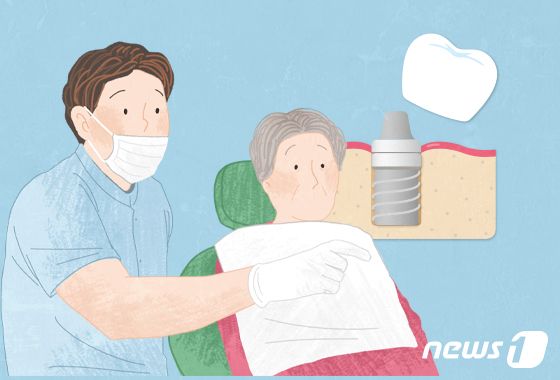
[Financial News] Whether to proceed with dental implant treatment should be decided by considering the patient's overall health, oral condition, and medications, rather than age alone.
Among older adults, some hesitate to undergo treatment because they worry, "Am I too old to get dental implants?" In particular, people with chronic conditions such as diabetes or osteoporosis, or those taking multiple medications, may feel burdened by surgery. However, being elderly does not by itself make implant treatment impossible.
Oh Min-seok, head of dentistry at Seran General Hospital, explained, "Some older patients feel that implant treatment itself is too burdensome because of their age, but implants should not be decided based on age alone. We need to judge whether treatment is possible and how far it should go based on the patient's overall health and oral condition."
If you are considering implants, the first step is to check any systemic diseases and medications. If you have a chronic condition such as diabetes, it is important to see whether it is being properly controlled. If you are taking osteoporosis medications or anticoagulants or antiplatelet drugs, you should give the medical staff accurate information about them. Even if you are on medication, the treatment plan can be adjusted by taking the type of drug, the purpose of treatment, and the patient's overall health into account.
The amount and condition of the jawbone that supports the implant, known as the alveolar bone, is also an important factor. If a tooth has been missing for a long time, or if periodontal disease has reduced the jawbone, there may not be enough bone to place an implant. But insufficient bone does not automatically mean implants are impossible. After evaluating the amount and shape of the jawbone and the condition of the gums, doctors can perform preliminary procedures such as bone grafting if needed and then plan implant placement.
It is also important not to leave a missing tooth untreated for a long time. If the gap remains for an extended period, the jawbone in that area may be resorbed, or nearby teeth may shift or tilt into the empty space, changing the oral environment. As a result, additional treatment may be needed before implant placement, or the scope of treatment may become larger.
Oh stressed, "If tooth loss is left untreated for a long time, it can affect later treatment by reducing the jawbone or changing the position of nearby teeth." He added, "If you have lost a tooth, do not leave it for too long. Visit a dentist as soon as possible to check your current oral condition and consult on whether implants are appropriate or whether another treatment is needed."
[email protected] Jeong Myeong-jin, medical specialist Reporter