"Bought for 600 million won, but the contribution fee is also 600 million?"... The 'redevelopment never fails' myth is being shaken by construction cost shocks
- Input
- 2026-09-01 10:46:30
- Updated
- 2026-09-01 10:46:30
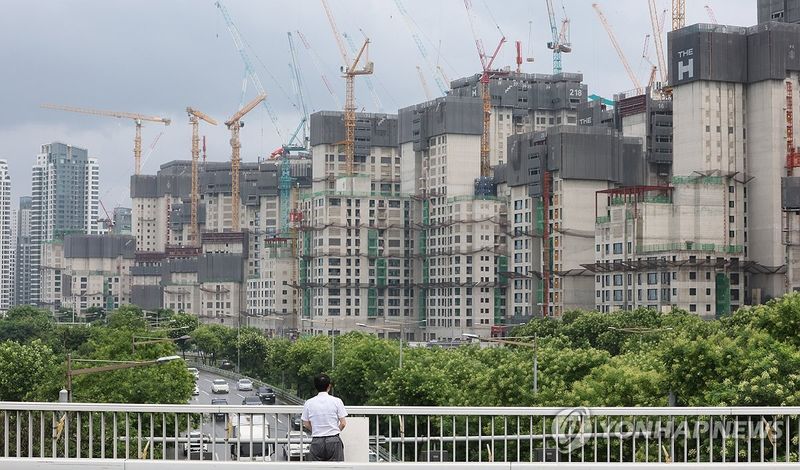
[Financial News] As construction and financing costs surge, the profitability formula for redevelopment projects in Seoul and the Capital Region is starting to crack. When the purchase price of an aging apartment is added to a soaring contribution fee, many projects now end up matching or even exceeding the market price of nearby new apartments, sharply reducing the price advantage of redevelopment investments.
A new apartment in Nowon costs 1.2 billion won, and the total redevelopment cost is also 1.2 billion won.
According to the redevelopment industry and the Housing Environment Research Institute on the 1st, the average construction cost for redevelopment sites in Seoul rose from 5.78 million won per 3.3 square meters in 2021 to 7.5 million won in 2023 and 8.9 million won last year, jumping 54% in four years.
This year, construction costs at major redevelopment sites in Seoul, including the Mokdong redevelopment complexes, have climbed to nearly 10 million won per 3.3 square meters. At ultra-high-rise and luxury projects such as Zone 38-1 of Gwangjang Apartment in Yeouido, they have even exceeded 15 million won.
Rising raw material prices and labor costs have driven up the burden. The construction cost index rose 5.5% from a year earlier, while key material prices surged sharply, including rebar by 11.8%, domestic electrolytic copper by 35.1%, and bare copper wire by 45%. Added financing costs from project delays are further increasing the contribution burden on union members.
The cost surge is already translating into a real contribution shock. In the case of Sanggye Jugong 5 Complex in Nowon District, Seoul, the estimated contribution fee for an owner of a 31-square-meter unit who wants to receive a 84-square-meter unit is about 600 million won. Adding that to the recent sale price of around 680 million won brings the total investment to about 1.285 billion won, which is not far from the actual transaction price of a nearby semi-new 84-square-meter unit at Forena Nowon.
For the 59-square-meter unit at e-Pyeonhansesang Siheung Double Square in Siheung, Gyeonggi Province, which had once pursued a one-to-one redevelopment plan, the gap between the union member's total investment of 565 million won and the current asking price of around 600 million won is only 35 million won, effectively eliminating the safety margin.
Construction costs are soaring, and interest expenses are rising too... Investors in redevelopment projects must separate the winners from the losers.
The Seoul Metropolitan Government has introduced measures such as a 'project feasibility adjustment coefficient' to provide floor-area ratio incentives, but critics say the hundreds of thousands of won in additional construction costs per 3.3 square meters are offsetting the increased sales revenue. As a result, only 32 of the 336 redevelopment sites in Seoul with more than 300 households are actually under construction. Housing permit volumes in Seoul from 2023 to 2025 have also fallen 27.8% from the previous three-year period, showing a clear deterioration in supply indicators.
As financial pressure grows, builders are competing for orders by offering 'payment deferrals' that postpone union members' contribution payments for up to four years after move-in, or 'no down payment, no interim payment' terms that require payment only as a final balance upon move-in. Representative cases include Apgujeong Zones 3, 4 and 5, Seongsu District 1, and Mok-dong Apartment Complex 6.
Experts say it is essential to distinguish the good projects from the bad ones when investing in redevelopment. An industry official explained, "If construction and financing costs keep rising, projects in the early stages may face even larger contribution fees." He added, "Investors should carefully analyze the project structure, including land share and general sale units, and closely examine the financing terms to see whether the payment deferral offered by the builder is an interest-free type or an interest-postponement type."
[email protected] Moon Young-jin Reporter