Urban Air Mobility Safety Operation Technology Passes Final Preliminary Feasibility Study... Moves to Demonstration in Real Operating Environments
- Input
- 2026-09-01 11:00:00
- Updated
- 2026-09-01 11:00:00
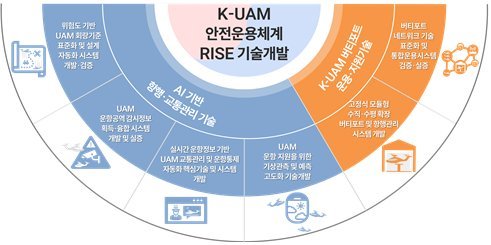
[Financial News] The Urban Air Mobility (UAM) safety operation technology project promoted by the Ministry of Land, Infrastructure and Transport has passed the final preliminary feasibility study and will move ahead with demonstrations in real operating environments.
The Ministry of Land, Infrastructure and Transport said on the 1st that this was the case.
The project is a follow-up to the K-UAM core technology development for a safety operation system. While the existing project focused on developing core technologies and building prototypes, this new initiative aims to advance demonstration work that links and verifies the developed technologies in real operating environments.
It will also verify, in real operating environments, the technologies needed for safe operations, including traffic management, flight information, weather, and vertiports, as well as individual technologies. The goal is to build a safety operation system that can be used for future commercial services and contribute to further advancement.
Specifically, the project consists of six research tasks under two strategic areas. The AI-based navigation and traffic management technology segment will focus on an automated design system for UAM and advanced technology development. In the case of vertiport operation and support technologies, the plan is to verify and demonstrate network technology standardization and an integrated operation system.
Collaboration with other agencies is also expected to be a key part of the project. The Ministry of Land, Infrastructure and Transport will oversee the development of safety operation technologies, while the Korean Meteorological Administration will handle weather observation and forecasting technology development, and Ulsan Metropolitan City will be responsible for building demonstration environments. The government aims to speed up technology advancement through cooperation not only among ministries but also with local governments.
The ministry plans to push ahead with the commercialization of initial UAM services by 2028. In the process, it will also prepare related systems, infrastructure, and specialized personnel, while using research and development (R&D) to bring UAM into urban areas by 2032.
The project will be carried out from 2027 to 2029 with a total budget of KRW 84.8 billion over three years. Specifically, KRW 57.8 billion from the national budget, KRW 17.6 billion from the private sector, and KRW 9.4 billion from local government funds will be invested.
A ministry official said, "This project is an important turning point that connects UAM technology development with actual operations and services." The official added, "We will work closely with relevant agencies to prepare for the initial commercialization planned for 2028 without setbacks, and we will continue to advance the project step by step toward future entry into urban areas."
[email protected] Jung Kyung-soo Reporter