Iran War Shock Reaches U.S. Home Market... Mortgage Rates Hit 6.87%
- Input
- 2026-09-01 04:47:35
- Updated
- 2026-09-01 04:47:35
On the 31st local time, Mortgage News Daily said the average rate on a 30-year fixed mortgage in The United States rose 6 basis points from the previous trading day to 6.87%. That is the highest level since June 2025. The rate jumped from 6.81% on the 28th to 6.87% in just one day.
Since the 28th, mortgage rates have risen 6 basis points. Over the past two months, the increase has exceeded 30 basis points.
The immediate trigger for the rise was the renewed escalation of the Iran War. As The United States and Iran exchanged attacks again after about a month, international oil prices surged. That, in turn, stoked inflation concerns and pushed bond yields higher. Mortgage rates tend to react more strongly to movements in 10-year U.S. Treasury bonds than to the Fed's policy rate. Analysts say recent bond selling, driven by the Iran War and inflation worries, has lifted mortgage rates.
At first, markets had expected mortgage rates to fall this year and ease pressure on the frozen U.S. housing market. But the Iran War has reversed that outlook.
Just before the war began, at the end of February, the 30-year fixed mortgage rate stood at 5.99%. Compared with the current 6.87%, that is an increase of 88 basis points in about six months.
The burden felt by homebuyers is even greater in practice. If a buyer purchases a $450,000 home, roughly equal to the U.S. median home price, makes a 20% down payment, and finances the rest with a 30-year fixed mortgage, the monthly principal and interest payment would now be $2,363. That is $207 more per month, or $2,484 more per year, than at the end of February.
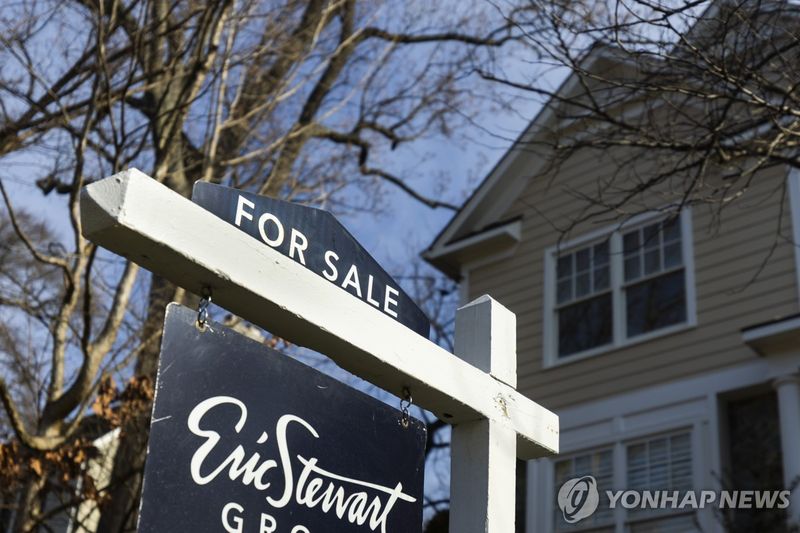
The problem is that high mortgage rates are also suppressing housing supply, creating a vicious cycle in the U.S. housing market.
Many existing homeowners locked in long-term mortgages at much lower rates around the time of the COVID-19 pandemic. If they sell their homes and buy new ones, they would have to give up those low-rate loans and borrow again at today's upper 6% range. That is why the so-called lock-in effect is keeping many owners from selling.
The shortage of homes is also supporting prices. According to the S&P CoreLogic Case-Shiller Home Price Index, national home prices in The United States rose 1.5% in June from a year earlier. That was faster than the 1.2% increase in May.
[email protected] Lee Byung-chul Reporter