Udo and Chujado, which have no animal hospitals, have been visited for 35 years... Jeju National University’s veterinary school provides free treatment to 114 animals
- Input
- 2026-08-31 19:40:23
- Updated
- 2026-08-31 19:40:23
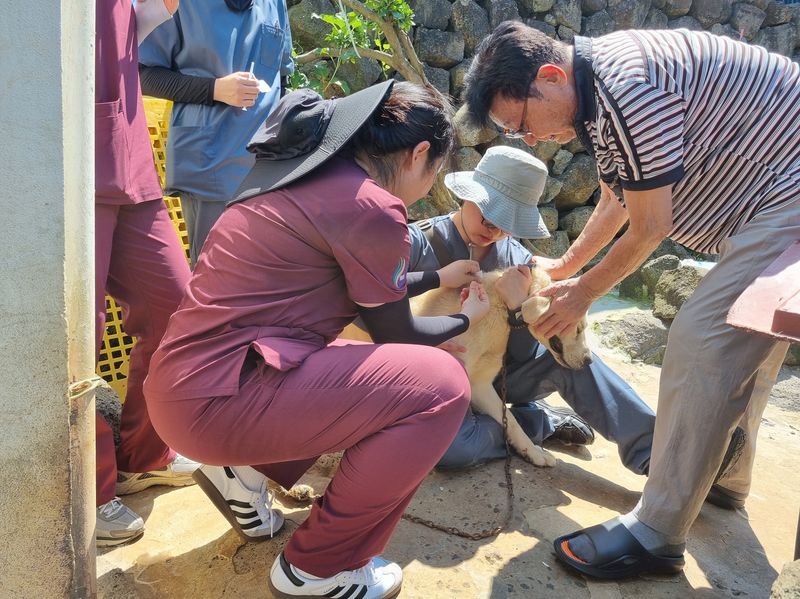
[Financial News, Jeju Province = Jeong Yong-bok] Veterinarians and veterinary students have been visiting Udo and Chujado Islands in Jeju Province, which have no animal hospitals, for 35 years. This year as well, about 30 people, including professors, students, and veterinarians from Jeju National University’s veterinary school, visited island residents’ homes directly and treated 114 dogs and cats free of charge.
According to JNU on the 31st, the College of Veterinary Medicine, Jeju National University, carried out a free animal clinic volunteer program on Udo and Chujado Islands on the 25th and 26th.
The veterinary school’s free clinic program for remote islands began in 1992. For about 35 years through this year, it has continued to provide care by visiting island areas where animal medical services are limited.
This year’s volunteer work involved about 30 participants, including clinical faculty members, undergraduate and graduate students, and veterinarians from the university-affiliated animal hospital. The program was supported by the national university development project.
The volunteer team set up medical teams based at the township office and then visited each household by vehicle and on foot. Rather than asking residents to bring their animals to a clinic site, the medical staff went directly to where they live.
Over the two days, the team treated and examined a total of 114 dogs and cats. Support included comprehensive vaccinations, rabies shots, heartworm and babesiosis tests, treatment for internal and external parasites, and pet registration.
In areas such as Udo and Chujado Islands, where it is difficult to use a permanent animal hospital, pet owners must travel to Jeju Island with their animals to receive vaccinations or regular checkups. JNU’s veterinary school has continued on-site treatment for years because of this gap in animal medical care on remote islands.
The free clinic also serves as a hands-on training site for students. Future veterinarians experience treating animals and consulting with owners in real-life settings, outside university classrooms and the affiliated animal hospital. It also functions as field training that helps them learn the public role veterinarians play in areas with limited access to medical care.
Seo Kyung-hoon, president of the student council at the College of Veterinary Medicine, Jeju National University, said, "The activities that have continued for 35 years are providing real help to residents of remote islands and their companion animals, while also giving students valuable field experience as they grow into veterinarians." He added, "I hope these efforts to reach medical blind spots will continue."
[email protected] Jeong Yong-bok Reporter