[Editorial] Consumers Have Closed Their Wallets, Except for Semiconductor Workers
- Input
- 2026-08-31 18:33:03
- Updated
- 2026-08-31 18:33:03
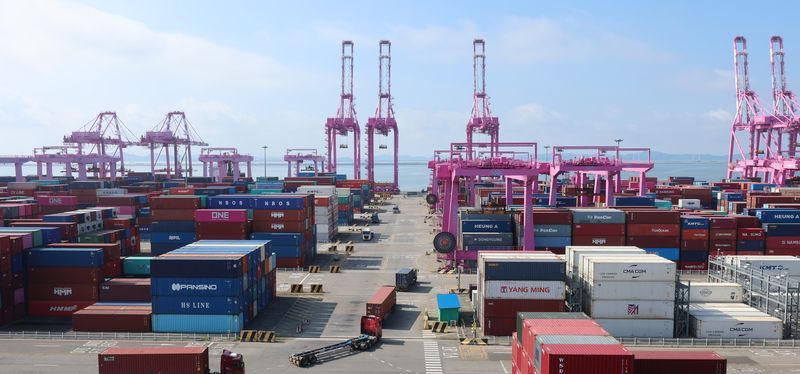
According to the 'Industrial Activity Trends for July' released on the 31st by the Ministry of Data and Statistics, the overall industrial production index in July remained unchanged from the previous month. Facility investment rose 7.5% from a month earlier, driven by a 15.4% increase in transportation equipment investment and a 4.2% rise in machinery, including semiconductor manufacturing equipment. That followed a 6.9% increase in June, marking two consecutive months of growth.
Indicators reflecting domestic demand, however, deteriorated. The retail sales index, which tracks goods consumption, fell 2.4%. The service industry production index, which measures activity in sectors such as food and lodging, transportation, finance and culture, also declined 1.3%. Consumption, which had risen, turned back to a decline after just one month as households' spending power weakened and retail sales of durable goods such as passenger cars and home appliances plunged. The service industry production index, closely tied to consumer sentiment, posted its steepest drop in four years and five months, showing that the slump in domestic demand is deepening.
The prolonged period of high prices, combined with seasonal factors such as the heat wave, led ordinary people to cut back on dining out and outings, while a correction in the stock market also dampened consumer sentiment. As consumers closed their wallets, the momentum behind private consumption weakened. Self-employed workers and small business owners are feeling the economic chill directly, making a recovery in domestic demand urgent. This stands in stark contrast to exports, which surged to $98.89 billion last month, the second-highest level on record. In other words, apart from workers at semiconductor companies, people are not spending.
Above all, the construction sector remained sluggish, with completed construction work, which reflects actual project execution, falling 1.1%. Construction orders, a leading indicator, dropped 34% from a year earlier, hit by weaker building orders. They had already fallen 28.1% in the previous month. Construction is a representative domestic-demand industry, directly linked to materials and equipment, on-site employment and neighborhood commercial districts. Its weakness, together with shrinking private consumption, is a major factor blocking a recovery in domestic demand.
The increase in facility investment also has limits as an indicator of a broader rebound in manufacturing or the economy, since it was driven largely by volatile transportation equipment such as aircraft and ships, as well as investment in semiconductor machinery. It remains unclear whether this rise in investment will lead to a virtuous cycle of production, employment and consumption in the months ahead.
The government should avoid being misled by the short-term illusion created by stronger exports and facility investment. Instead, it needs targeted support for vulnerable groups and the self-employed, along with concrete measures to boost consumption. Policies to strengthen the self-sustaining capacity of neighborhood businesses are also necessary. It must also address the structural problem in which export gains led by a few large companies in sectors such as semiconductors and shipbuilding do not spread across the broader economy. The warmth generated by export-driven conglomerates should flow through subcontractors and partner firms, as well as into employment and household income, by building a mutually beneficial ecosystem between large and small companies.