Police Reform Panel Issues First Recommendation: "Crime Victims Should Be Rights Holders, Not Just Protected Parties"
- Input
- 2026-08-31 17:59:46
- Updated
- 2026-08-31 17:59:46
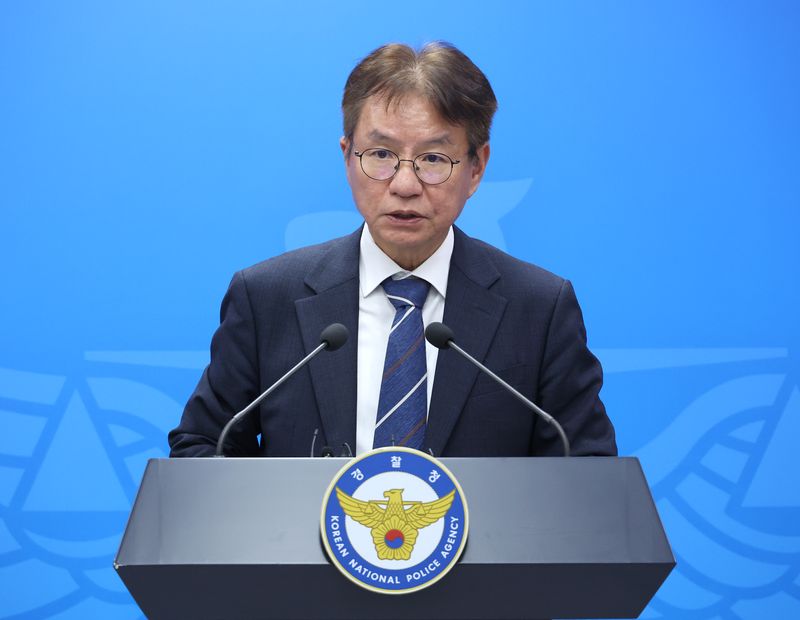
[Financial News] The Police Investigation Reform Committee has recommended that crime victims be treated not merely as objects of protection and support, but as parties who can exercise substantive rights in criminal justice procedures. To that end, it proposed building a dedicated victim-protection system from the National Police Agency down to local police stations, along with expanding the scope of assistance provided by state-appointed lawyers for victims.
At its sixth meeting on the 31st, the Police Investigation Reform Committee approved the proposal, titled "Reorganizing the police investigation system to strengthen the status, protection and support of crime victims," as its first recommendation.
Chair Kim Nam-joon said, "Even though the system exists, there are still limits to how victims can actually feel and exercise those rights in their own cases." He added, "Victims should be able to receive case information, submit opinions and evidence, obtain legal assistance, and challenge major decisions."
The committee made five recommendations: establishing victims' substantive participation rights in criminal justice procedures; strengthening police investigation and response capabilities; creating a dedicated victim protection and support organization that extends from the National Police Agency to police stations nationwide; building an integrated support linkage system centered on police stations; and reinforcing the state-appointed lawyer system for victims.
First, it called for the current Crime Victim Protection Act to be developed into a framework law that more clearly defines victims' status and rights, while the Criminal Procedure Act of the Republic of Korea and other related laws should establish specific procedures for exercising those rights and the obligations of state agencies to carry them out. Because legislation will take time, the committee also recommended that measures that can be implemented through the National Police Agency's own regulations, such as the victim protection and support rules and the Criminal Investigation Rules, be reflected first. The committee said the National Police Agency also agrees with this direction.
It also urged police to strengthen investigative capabilities for victim protection. That includes improving early evidence collection and risk assessment, and requiring that important investigative directives be documented with their basis to enhance accountability. The committee said the measures are intended to prevent responsibility from being concentrated on frontline officers and to reduce disputes over investigative command.
The committee also called for a dedicated victim-protection organization spanning the National Police Agency, provincial police agencies and local police stations. At present, there are 259 victim liaison officers at police stations nationwide, but 70 of the country's 262 police stations, classified as level-3 stations, have no such officers assigned. The committee did not specify a target increase in personnel, but said the appropriate staffing level should be determined through consultations with relevant ministries.
The dedicated organization would not directly handle legal, medical, psychological or welfare support for victims. Instead, police officers who first encounter victims after a crime would identify the support needed and connect them with the Ministry of Justice, local government and private support agencies. The committee said, "This does not mean the police will do everything or take the lead in victim protection and support." It explained that the organization is meant to ensure responsible initial response and interagency coordination.
The state-appointed lawyer system for victims should also be expanded by considering not only specific charges, but also the severity and repetition of the crime, as well as the risk of retaliation. Under the proposal, police would assess a victim's risk at the initial stage, coordinate with the Ministry of Justice, and ensure access to state-appointed legal assistance even before the first interview if necessary.
The committee also cited recent cases as background for the recommendation. It said the Jang Yoon-gi case, the Namyangju stalking murder case and the Jeju long-term missing person case showed that initial assessment, investigation, command, case management and victim protection cannot be separated from one another.
At the meeting, the committee also received a progress report on the Jeju long-term missing person case. However, it withheld details because the police were scheduled to announce their findings the following day. The committee said it plans to review the issues revealed in that case and reflect them in future recommendations.
The National Police Agency is expected to prepare a detailed implementation plan within three months and begin with measures it can carry out on its own. As an advisory body, the committee has no legal authority to compel compliance, but it plans to monitor whether the National Police Agency accepts and implements the recommendations. For measures requiring legislation, it set deadlines of the first half of next year or the end of next year, depending on the content.
[email protected] Kim Ye-ji Reporter