50 East and West Medical Scholars Seek Solutions for Integrated Musculoskeletal Treatment
- Input
- 2026-08-31 16:35:04
- Updated
- 2026-08-31 16:35:04
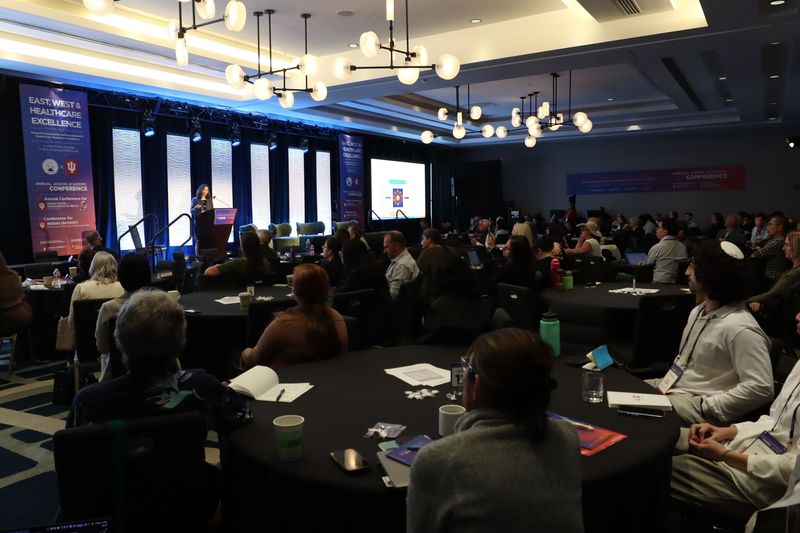
[Financial News] Experts in Eastern and Western medicine came together to discuss how musculoskeletal health can be managed in an integrated way from childhood to old age.
Jaseng Hospital of Korean Medicine said it successfully wrapped up the 2026 AJA (Annual Jaseng Academic) International Academic Conference, held over two days from the 28th to the 29th in Indianapolis, United States. Building on years of academic exchange with leading overseas universities, this year’s event was co-hosted in the U.S. with Indiana University School of Medicine, further elevating its status as an international conference. At the venue, leading scholars in the global medical field gathered to share the latest research findings and clinical experience in Eastern and Western medicine, while seeking ways to strengthen the scientific basis of integrative medicine and expand its international use.
Now in its sixth year, the conference carried added significance as it was held overseas for the first time. Indiana University School of Medicine, which co-hosted the event, is the largest medical school in the United States by the number of students enrolled in its MD program. It operates nine campuses across Indiana and more than 400 clinical training partner institutions.
Under the theme, "The Meeting of Eastern and Western Medicine: An Integrative Medical Approach to Musculoskeletal Health from Childhood to Old Age," the conference featured wide-ranging discussions on the latest insights in integrative medicine. A total of 50 top experts from Korea and abroad, including faculty from Indiana University School of Medicine, Harvard Medical School, and the University of California, Irvine School of Medicine, served as speakers, and more than 200 medical professionals from various countries attended.
The conference consisted of four keynote speeches and 11 sessions. On the first day, presentations and discussions covered pain management, cases of introducing acupuncture in U.S. hospitals, and topics that extended beyond musculoskeletal health to areas such as brain health. On the second day, the scope broadened to clinical treatment and mechanistic research, including musculoskeletal medicine and prosthetic treatment, studies on the mechanisms of myofascial therapy, and exercise therapy related to oncology and aging.
In particular, Lee Jin-ho, chief director of Jaseng Hospital of Korean Medicine; Richard Harris, Chaired Professor at the University of California, Irvine; and Melissa Kacena, Chaired Professor of Orthopedic Surgery at Indiana University School of Medicine, took part as keynote speakers and shared their insights.
Lee Jin-ho emphasized the importance of holistic treatment in pain care for musculoskeletal disorders, one that considers both physical recovery and improved quality of life. He noted that secondary pain trigger points caused by defensive compensatory actions, such as abnormal gait and fascial tension, can produce greater pain than the primary lesions seen on imaging tests. He then proposed a precision pharmacopuncture treatment method that accurately identifies the pain-generating tissue and precisely targets secondary pain trigger points, which are a major cause of chronic pain.
Lee said, "Ultrasound-guided pharmacopuncture has accumulated scientific evidence for its effectiveness and safety through continuous clinical use and research." He added, "The integration of imaging technology with Korean medicine treatment will improve treatment accuracy and objectivity, and serve as an opportunity to make integrative care more systematic."
Discussions also continued on ways to standardize acupoint research in order to strengthen the scientific basis for acupuncture. Richard Harris, a Chaired Professor at the University of California, Irvine School of Medicine, presented TARA, a research platform designed to systematically identify the biological basis of acupoints. TARA is a research platform that compiles physiological data related to acupoint stimulation on a three-dimensional human map that standardizes acupoint names and locations. He said it could help researchers analyze acupoint characteristics and bodily changes in response to stimulation using the same criteria, while improving the objectivity and reproducibility of acupuncture research.
Research methodology for systematizing the scientific basis of manual therapy was also a major topic. Terry Loghmani, a professor at Indiana University School of Health and Human Sciences, introduced the force-based manual therapy (FBM) model, which comprehensively analyzes the force applied during treatment, the surrounding environment, and the resulting biological responses. He also suggested that treatment procedures and evaluation methods should be standardized to objectively identify the mechanisms of manual therapy and improve research reproducibility.
Melissa Kacena, a Chaired Professor of Orthopedic Surgery at Indiana University School of Medicine, stressed that research in a variety of environments, including microgravity, is needed to broaden scientific discoveries and research possibilities in musculoskeletal medicine. As part of that effort, she introduced a study conducted on mice aboard the International Space Station (ISS) on bone formation and fracture healing.
There were also discussions on the integrated management of musculoskeletal health issues associated with aging. Lisa J. Taylor-Swanson, an associate professor at the University of Utah College of Nursing, introduced "menopausal musculoskeletal syndrome," which encompasses joint pain and sarcopenia that appear after menopause. Drawing on her research experience, including the MENOGAP personalized menopause management program, as well as previous studies on musculoskeletal pain, she explained the pain-relieving and physical-function-improving effects of acupuncture.
Peter Wayne, an assistant professor at Harvard Medical School, focused on the role of exercise and movement in recovery after cancer treatment and in the aging process. He argued that attention should be paid not only to outcomes after cancer treatment, but also to how well patients regain physical function and maintain daily life. In particular, he emphasized that because pain and reduced mobility often appear in combination with aging and chronic disease, physical function and movement should be managed over the long term using a range of treatments, including acupuncture.
To keep pace with the digital transformation era, proposals were also made to improve the efficiency and reliability of integrative medicine research using artificial intelligence (AI). Jeremy Y. Ng, an assistant professor at McMaster University in Canada, introduced ways to use generative AI in the evidence-synthesis process for traditional, complementary and integrative medicine (TCIM), including literature search, screening, and data extraction.
Chairman Park Byung-mo said, "This conference was a meaningful occasion to share a wide range of research achievements and clinical experience in Eastern and Western medicine, and to jointly explore the future direction of integrative medicine." He added, "We will continue academic exchange and research cooperation with scholars around the world, build the scientific basis for integrative medicine, and connect it to improved patient health and quality of life in real-world medical settings."
[email protected] Medical Reporter Jeong Myeong-jin Reporter