Tensions Over Re-Nomination of Supreme Court Justice Candidates Ease After Chief Justice Cho Hee-dae's Father's Death, but Friction Remains
- Input
- 2026-08-31 16:22:14
- Updated
- 2026-08-31 16:22:14
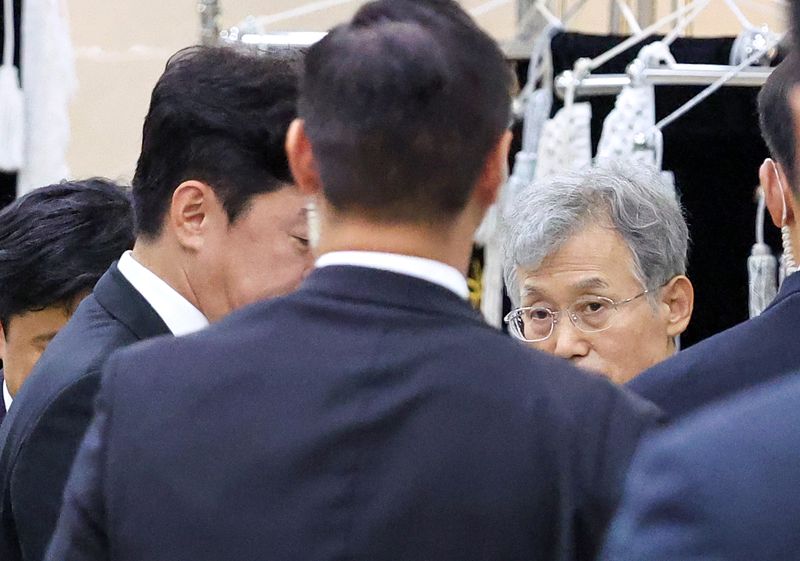
[Financial News] The unprecedented clash between Cheong Wa Dae and the Supreme Court of Korea over the nomination of a Supreme Court Justice candidate has temporarily eased following Chief Justice Cho Hee-dae's bereavement. However, tensions remain, as Cheong Wa Dae is demanding that one of the previously recommended candidates be renominated, while the Supreme Court may reconstitute the Committee of Recommendation of Supreme Court Justice Candidates and restart the selection process from scratch.
According to the legal community on the 31st, Chief Justice Cho did not go to work at the Supreme Court of Korea that day after his father, Jo Bu-hwan, died the previous day at the age of 93. Instead, he remained at the funeral hall set up in Pohang, North Gyeongsang Province. A Supreme Court official said, "We are declining outside condolences and will not accept flowers or condolence money." The Legislation and Judiciary Committee of the National Assembly had originally planned to summon Cho as a witness at 2 p.m. that day and question him on the background of the written nomination for candidate Son, but it decided not to hold the hearing in light of his father's death.
As a result, the conflict between Cheong Wa Dae and the Supreme Court, which had intensified after the rejection of the nomination for Supreme Court Justice candidate Son Bong-gi last week, appears to have temporarily receded. Earlier, in response to Cheong Wa Dae's request for a renewed nomination, Cho said, "I am sorry for causing concern to the public," and added that he would review specific response measures before announcing his position.
Still, once Cho completes the funeral, differences between the two sides could surface again over how a successor Supreme Court Justice will be renominated.
Earlier, President Lee Jae Myung rejected Cho's nomination of Son, citing insufficient prior consultation. Cheong Wa Dae conveyed to the Supreme Court that it wanted one of the originally recommended candidates — Kim Min-ki, Park Soon-young, or Judge Yoon Sung-sik — to be renominated, excluding Son. Among them, Seoul High Court Judge Kim Min-ki is being mentioned as Cheong Wa Dae's preferred candidate.
For the Supreme Court, two main options are being discussed. It could accept Cheong Wa Dae's request and renominate one of the three existing candidates, or it could restart the entire process, from recommending candidates to forming the committee.
A precedent for the latter is the 2012 resignation of Supreme Court Justice candidate Kim Byung-hwa. At the time, after Kim stepped down during the National Assembly confirmation process, the Supreme Court reconstituted the Committee of Recommendation of Supreme Court Justice Candidates about two weeks later and restarted the nomination process from the beginning.
Interpretation of the current Court Organization Act is also expected to become a variable. The law stipulates that the chief justice must form the Committee of Recommendation of Supreme Court Justice Candidates each time a Supreme Court Justice candidate is nominated. If interpreted strictly, one could argue that because the previous nomination process for Son has ended, a new committee must be formed before any fresh nomination can be made. On the other hand, another interpretation is that the chief justice may renominate from among the remaining candidates, since the existing committee has already selected qualified candidates.
Some in the legal community believe the chief justice is more likely to reconstitute the committee. Cha Jin-a, a professor at Korea University School of Law, said, "Under the current Court Organization Act, the Committee of Recommendation of Supreme Court Justice Candidates must be newly formed each time a recommendation is made," adding that "there are effectively no remaining candidates." She went on to say, "The president can refuse an appointment without limit, but if the chief justice's nomination authority is reduced to only the candidates already recommended, that would hollow out the chief justice's power of nomination."
[email protected] Choi Eun-sol Reporter