"Need to open the police commissioner post to outsiders and introduce a confirmation hearing for the National Office of Investigation chief" ... Ruling party-led police reform forum
- Input
- 2026-08-31 16:30:17
- Updated
- 2026-08-31 16:30:17
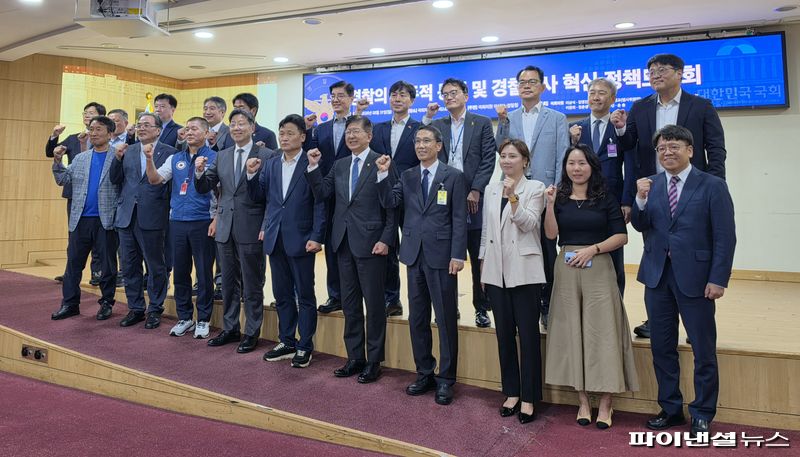
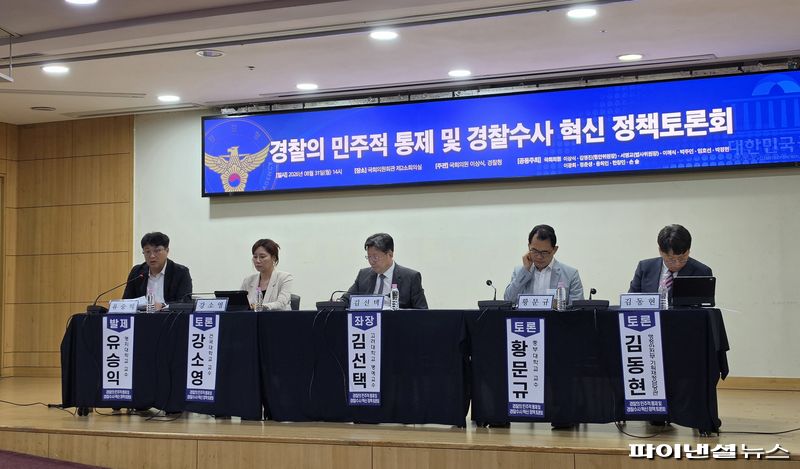
The policy forum on the democratic oversight of police and innovation in police investigations, co-hosted by Democratic Party of Korea lawmakers Lee Sang-sik, Kim Young-jin, Seo Young-kyo, the National Police Agency and others, was held on the 31st in Room 2 of the National Assembly Members' Office Building in Yeouido, Seoul.
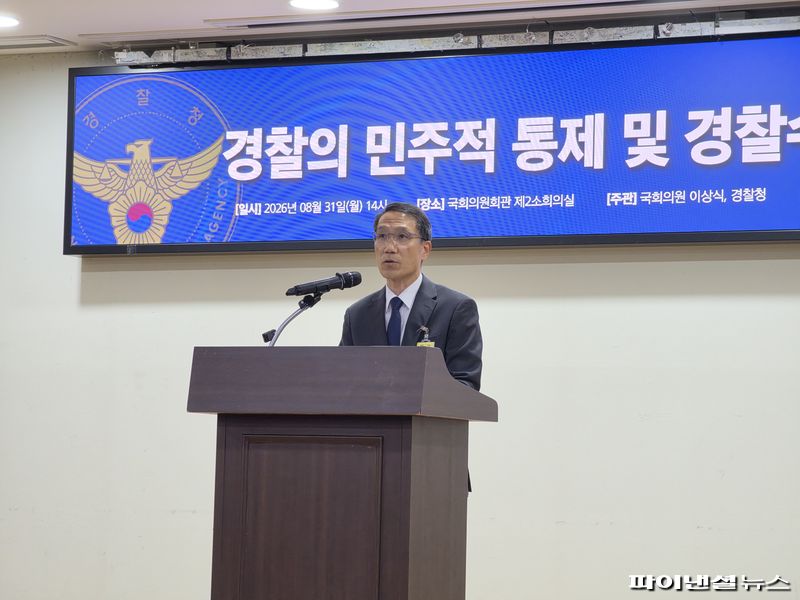
Before the forum, acting Commissioner General of the Korean National Police Agency Yoo Jae-seong said, "With the revision of the Criminal Procedure Act of the Republic of Korea centered on separating investigation and prosecution, the role and responsibility required of police investigations have grown more than ever." He added, "We are also speeding up institutional reforms to strengthen democratic oversight of the police and improve fairness and transparency in the investigative process."
Professor Yoo Seung-ik of Myongji University, who gave the first presentation, pointed out that the Korean National Police Committee has remained little more than an advisory body under the Ministry of the Interior and Safety because it lacks independent authority to impose administrative measures, make rules, and operate a dedicated secretariat. According to Yoo, the rejection rate among the thousands of resolutions adopted since the committee was launched is below 0.1%.
Professor Yoo argued that "institutional capture" occurs because the National Police Agency, which should be the subject of oversight, is instead responsible for drafting agenda items, submitting materials, running meetings and carrying out decisions for the oversight body. He said the committee should be given binding review and decision-making powers, authority to speak externally, its own secretariat, and the right to demand documents.
He also proposed placing a "National Police Human Rights Inspector" and a "Police Investigation Ombudsman" under the committee to conduct ex officio investigations into allegations of abuse of investigative powers. If illegal or improper conduct by police officers is confirmed, the proposal would require the police commissioner to request disciplinary action and corrective measures, with the results reported within a set period.
He also stressed that the appointment structure for the police commissioner should be revised to open the door to outside experts, as candidates are effectively limited to the seven current senior police officers. For the National Office of Investigation chief, who oversees more than 30,000 investigative police officers nationwide, he proposed introducing a parliamentary confirmation hearing.
Professor Hwang Moon-gyu of Joongbu University argued that the Korean National Police Committee should be elevated into a collegial administrative body under the Prime Minister. He then said, "There can be no responsibility without capability," and proposed separate recruitment for investigative positions, expanded legal education, and the inclusion of investigative experience in promotion evaluations. He also said the possibility of separating the National Office of Investigation from the National Police Agency should be considered in the medium to long term.
The police also plan to expand the pool of outside experts for the National Office of Investigation to as many as 30 people, and the pool for provincial police agencies to as many as 200. The number of cases reviewed by the Police Investigation Review Committee rose from 2,146 in 2021 to 6,233 last year, nearly tripling. Lee added that the legal basis for the committee, its composition and operation, and the rule requiring respect for its decisions should be explicitly written into the Police Act, rather than being left to internal police regulations.
In addition, the police are pushing to strengthen checks on self-closed cases. These are cases that are handled as non-filed or administratively closed before a formal investigation and are not sent to prosecutors. They are said to total about 900,000 a year. Most involve no grounds for prosecution or are clearly not criminal cases. They are entered into the Korea Information System of Criminal Justice Services (KICS) and go through approval and review by investigative supervisors, but they are not subject to a separate examination.
Lee said, "We are pushing to build a system in which independent units at each police station objectively verify and inspect all such self-closed police cases." Since about 1.7 million formal investigative cases, including indictments, non-indictments and suspensions of investigation, are reviewed by prosecutors, he explained that a separate unit rechecking self-closed cases would create a safeguard for every case handled by the police.
A subcommittee dedicated to cases involving socially vulnerable groups such as women, children, the elderly and people with disabilities will also be created under the Police Investigation Review Committee. The plan is to hold meetings as needed, guarantee victims the right to state their views, and expand participation by related organizations and experts.
Seo Hye-jin, vice president of the Korean Women Lawyers Association, said, "When an investigation is insufficient, putting the victim back before the committee can end up shifting the burden of completing the investigation onto the victim." She added that the referral criteria, review deadlines and legal effect of the committee's decisions should be clearly defined.
[email protected] Seong-hyun Park Reporter