Yeonggwang Nagwol-do Hit by 539 mm of Torrential Rain; Rising River Levels in Gochang Force Residents to Evacuate
- Input
- 2026-08-31 16:14:11
- Updated
- 2026-08-31 16:14:11
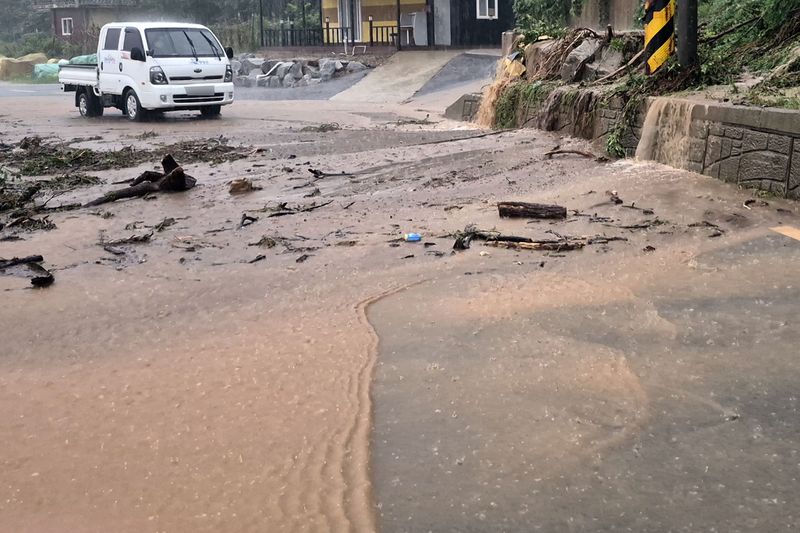
According to the Korean Meteorological Administration on the 31st, Nagwol-do saw 68.5 mm of rain in the one hour between 7 a.m. and 8 a.m. During the same period, Taein-eup in Jeongeup recorded 35.0 mm, Imjado in Sinan County 33.0 mm, and Gochang Sangha 29.5 mm.
Heavy rain also concentrated in North Jeolla Province. According to the Jeonju Meteorological Office, cumulative rainfall from the 30th through 2 p.m. on the 31st reached 237.0 mm in Gochang Sangha, 230.5 mm in Buan Julpo, and 213.7 mm in Osikdo-dong, Gunsan.
At around 9:30 a.m. on the day, Gochang County issued an emergency evacuation order for nearby residents after rainfall of 60 mm per hour caused water levels in Jujincheon in Asan-myeon to rise. Six residents who had evacuated to higher ground in the village returned home after the water receded.
More than 100 mm of rain also fell in the Chungcheong region. As of 3 p.m. on the 31st, cumulative rainfall stood at 138.5 mm in Seocheon County, South Chungcheong Province, 115.0 mm in Yeonmu-eup, Nonsan, and 108.5 mm in Buyeo Yanghwa.
The torrential rain also caused damage to facilities and led to restrictions. According to the Central Disaster and Safety Countermeasures Headquarters (CDSCHQ), fire and rescue operations related to flooded roads and homes, fallen trees and other damage totaled 432 cases as of 6 a.m. Access to 2,974 dangerous sections, including riverside areas, was restricted.
The Ministry of the Interior and Safety (MOIS) raised the heavy-rain disaster alert level from "Attention" to "Caution" at 5 p.m. on the 30th and activated Level 1 of the CDSCHQ after heavy-rain advisories were issued for Jeollanam-do, Gwangju, Ulsan Metropolitan City, North Jeolla Province and North Gyeongsang Province.
The Korean Meteorological Administration forecast rain across the country on September 1 as well. Rain is expected in many parts of the central region until noon, while eastern Gyeonggi Province and Gangwon State are likely to see scattered rain through the afternoon. Showers are forecast for the southern region and Jeju Island from afternoon into evening.
Expected rainfall is 30 to 80 mm in Seoul, Incheon and Gyeonggi Province, with more than 120 mm in some southern parts of Gyeonggi Province. Gangwon State is expected to receive 30 to 80 mm, with more than 120 mm in some inland and mountainous areas in southern Gangwon. Daejeon, Sejong City and South Chungcheong Province are forecast to see 80 to 150 mm, with more than 200 mm in some areas, while North Chungcheong Province is expected to receive 50 to 100 mm, with more than 150 mm in some places.
Rainfall from showers is expected to reach 5 to 40 mm in North Jeolla Province, Gwangju, Jeollanam-do, Daegu, North Gyeongsang Province, Busan and South Gyeongsang Province, and 5 to 30 mm in Jeju Island. Morning lows are forecast at 20 to 26 degrees Celsius, and daytime highs at 25 to 33 degrees Celsius.
The Korean Meteorological Administration urged people to avoid camping, warning that rain falling in upstream valleys or rivers could suddenly swell downstream waters. It also asked the public to stay out of riverside walking paths and underpasses, where people could become stranded, and to be especially careful about flooding in low-lying areas, river overflows and fast currents. Caution is also needed for flooded farmland, overflowing irrigation channels, rapid currents, landslides, mud and debris flows, and the collapse of facilities.
Meanwhile, the Ministry of the Interior and Safety decided to first allocate 6.6 billion won in national disaster relief funds to Tongyeong-si and Geoje, South Gyeongsang Province, which were hit by torrential rain from August 15 to 18. Tongyeong will receive 1.4 billion won, and Geoje 5.2 billion won. Normally, disaster relief funds are paid after the scale of damage and recovery plans are finalized, but this time the government will provide support first for confirmed damage cases and offer additional aid after recovery plans are set.
[email protected] Lee Bo-mi Reporter