Asia Cement Receives Technical Certification for Concrete That Can Withstand Extreme Heat and Long-Distance Transport
- Input
- 2026-08-31 16:26:58
- Updated
- 2026-08-31 16:26:58
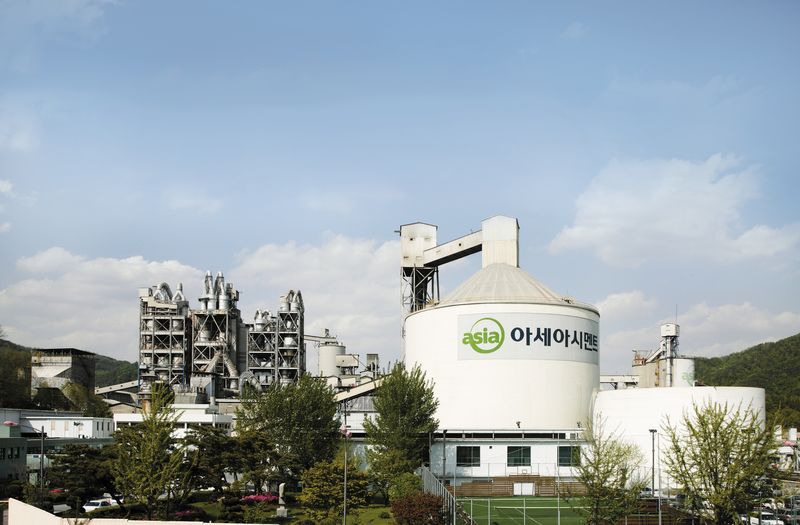
According to the industry on the 31st, Asia Cement received technical certification from the Korean Society of Architectural Construction for its super-retention concrete designed to cope with high temperatures in extreme heat and long-distance transport.
The certified technology uses a hybrid polycarboxylate (PCE) admixture to maintain concrete fluidity and air content over a long period while also securing early compressive strength.
As time passes after production, or as outside temperatures rise, concrete slump declines. The burden of maintaining quality has grown as ready-mix concrete plants in urban areas move outward, extending transport times to construction sites, while high summer temperatures add further strain.
In the past, the main approach was to delay concrete setting in order to secure more working time. However, that method has a limitation: if setting itself is delayed too much, early strength development can also be affected.
This technology addresses that issue by applying a hybrid PCE admixture with enhanced fluidity-retention performance.
According to the certification from the Korean Society of Architectural Construction, the concrete can maintain fluidity and air content for up to three hours under hot-weather outdoor temperature conditions and for up to four hours under standard conditions. Another key feature is that it secures early compressive strength and the required quality standards without delaying setting.
In a production demonstration test conducted at a concrete batching plant under extreme heat conditions, slump and air content remained within the standard range even after a three-hour wait. Compressive strength was also reported to be at a level similar to that of ordinary concrete.
An Asia Cement official said, "As climate change increases the need to respond to extreme heat at construction sites and the problem of reduced workability caused by long-distance transport is also growing, we will expand the development of special concrete technologies that can adapt to site conditions."
[email protected] Kim Hyun-chul Reporter