Gwangju Metropolitan City Says Industrial Regional Electricity Tariff Could Cut Local Companies' Power Costs by Up to 425 Billion Won a Year
- Input
- 2026-08-31 15:23:58
- Updated
- 2026-08-31 15:23:58
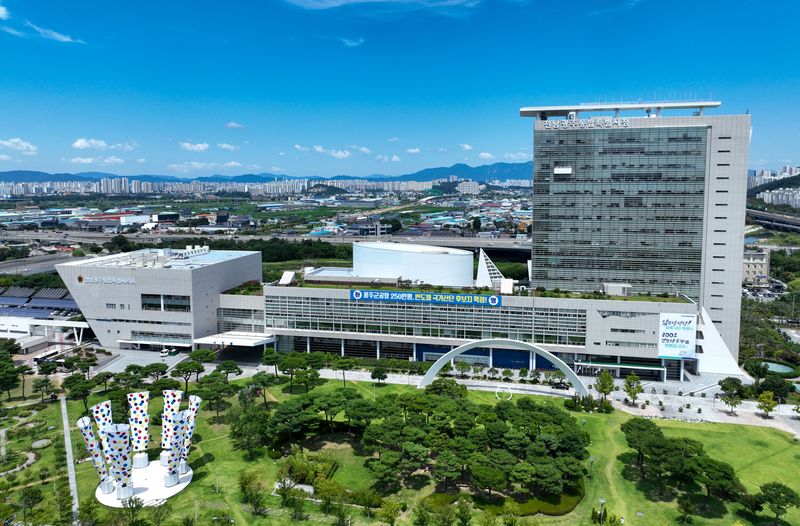
[Financial News, Jeonnam-Gwangju = Reporter Hwang Tae-jong] Jeonnam-Gwangju Integrated Metropolitan City, or Gwangju Metropolitan City, said it strongly welcomed the government's recently released plan for an industrial regional electricity tariff. The city said local industries could save up to 425 billion won a year in electricity costs, based on 2025 power consumption.
According to Gwangju Metropolitan City on the 31st, the Ministry of Climate, Energy and Environment and Korea Electric Power Corporation (KEPCO) unveiled the design for the industrial regional electricity tariff on the 26th. The plan is intended to promote balanced regional development and strengthen the country's industrial competitiveness.
Gwangju Metropolitan City stressed that the industrial regional electricity tariff is significant because it goes beyond a simple rate cut. It is a policy shift aimed at steering industrial sites toward regions with abundant power, reforming the national power system, and reshaping the industrial map of the future.
If the industrial regional electricity tariff is implemented, industrial power rates in the southern region, including Jeonnam-Gwangju, would fall by 13 to 18 won per kWh from current levels. The city said this would ease cost burdens on local companies and help improve industrial competitiveness.
It is also expected to help ease management pressure on the Yeosu-Yeocheon Petrochemical Complex, which has been struggling with global oversupply and rising costs. Based on the roughly 13,081 GWh of industrial power used in the Yeosu area in 2025, the lower rates could reduce electricity costs by about 170 billion to 235.5 billion won a year.
The measure is also expected to boost the region's ability to attract advanced industries such as semiconductors and artificial intelligence data centers. If a 6.3 GW semiconductor fab is built in Jeonnam-Gwangju in the future, it would require an estimated 63 TWh of electricity a year. With lower rates, annual power costs could fall by 717.6 billion to 993.6 billion won.
In addition, if the region also secures the conditions needed to carry out RE100 commitments using abundant renewable energy, its competitiveness in attracting advanced companies is expected to improve further.
Yu Hyun-ho, head of the Industry Bureau of Gwangju Metropolitan City, said, "A regionally differentiated electricity tariff is an important policy shift that turns the value of power-producing regions into industrial competitiveness." He added, "Based on abundant renewable energy and power infrastructure, we will build an industrial ecosystem where energy leads to corporate investment, jobs, and local income."
Meanwhile, Gwangju Metropolitan City said that for power-intensive advanced industries, a stable and eco-friendly electricity supply is a key factor in deciding where companies locate. It plans to use Jeonnam-Gwangju's abundant renewable energy and high power self-sufficiency as an opportunity to leap forward as a future hub for advanced industries.
The city also plans to respond proactively so that cost savings from lower industrial electricity rates lead to actual investment and job creation. In particular, it aims to use the region's power competitiveness as a differentiated strength in attracting investment and to actively pursue advanced industries such as semiconductors and AI data centers.
At the same time, it will ask the government to ensure that the final tariff design fully reflects industrial factors such as key local industries and industrial crisis zones. To prepare for large-scale power demand, the city also plans to expand renewable energy through planned-site development and respond in advance by expanding transmission and substation networks, Energy Storage Systems (ESS), and distributed power grids.
[email protected] Hwang Tae-jong Reporter