"We thought it was just a metabolic byproduct"... CHA Bundang Medical Center finds how lactate helps regenerate bone
- Input
- 2026-08-31 14:15:05
- Updated
- 2026-08-31 14:15:05
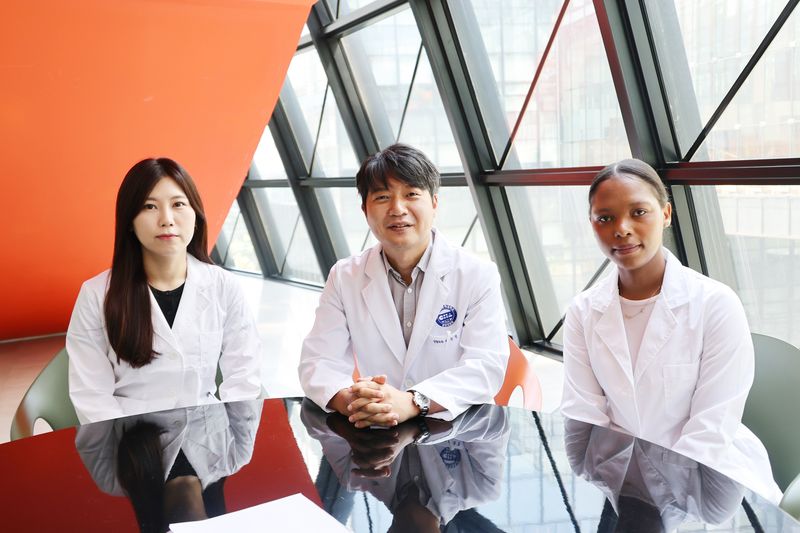
[Financial News] Researchers at CHA Bundang Medical Center have developed an "active bone regeneration material" that does more than simply support damaged bone. It also recruits stem cells and induces them to differentiate into bone cells. The material is drawing attention because it expands the role of biomaterials for bone regeneration from a physical support to a platform that controls cell movement and differentiation.
According to CHA Bundang Medical Center on the 31st, Professor Lee Soon-cheol's orthopedic surgery team has developed a next-generation bone regeneration scaffold that can both attract stem cells and promote bone differentiation. The key to the study is that it combines the processes needed for bone regeneration into a single material. The team attached the protein Stromal cell-derived factor-1 (SDF-1), which draws stem cells to injured areas, to the scaffold surface, and applied calcium lactate inside the material to release calcium and lactate.
In the early stage of injury, SDF-1 attracts stem cells. Later, as lactate and calcium are supplied, the scaffold promotes the bone differentiation of the recruited cells. Based on plant-derived cellulose and biocompatible polymers, the platform integrates the structural and biochemical signals needed for bone regeneration.
In particular, the researchers identified a mechanism in which lactate is linked to the OR5AN1 receptor in human bone marrow-derived mesenchymal stem cells, increasing intracellular calcium signaling and markers related to bone formation. The finding suggests that lactate may be used not merely as a metabolic byproduct, but as a biological signal involved in bone regeneration.
In animal models, the group that received the scaffold showed improved new bone formation and better maturation of bone tissue.
An official in the regenerative medicine industry said, "The competitiveness of bone regeneration materials is shifting away from simply filling defects and toward how precisely they can induce cells to take part in the actual regeneration process." The official added, "The fact that stem cell recruitment and bone differentiation signals were implemented in a single material is noteworthy for the future development of functional bone regeneration materials."
Another industry source said, "It will be important to verify the material's potential for real clinical use through large-animal tests and safety evaluations." The source added, "A key point to watch is whether its applications can expand beyond fractures and large bone defects to bone regeneration around artificial joints."
Professor Lee Soon-cheol said, "The significance lies in creating a biomaterial that gathers stem cells at the injury site and induces them to form bone on their own." He added, "We expect it to be used in a wide range of orthopedic treatments, including fractures, bone defects, and bone regeneration after joint replacement surgery."
Meanwhile, the study was published in the international journal Carbohydrate Polymers (IF 13.2) and was also listed in the Biological Research Information Center's "People Who Have Made Korea Shine."
[email protected] Kim Kyung-ah Reporter