"Supreme Court Justices Received Monthly Incentive Payments of 2 Million Won; Supreme Court of Korea Paid 1.3 Billion Won in Cash Over Four Years"
- Input
- 2026-08-31 13:54:44
- Updated
- 2026-08-31 13:54:44
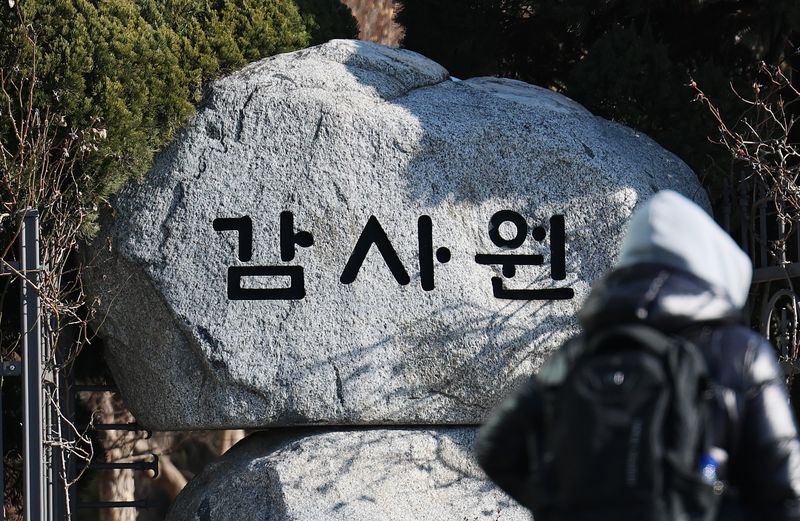
[Financial News] The Supreme Court of Korea was found to have improperly spent its budget, including paying Supreme Court Justices an average of 2 million won in cash each month as incentive payments without any legal basis, according to an audit by the Board of Audit and Inspection (BAI). The audit also found that, in purchasing computer equipment, the court had increased order volumes to exhaust its budget and stockpiled more than 6,000 PCs and 3,000 printers as reserve items.
BAI disclosed the results of its regular audit of the Supreme Court of Korea on the 31st. Because the courts are constitutionally independent institutions, BAI can only conduct accounting audits under the BAI Act. Given that no regular audit had been carried out since 2021, the agency focused on reviewing the appropriateness of the court's financial activities. The audit identified a total of 12 illegal or improper cases.
The most notable issue was the incentive payments to Supreme Court Justices. The Supreme Court of Korea's budget execution guidelines prohibit regular monthly incentive payments without a legal basis. However, the National Court Administration paid 12 Supreme Court Justices an average of 2 million won in cash twice a month from 2022 through April 2024. In some periods, it also paid an additional 1 million to 1.5 million won per month. These payments were separate from the 5.12 million won in monthly special-duty expenses paid to each justice.
After May 2024, the payment dates and amounts varied by justice, so the payments were no longer formally structured as fixed monthly allowances. Even so, the annual amount per justice in 2024 remained similar, at 26.5 million to 30.5 million won. The Minister of the National Court Administration also received 3 million won a month from 2022 through April 2024, and 2 million to 4 million won a month thereafter. The incentive payments made from 2022 through September last year totaled 1.299 billion won. An additional 160 million won was regularly paid to the security and protocol team for the Chief Justice of the Supreme Court of Korea and to the official residence security unit.
BAI said the National Court Administration handled the payments administratively, but in practice they were made by the Chief Justice of the Supreme Court of Korea. The National Court Administration explained that the payments were intended to encourage Supreme Court Justices and judicial researchers for their hard work. BAI instructed the court to stop paying monthly incentive allowances to Supreme Court Justices and the Minister of the National Court Administration.
The audit also found wasteful budget execution in computer equipment purchases. From 2022 to 2025, the National Court Administration bought replacement PCs that had already been purchased the previous year, or secured reserve stock without reasonable justification. As a result, 6,131 PCs remained in reserve at the end of last year, enough for about one-third of the court's total workforce of 18,669. Another 2,983 printers and 559 scanners were also stored unused. In particular, when printer contract prices fell in 2025, the administration increased the purchase volume by 1,055 units to use up the budget.
There were also cases in which money was paid additionally for work already included in contracts. Although the National Court Administration had signed a contract requiring a computer equipment maintenance vendor to upgrade the Windows operating system, it added the work as a separate task and paid an extra 650 million won, citing an oral agreement between staff members. BAI concluded that the amount was spent unnecessarily.
Other findings included paying higher-than-prescribed travel expenses for auction case status investigations and receiving court-published books before signing a contract, then formalizing the agreement afterward. BAI asked the Supreme Court of Korea to improve related procedures and issued warnings.
[email protected] Seong Seok-woo Reporter