A 225.3 billion won Jeju tourist condo to be built as a zero-energy building, the first application in private tourism development
- Input
- 2026-08-31 11:30:43
- Updated
- 2026-08-31 11:30:43
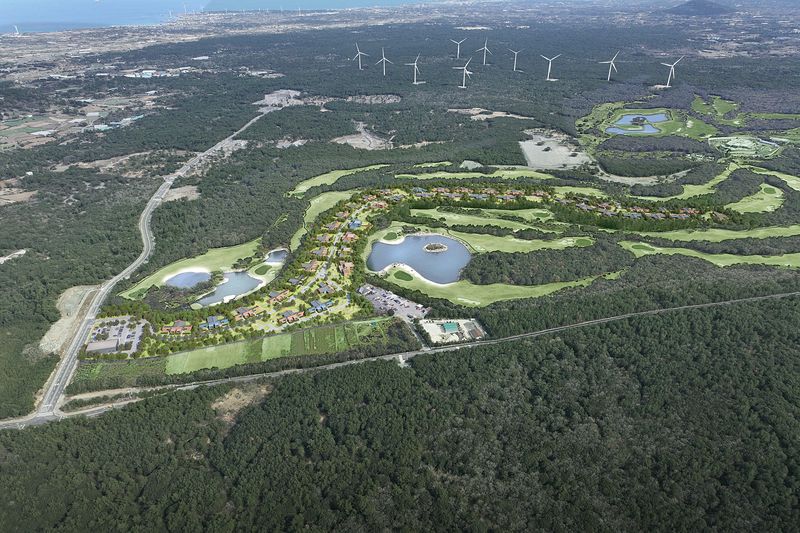
[Financial News, Jeju = Jeong Yong-bok] Jeju will apply a zero-energy building method to a large-scale private tourism development project for the first time. Attention is now focused on whether Jeju's eco-friendly building policy, which has centered on public buildings, can expand to large private structures such as tourism and lodging facilities.
According to Jeju Special Self-Governing Province on the 31st, the 44 resort condominium buildings being developed by Ananti in the Myosanbong Tourist Complex in Gujwa-eup, Jeju City, received preliminary certification as zero-energy buildings on the 6th.
The project is targeting a construction start in December. The total project cost is about 225.3 billion won.
The site covers 132,981 square meters, with a total floor area of 24,827 square meters. The development will include 44 resort condominium buildings with 88 units, each with one basement level and two floors above ground, as well as one management building.
A zero-energy building does not literally mean a building that uses no outside energy at all.
It is a structure that first reduces energy consumption by improving insulation and installing high-efficiency heating, cooling and lighting systems, then generates part of the energy it needs on site using renewable sources such as solar power. Certification grades are determined by a comprehensive assessment of how much energy is reduced and how much is covered by self-generation.
At the Myosanbong project, high-efficiency heat pumps will be used for heating and cooling. Instead of burning fuel directly to produce heat, heat pumps use electricity to move heat from outside to inside a building, or vice versa. Compared with conventional fossil-fuel-based heating, they improve energy efficiency and reduce carbon emissions during building operations.
The project will also install renewable energy facilities such as solar power systems to generate part of the energy used by the building on site.
The significance of this project lies in where it is being applied. In Jeju, zero-energy building practices have expanded mainly in the public sector, including schools, government offices and public housing. Of the 79 certified buildings in the province as of the end of July, 77 were public buildings and only two were private-sector projects.
By grade, there were 22 buildings at Grade 5, 28 at Grade 4, 12 at Grade 3, 7 at Grade 2, 8 at Grade 1 and 2 at the plus grade.
This is the first time the zero-energy building method has been applied to a large-scale private tourism development project. The Myosanbong Tourist Complex is a major tourism development project underway in the Gimnyeong-ri area of Gujwa-eup, Jeju City. The project is adding lodging and leisure facilities to an existing golf course and tourism complex.
Because tourism facilities consume significant energy for heating, cooling, hot water and lighting, improving the energy efficiency of lodging facilities is also meaningful in reducing carbon emissions from buildings.
The move is also drawing attention because Jeju is pursuing policies to expand renewable energy and achieve carbon neutrality, and this project attempts to redesign the energy use of a new large-scale tourism facility from the planning stage.
Incentives are also available to encourage private developers to choose zero-energy building certification. If the relevant standards are met, building requirements such as floor-area ratio and building height can be relaxed depending on the certification grade, and acquisition tax reductions can also be applied.
Jeju Special Self-Governing Province plans to expand this case to other newly built large private structures, including apartment complexes and tourism and lodging facilities.
Zero-energy buildings go through a preliminary certification stage during the design phase and then undergo a final certification process after completion to verify the actual construction details and energy performance. Accordingly, the Myosanbong project will ultimately be judged on whether it has actually achieved the planned energy savings and renewable energy generation performance after completion.
Hyun Ju-hyun, director of the Urban Construction Bureau of Jeju Special Self-Governing Province, said, "Private participation is important for reducing carbon emissions in the building sector," adding, "We will expand support so that large private buildings can improve their energy efficiency."
[email protected] Jeong Yong-bok Reporter