Generation Z Relieves Stress Through Tactile Sensations and Repetitive Sounds
- Input
- 2026-08-31 16:22:31
- Updated
- 2026-08-31 16:22:31
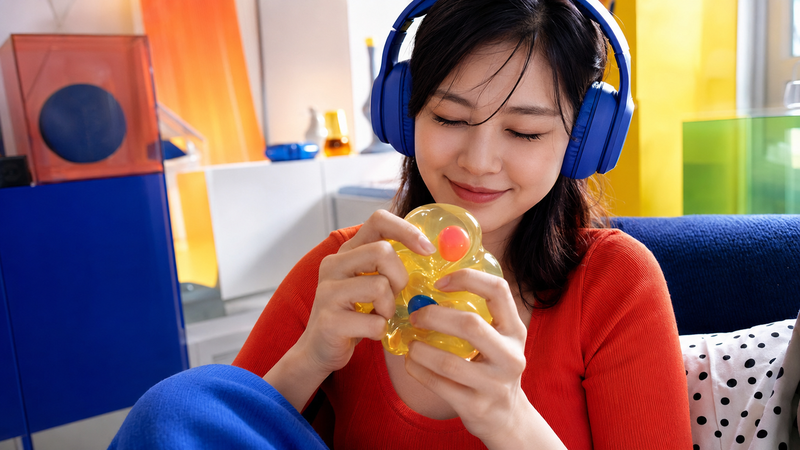
According to industry data on the 31st, transactions involving soft squishy toys on Zigzag in May rose 235% from a year earlier. On ABLY, the value of soft squishy toy transactions from Jan. 1 to June 23 increased 514% from the same period last year.
Average monthly sales at stationery and art supply retailers in Changsin 1-dong, Jongno-gu, Seoul, also increased. In the area known as the “malangi street” district, average monthly sales rose about 34%, from 8.35 million won in November last year to 11.24 million won in February this year.
In the related market, fidget toys such as stress balls, soft squishy toys, slime and wax balls are drawing attention. The idea is to press or knead the product repeatedly, focus on the sense of touch, and briefly step away from complicated thoughts.
More recently, products that combine touch and sound, such as keycaps and click stones, have also appeared. As surface texture, the degree of pressure when pressed, and the sound produced during use have become key buying factors, these products are expanding beyond simple stress-relief items into the realm of taste-driven consumption.
This sensory consumption trend is also spreading into the auditory realm. ASMR content that uses whispering, the sound of turning pages, or rainfall is being used to help people relax and sleep. Content that encourages users to focus on specific sounds and vibrations, such as singing bowls and sound therapy, is also being used.
The auditory content “Sound Therapy” on the mental health platform Trost has recorded 179 million cumulative plays through July since its launch. It has also been repeatedly used not only for relaxation and sleep, but also as background sound to help people concentrate at work.
Experts say such sensory stimulation can be used as a supplementary way to manage everyday stress, but it should not be viewed as a treatment for mental health problems.
Jeong-Ho Chae, a psychiatry professor at The Catholic University of Korea, Seoul St. Mary's Hospital, said, "Paying attention to repetitive tactile or auditory stimuli can help you step away from complicated thoughts for a moment and focus on the sensations of the present." He added, "It can be used as a way to manage everyday stress."
He also noted, "If anxiety, depression, or sleep problems continue for a long time and affect daily life, it is necessary to seek help from a specialist and look into the underlying cause rather than relying only on sensory content."
[email protected] Jung Sang-hee Reporter