NHRCK says foreign detainee facilities lack forms and guidance, urges stronger due process protections
- Input
- 2026-08-31 12:00:00
- Updated
- 2026-08-31 12:00:00
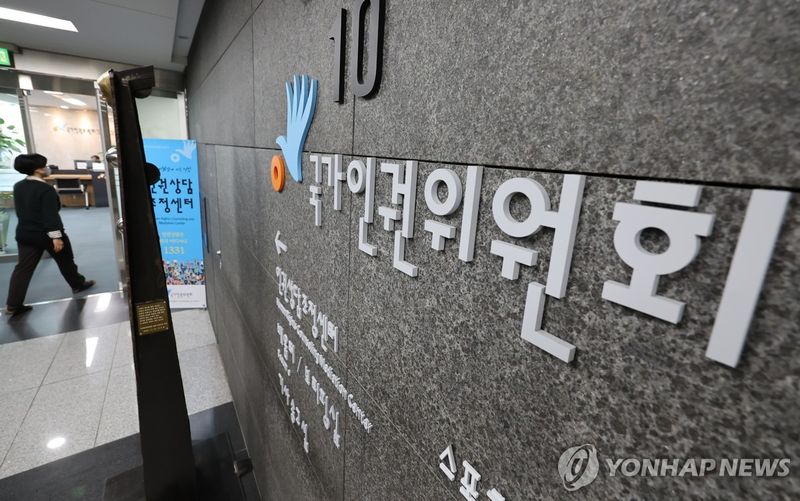
On the 31st, the National Human Rights Commission of Korea said it had recommended that the Minister of Justice improve practices and policies to ensure the procedural rights of detained foreigners in practice.
The revised Immigration Control Act, which centers on a cap on detention periods and a review-and-approval system for extensions by the Foreigners’ Detention Review Committee, took full effect on June 1, 2025, to prevent indefinite long-term detention and protect human rights. In response, NHRCK visited key sites such as the Seoul Immigration Office and the foreign detainee centers in Hwaseong and Cheongju to inspect whether the revised system was being operated properly and in line with its original purpose.
The inspection, however, found that even the minimum conditions for detainees to exercise their procedural rights were not in place. According to NHRCK, essential forms such as requests for detention review and applications for temporary release were not properly available at the facilities. Basic guidance on the detention cap, the extension review system, and the right to request an oral hearing was also insufficient.
Particularly troubling was the routine handling of detention extension reviews. Of 360 extension applications tallied as of Aug. 30, 2025, as many as 355, or 98.6%, were uniformly requested for the statutory maximum of three months. NHRCK said this practice, which failed to adequately examine each detainee’s likelihood of deportation or the need for continued detention, directly violated the revised law’s principle of 'the minimum necessary detention.'
NHRCK called on the Ministry of Justice to take comprehensive steps to ensure rights are protected in practice. It recommended that detention facilities keep review request forms and temporary release applications readily available at all times and issue receipts upon submission. It also urged the ministry to expand interpretation support and improve forms so that the right to request an oral hearing is meaningfully guaranteed. In addition, it called for sufficient explanations of the relevant system from the start of detention, and for extension requests to be reviewed strictly based on the specific period needed rather than applying a blanket three-month standard. The commission also recommended allowing at least 10 days to submit opinions so that the right to defense is protected, and requiring that detainees be informed of their right to appeal in a language they can understand when temporary release is denied or a review request is rejected.
NHRCK said, "We plan to continue monitoring conditions on the ground so that the revised foreign detainee system can take root as a practical safeguard against prolonged or arbitrary detention."
[email protected] Seo Ji-yoon Reporter