U.S. Treasury Secretary Urges G20 to Reassess Trade Terms With China, Targets Overproduction
- Input
- 2026-08-31 12:02:21
- Updated
- 2026-08-31 12:02:21
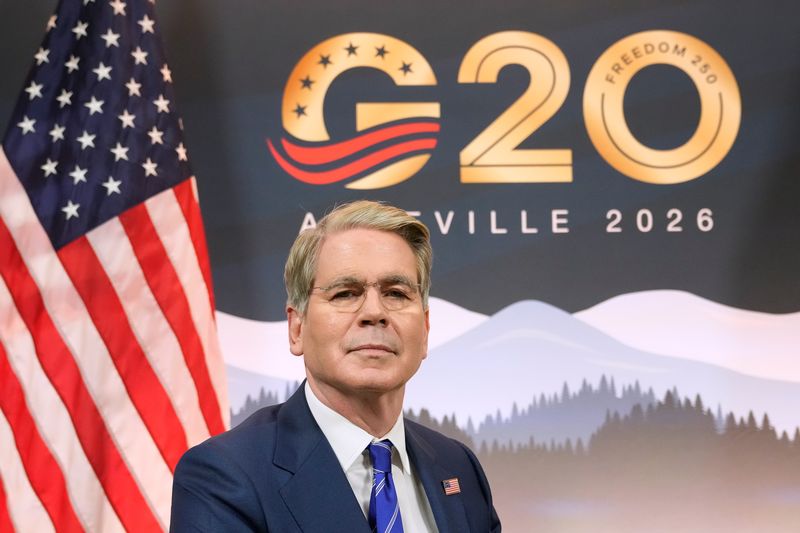
[Financial News] The United States, which is reviewing a range of trade measures against China, plans to ask the Group of Twenty (G20) to join in pressuring China. Washington said China’s overproduction is a global problem.
According to foreign media outlets including Firstpost, Scott Bessent said in an interview on the 30th local time that the United States would take that position. Bessent will attend the 2026 G20 finance ministers and central bank governors meeting, which runs from the 31st to the 1st of next month in Asheville, North Carolina.
Bessent said he plans to urge G20 members to review their trade terms with China. He noted that the U.S. trade balance with China is "improving rapidly," but said the current flood of exports from China is not sustainable. He explained that as the United States blocks Chinese goods with tariffs and other trade barriers, those exports are being redirected to Europe and Latin America.
He said the world must address global trade imbalances and that other countries should also take action. Bessent stressed, "The world cannot absorb China, which is running a trade surplus of $1.2 trillion," adding, "China needs to rebalance its economy because its domestic economy is very weak and it is trying to export its way out of that situation." He also said that to force such a shift, "the rest of the world, excluding the United States, will have to review its trade terms with China."
Earlier, the Office of the United States Trade Representative (USTR) announced on March 12 that it would launch an investigation under Section 301 of the Trade Act of 1974 into forced-labor-related acts, policies, and practices. The claim is that U.S. trading partners have allowed products made with forced labor to enter the market, undermining the price competitiveness of American goods. On March 11, USTR also said it would investigate unfair trade practices related to manufacturing overcapacity involving 15 countries, including South Korea, China, and Japan, as well as the European Union (EU), under Section 301.
On the 23rd of last month, USTR imposed an additional 12.5% tariff on South Korea and China over forced labor concerns, and added tariffs on 58 other economic entities on the same grounds. A tariff announcement related to overcapacity has not yet been finalized. U.S. media outlets, including AP, reported on the 24th, citing an official, that the United States was considering imposing a 7.5% tariff on China over overcapacity. If implemented, the additional tariffs on China would rise to a cumulative 20%, matching the tariff rate imposed last year under fentanyl-related and reciprocal tariffs.
[email protected] Park Jong-won Reporter