People Power Party postpones full introduction of direct elections for local party committee heads, starting with vacant branches
- Input
- 2026-08-31 11:12:51
- Updated
- 2026-08-31 11:12:51
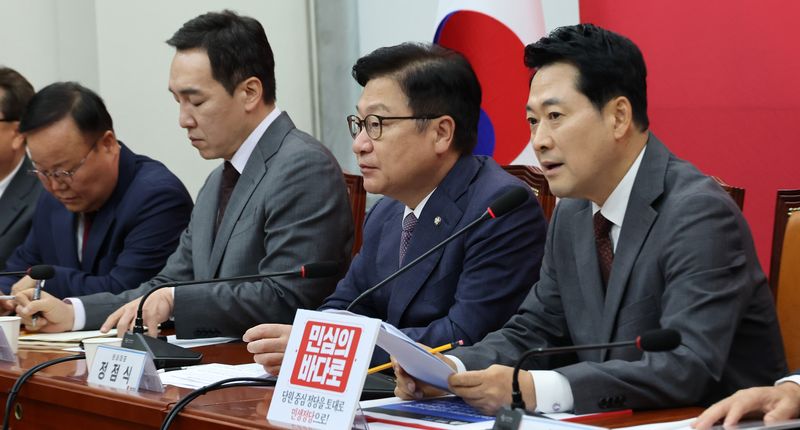
[Financial News] The People Power Party leadership has decided to introduce direct elections by party members for local party committee heads in stages. The plan will first apply only to vacant local branches. As party lawmakers reached a consensus at a general meeting that they opposed a full direct-election system, Jang Dong-hyuk's plan to replace all local committee heads has effectively fallen through. However, Jang said he would keep the party's pro-member direction by expanding opportunities for members to take part in party operations.
Secretary-General Jeong Hee-yong told reporters after the Supreme Council meeting at the National Assembly on the 31st that the party had considered introducing direct elections for local committee heads nationwide, but decided on a gradual, phased rollout after reflecting opinions from within the party, including the parliamentary caucus.
Jeong said, "For current vacant local party branches, we will immediately begin open recruitment. After eligibility screening by the organization strengthening special committee, candidates will be elected by direct vote of party members if there are at least two applicants," adding, "Points will be deducted for any improper conduct." There are currently 34 vacant local party branches nationwide.
The party also decided to elect incumbent local committee heads under the existing system by the 15th of next month. Under that method, the local party operating committee, rather than party members, will choose the committee head. Until the operating committee makes its selection, the current local committee heads will remain in office.
The People Power Party also decided to conduct regular party operations audits. Vacant branches and similar cases will be excluded, and the party plans to make it mandatory to reflect 50% of members' evaluations of local committee heads. It also decided to apply point deductions to those found to have engaged in improper conduct during the audit. Jeong explained, "Based on the results of the party operations audit, lower-ranked branches will be selected for replacement," adding, "Those branches will reapply through the organization strengthening special committee, and if there are at least two qualified applicants, they will be elected by party members."
He added, "We are considering revising the rules on local organization management so that, at the end of August in a year when local elections are held, the principle will be to elect party member electorates, and revising the party operations audit rules to make it mandatory to reflect 50% of evaluations from local party members during audits. Therefore, we have settled on a two-stage, gradual implementation rather than a full direct-election system."
The phased plan to introduce direct elections by party members reportedly passed unanimously at the Supreme Council. Initially, Jeong Jeom-sig, the parliamentary leader, Woo Jae-jun, a Supreme Council member, and others expressed opposition to a full resignation of incumbent lawmakers and local committee heads followed by direct elections. Shin Dong-wook, Yang Hyang-ja, and Policy Committee Chairperson Im Lee-ja took a cautious stance. Jang appears to have supported the compromise plan.
[email protected] Lee Hae-ram Reporter