'Argentina's Trump' hurls abuse at reporters, while the real Trump files a complaint against an anchor
- Input
- 2026-08-31 14:23:23
- Updated
- 2026-08-31 14:23:23
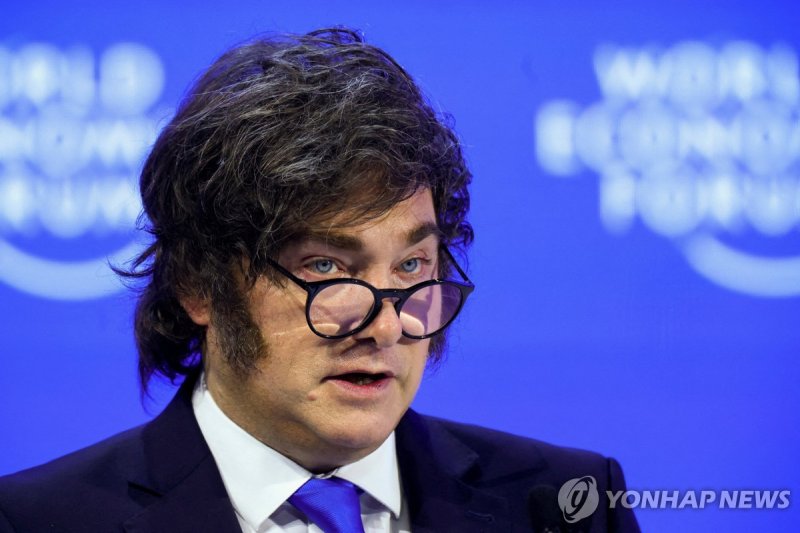
According to La Nación on the 30th local time, Milei spent as much as eight hours on the 25th posting or sharing social media messages attacking the press. The outlet also said he shared or posted 335 messages criticizing the media during the week of the 17th to the 23rd. Joaquín Morales Solá, a columnist for the paper, described Milei's attacks on the press as 'violence and anger,' noting that he has attacked or insulted the media more than 1,000 times since taking office.
The language Milei uses against the media is becoming increasingly harsh. He has resorted to crude terms such as 'trash,' 'liars,' and 'useless human waste.' He has also repeatedly belittled journalists as 'those who write articles for money' and 'those who cling to government media subsidies and advertising spending.' He has also used the slogan 'We do not hate journalists enough (NOLSALP),' claiming that the media is spreading false information about the economy.
His speech on the 27th at ORT Argentina, a private Jewish high school in Buenos Aires, also sparked controversy. Milei spoke for about 40 minutes to middle school students in their fourth and fifth years of secondary school, on the topic of 'ethics and artificial intelligence as national policy.' But most of the speech focused on the economy, liberal ideology, and attacks on the opposition and the media. When he mentioned reporters, students responded with supportive boos, and he encouraged them by saying, 'I would be even happier if you booed louder.'
Concern is also growing in the media industry after Economy Minister Luis Caputo recently argued that a law is needed to punish reporters who spread 'baseless information,' and Milei publicly backed the idea. On this, columnist Solá said that while Argentina's media landscape does have problems, 'a president who is the subject of media coverage cannot decide who is a 'good journalist' and who is a 'bad journalist.''
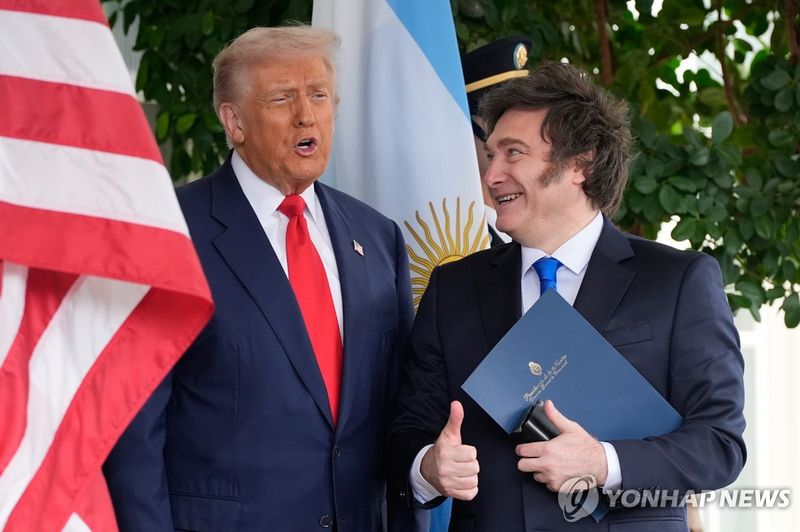
In particular, Trump criticized Welker, the host of NBC's political program 'Meet the Press,' on Truth Social, calling her 'the unpopular host of the once-great Meet the Press.' He took issue with her assessment that his backing of candidates in the Republican Party primaries had produced 'mixed results,' and claimed that 'she will be reported to the FCC for reprimand or punishment.' The FCC is the federal agency that grants and oversees frequency licenses for radio and television broadcasters in the United States.
Trump broadened his criticism beyond Welker to the media as a whole. 'Unfortunately, it's not just her,' he said. 'Radical left news is doing everything it can to harass, diminish, and smear everything related to me.' He added, 'I hope FCC Chairman Brendan Carr and the good people at the commission take this threat to the country very seriously.'
Trump, who first made his name by aggressively using the media during his years as a real estate developer, has continued his conflict with the press since taking office by attacking it as 'fake news.' He has filed lawsuits against several newspapers, including The Wall Street Journal and The New York Times, and has also cut federal funding for public media. In response, AFP noted that 'the Trump administration is tightening regulations on journalists while pressuring broadcasters through the FCC, which is led by a close ally of Trump.'
As the Trump administration continues to pressure critical media outlets for months, backlash from the press has also grown. Some media organizations and major broadcast networks have filed lawsuits, calling the FCC's pressure 'political retaliation that violates the First Amendment, which guarantees freedom of expression.' Experts have also pointed out that 'the FCC has no legal authority to punish broadcasters or journalists for their political views.' According to AFP, the 2025 Yale Journal on Regulation explained, based on U.S. Supreme Court precedent, that 'U.S. law does not grant the FCC the power to ban controversial speech.'
[email protected] Hong Chae-wan Reporter