At the G20, Bessent Shifts from Offense to Defense: Pressuring China and Defending U.S. Treasuries
- Input
- 2026-08-31 10:22:23
- Updated
- 2026-08-31 10:22:23
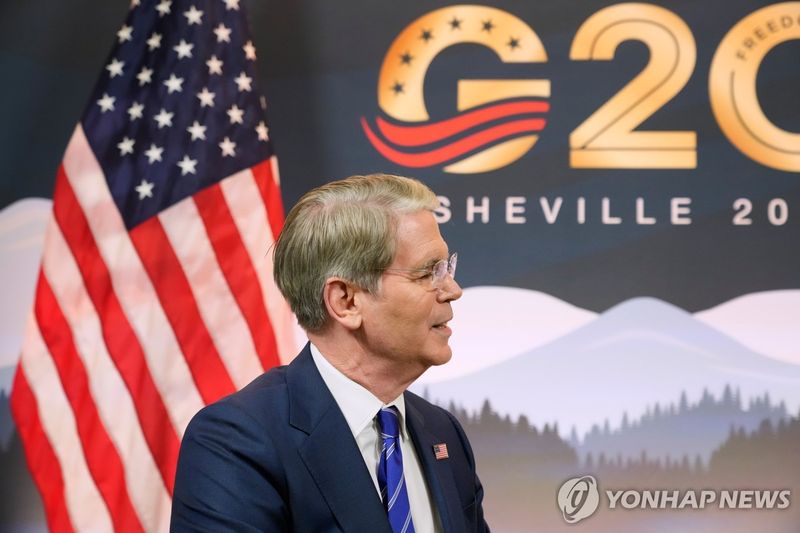
Six months later, the situation has changed. As long-term U.S. Treasury yields surged to their highest level in 19 years, the Treasury Department stepped in directly by expanding buybacks of long-dated bonds. Central banks in major economies are now voicing concern that the Treasury may be trying to artificially push down long-term rates that should be set by the market. After demanding that China reduce market distortions, the United States now finds itself in the role of a defender, forced to answer why it is intervening in the Treasury market.
Bessent's ability to play both offense and defense will be tested at the G20 finance ministers and central bank governors' meeting, which opens on July 31 for a two-day run in Asheville, North Carolina.
The U.S. and Europe speak with one voice on China's overproduction
The key theme of this year's G20 finance ministers' meeting, as outlined by the U.S. Department of the Treasury in February, is growth. Bessent said he would "return the G20 to its core mission," and set out key agenda items including modernizing financial regulation, addressing excessive global imbalances, improving debt transparency and restructuring, energizing the digital asset ecosystem, and improving cross-border payments.
At this meeting, the United States will focus on "excessive global imbalances." The concern is that government-backed overproduction and excess capacity are flooding global markets and undermining fair competition, effectively targeting China's export-driven growth model. Europe largely shares Washington's view on this issue. According to Reuters, European officials also want to discuss the threat posed by the influx of Chinese products, especially cars, to their domestic industries. There is also growing concern that, as the United States raises tariff barriers, Chinese goods will be diverted to other markets such as Europe.
This G20 meeting comes just ahead of a summit between U.S. President Donald Trump and Chinese President Xi Jinping. Trump has said he expects to meet Xi in the United States next month, raising the possibility that China's overproduction and trade imbalance will become topics at the summit. Ahead of the meeting, a senior U.S. Treasury official told Reuters, "We will focus on making sure countries compete through productivity, innovation and investment, rather than policies that push overproduction and excess capacity into global markets."
Cutting off Iran's funding and pressuring G20 members to join in
Economic pressure on Iran is another major agenda item. The United States has warned that it could impose secondary sanctions on countries and companies that continue to buy Iranian oil or maintain financial transactions with Tehran. It has also recently moved to block financial channels in practice. The U.S. Department of the Treasury said it would cut off branches of Banque Misr, Egypt's state-owned bank and a G20 member, in the United Arab Emirates from the dollar transaction network because of dealings with Iran. It has also warned of possible secondary sanctions on Iranian funds moving through Chinese financial institutions.
A senior U.S. Treasury official said Bessent will raise the Iran issue in virtually every bilateral meeting he holds with G20 members. In effect, the message is that countries must cut ties with Iran if they want continued access to the world's largest financial market, the United States.
Bessent as the 'defender' over U.S. Treasury intervention
The area where Bessent must play defense is the U.S. Treasury market. With U.S. national debt now exceeding $40 trillion, the yield on 30-year Treasuries recently climbed to its highest level since 2007. In response, the Treasury Department doubled the size of its buybacks of long-term bonds with maturities of 10 to 30 years, from at least $2 billion per operation to $4 billion.
The core of the controversy is whether it is appropriate for the Treasury Department to directly influence long-term yields set by the market. Treasury yields reflect the price investors assign after weighing risks such as U.S. fiscal conditions and inflation. Critics warn that if the government buys Treasuries to push yields lower, it could distort market price signals and clash with the monetary policy domain of the Federal Reserve.
Officials at the European Central Bank are also watching closely. According to Reuters, they are concerned that the Treasury's expanded buybacks of long-dated bonds could evolve into unusual market intervention aimed at lowering the government's borrowing costs. One official said the effect of intervention would be temporary, and even raised the possibility that it could eventually lead to pressure on the Fed to buy Treasuries. The U.S. Treasury counters that the buybacks are intended to improve market liquidity, not control interest rates.
In the end, Bessent is the 'offensive player' at this G20, pressing China to curb overproduction and urging major economies to join efforts to cut off Iran's funding. At the same time, the United States must act as the 'defender,' explaining why it is intervening in long-term yields, which are supposed to be set by the market, and easing concerns from markets and major economies.
[email protected] Lee Byung-chul Reporter