Traces of the Pacific War After 80 Years: Safety Inspection of Jeju Sarabong Japanese-Era Cave Fortifications After a Decade
- Input
- 2026-08-31 10:15:29
- Updated
- 2026-08-31 10:15:29
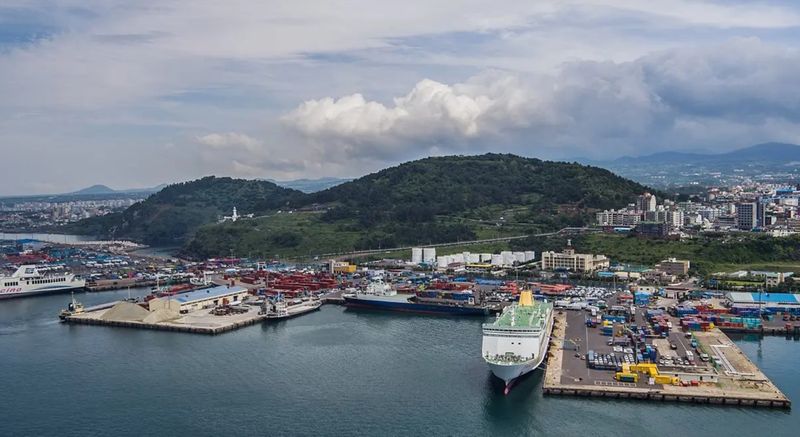
[Financial News, Jeju = Reporter Jung Yong-bok] The 'Japanese-era cave fortifications at Sarabong, Jeju,' built by the Japanese military as it turned Jeju into a military base in the final years of the Pacific War, will undergo a detailed safety inspection again for the first time in about 10 years. More than 80 years after they were built around 1945, the wartime remains are being reexamined to assess their current structural condition, following a survey and safety check in 2015-2016 and the installation of anti-collapse facilities at the entrance in 2019.
According to Jeju Special Self-Governing Province and the Korea Heritage Service on the 31st, the province issued a bid on the 28th for a 'detailed safety inspection service for the Japanese-era cave fortifications at Sarabong, Jeju.'
The project is valued at 79.194 million won. Quotations began to be accepted on the 29th and will close at 10 a.m. on September 3. The service will be carried out through a small-scale quotation process involving at least two participants.
The Japanese-era cave fortifications at Sarabong are a site that shows how Jeju was transformed into a Japanese military stronghold in the final phase of the Pacific War.
According to the Korea Heritage Service, the Japanese military built the cave fortifications in the Sarabong area around 1945 to first stop Allied forces landing on Jeju Province's northern coast and to defend the eastern and western airfields on Jeju. The western airfield is now the area around Jeju International Peace Center.
As a military facility built by the Japanese military, which was on the defensive at the end of the war, to use Jeju as a resistance base, the site is regarded as a heritage asset that illustrates wartime mobilization in the late colonial period and the process of turning Jeju into a military base.
The Sarabong cave fortifications were designated as a Registered National Cultural Heritage on December 4, 2006. According to the current legal registration information on the National Heritage Portal, the site consists of seven caves and covers an area of 124,006 square meters.
Surveys to check the state of preservation continued after the designation. A detailed academic survey was conducted from 2007 to 2009, and cave surveys and safety inspections were carried out in 2015 and 2016.
In 2016, Jeju Province worked with LX to survey reference points inside the caves and conduct 3D laser measurements. The goal was to record the caves' shapes and locations as precise spatial data for future preservation and maintenance work.
In 2019, facilities were installed to prevent collapse at the cave entrances. A regular survey by the Korea Heritage Service was also conducted that year. This means the current project is a detailed safety inspection being carried out for the first time in about 10 years since the service's last inspection.
The key question is how the structural condition of the caves and their entrances has changed compared with the survey conducted 10 years ago.
Exposed to the natural environment for more than 80 years, the cave fortifications require continuous monitoring for cracks in the bedrock, weathering, water leakage, and rockfalls. By linking past survey and safety inspection data with the latest findings, the next task will be to identify structural changes and vulnerable sections, and to determine whether preservation and maintenance standards can be revised if needed.
[email protected] Reporter Jung Yong-bok Reporter