Jeonnam-Gwangju Agricultural and Fisheries Food Exports Reach $676.27 Million Through July, a Record High
- Input
- 2026-08-31 09:58:01
- Updated
- 2026-08-31 09:58:01
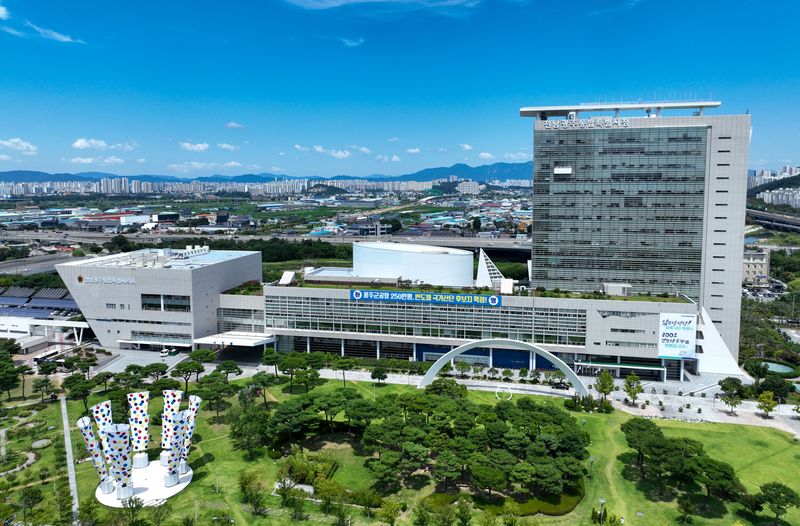
[Financial News, Jeonnam-Gwangju = Hwang Tae-jong] Jeonnam-Gwangju Integrated Metropolitan City (Gwangju Metropolitan City) announced on the 31st that agricultural and fisheries food exports from the Jeonnam-Gwangju region reached $676.27 million through the end of July this year, up 10.0% from the same period last year and setting a record high.
In particular, cumulative exports in the region through July rose steadily from $441.61 million in 2023 to $552.19 million in 2024, $614.87 million in 2025, and $676.27 million this year. Compared with 2023, the figure has increased 53.1% in three years.
Agricultural and fisheries products accounted for the largest share by category, with fisheries products totaling $368.54 million, or 54.5% of overall exports. They were followed by agricultural products at $247.73 million (36.6%), livestock products at $55.81 million (8.3%), and forestry products at $4.18 million (0.6%).
Seaweed, one of the region's flagship export items, generated $289.60 million, accounting for 42.8% of total agricultural and fisheries food exports. It was followed by tobacco products at $59.86 million (8.9%), alcoholic beverages at $44.22 million (6.5%), beverages at $27.76 million (4.1%), sea mustard at $21.71 million (3.2%), abalone at $21.04 million (3.1%), powdered milk at $17.52 million (2.6%), rice at $17.48 million (2.58%), coffee preparations at $17.19 million (2.54%), and yuzu tea at $8.83 million (1.3%).
Shin Hyun-gon, director of international cooperation for Gwangju Metropolitan City, said, "Despite uncertainty in the trade environment, agricultural and fisheries food exports from the Jeonnam region have grown by more than 50% in three years." He added, "In particular, fisheries products such as seaweed, sea mustard, and abalone, along with agricultural foods including alcoholic beverages, beverages, powdered milk, rice, coffee preparations, and yuzu tea, have also grown into major export items, showing that the export portfolio is becoming more diversified."
By country, cumulative exports through July to Japan reached $129.46 million, accounting for 19.1% of the total. They were followed by the United States at $119.35 million (17.6%), China at $113.08 million (16.7%), and Taiwan at $43.58 million (6.4%).
By city, county, and district, Mokpo City recorded the largest amount at $127.40 million (18.8%). It was followed by Buk District, Busan at $106.15 million (15.7%), Naju-si at $77.75 million (11.5%), Goheung County at $74.01 million (10.9%), Sinan County at $64.18 million (9.5%), and Wando County at $44.20 million (6.5%).
Shin said, "We will continue the upward trend in exports by strengthening the competitiveness of key export items such as seaweed and by continuously identifying promising products and new markets."
Meanwhile, Gwangju Metropolitan City is stepping up overseas marketing efforts to sustain export growth, including dispatching market development delegations, participating in international expos, and hosting export consultation meetings with buyers.
It is also supporting export companies and farming and fishing households in entering overseas markets through assistance for foreign certification, export insurance premiums, and export infrastructure vouchers, as well as through online export platforms such as Amazon, permanent overseas sales outlets, and direct payments for specialized agricultural and fisheries export items.
[email protected] Hwang Tae-jong Reporter