"While We Understand the Purpose of the CSAT Reform, 64% of Parents Worry About a Surge in Private Tutoring Costs"
- Input
- 2026-08-31 09:25:54
- Updated
- 2026-08-31 09:25:54
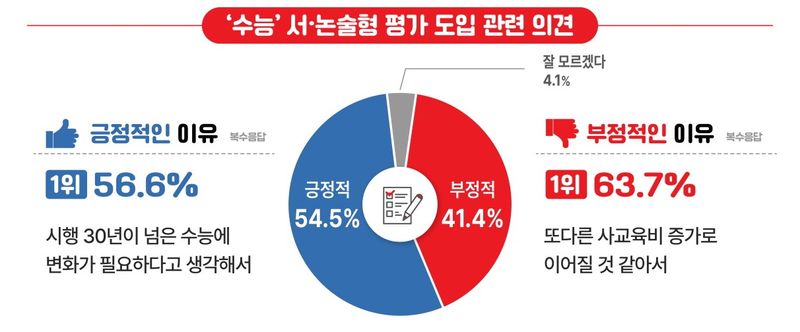
A survey of 905 parents with preschool or elementary school children, conducted by education company Yoons English on the 31st, found that 45.2% of respondents identified the introduction of essay-style questions in the CSAT as the most important issue in the reform plan.
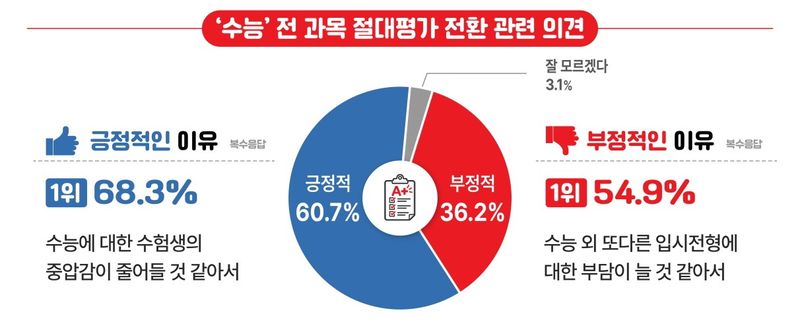
There was also considerable concern that another key part of the reform plan, the shift to absolute grading for all CSAT subjects, could simply shift the burden elsewhere in the admissions process. Positive views on the move accounted for 60.7%, while negative views stood at 36.2%. The most common reason for support was easing the pressure on test-takers, cited by 68.3%. By contrast, 54.9% of parents who opposed the change said it would increase the burden of university-specific screening such as interviews. Another 47.3% worried about confusion caused by a weaker CSAT differentiating function, and 40.5% pointed to grade inflation in high school and widening gaps between schools. In other words, they feared that efforts to reduce CSAT pressure could instead raise private tutoring costs for university entrance exams.
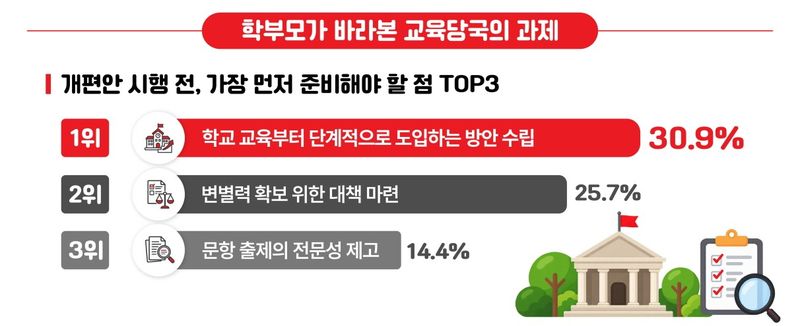
To address this uncertainty, the top priority for education authorities was identified as establishing a phased introduction plan that begins with school education before full implementation, chosen by 30.9% of respondents. That was followed by measures to secure differentiation at 25.7%, improving the expertise of question setters at 14.4%, and social discussion and verification at 10.9%.
When asked what they would worry about most if the new admissions reform is implemented, 30.2% of parents said identifying the skills needed to stay competitive in college admissions. Another 25.0% cited the lack of reliable sources for admissions information, while 22.1% pointed to whether their child could enter a more favorable high school or region.
Meanwhile, the survey was conducted online over 10 days from Aug. 14 to 23.
[email protected] Kim Man-gi Reporter