6,000 L of Urine a Day from Mount Everest Climbers Melts 154 Tons of Glacier Ice
- Input
- 2026-08-31 13:42:03
- Updated
- 2026-08-31 13:42:03
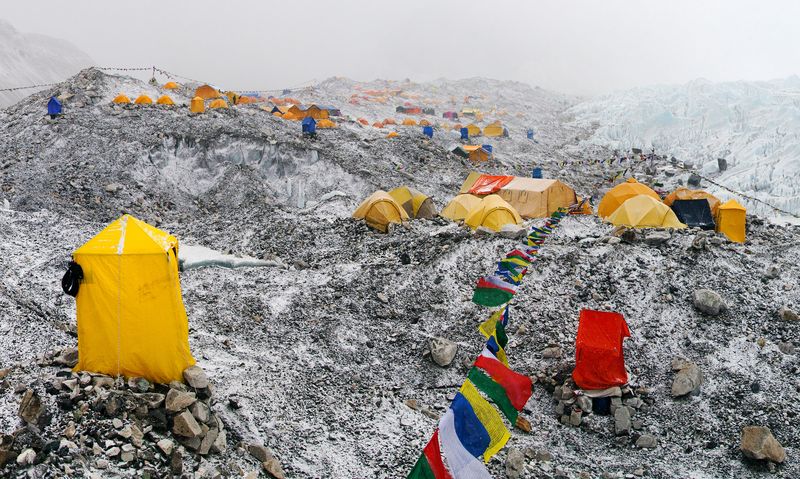
[Financial News] A study has found that the activities of climbers visiting Mount Everest could melt 2,500 tons of ice and snow. The analysis suggests that not only fuel used for heating and cooking, but also the heat from climbers' urine, contributes to the impact.
A research team that included Khim Lal Gautam, chief surveyor for the Nepalese government, analyzed how human activity affects glaciers at Khumbu Glacier, where the Nepal-side Base Camp of Mount Everest is located. The findings were published last month in the international journal Regional Environmental Change.
According to the researchers, about 1,600 tents were set up across roughly 26 hectares at the Nepal-side Base Camp during the spring 2023 climbing season. Around 2,127 people, including climbers, Sherpa guides, cooks, and expedition support staff, stayed there for about 50 days.
Dining tents with heating, kitchens, generators, electric charging facilities, and satellite communications greatly improved convenience at Base Camp. But they also consumed vast amounts of energy.
The researchers estimated that the heat generated by human activity alone was enough to melt about 2,492 tons of ice and snow.
In fact, the heat produced by burning 824 cylinders of Liquefied Petroleum Gas (LPG), 18,935 L of kerosene, and 5,130 L of gasoline was enough to melt about 2,338 tons of ice and snow.
Human urine was also identified as a heat source that melts glacier ice. At high altitudes, climbers and guides drink large amounts of water to prevent dehydration, which means thousands of people produce more than 6,000 L of urine a day. The researchers estimated that the heat transferred by urine alone could melt about 154 tons of ice in a single season.
The main driver of glacier melt on Mount Everest is global climate change. Still, the researchers pointed out that the current practice of concentrating thousands of people on an already rapidly melting glacier and generating additional heat is not sustainable. They suggested that, in the long term, Base Camp should be relocated from the glacier to stable ground nearby.
Meanwhile, multiple experts say the massive flood that struck the border region between Nepal and Chinese-controlled Tibet on the 26th was caused by a combination of high-altitude bedrock landslides and glacier collapse, which sent huge amounts of water, mud, and rocks rushing into the river all at once.
[email protected] An Ga-eul Reporter