"The Bottom Is in... KOSPI Could Rise to 8,000 in September"
- Input
- 2026-08-31 08:41:30
- Updated
- 2026-08-31 08:41:30
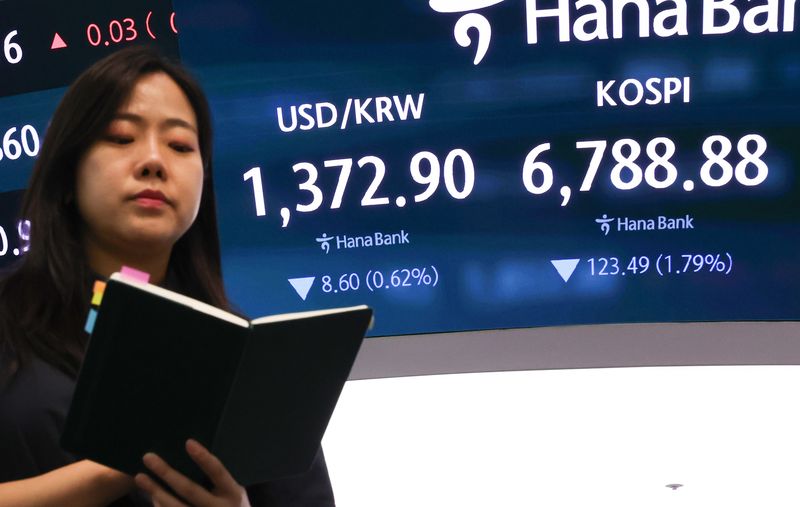
[Financial News] Shinhan Investment & Securities raised its September forecast for the domestic KOSPI to a range of 6,600 to 8,000. In a report released on Aug. 31, analyst Noh Dong-gil said, "Applying 8.5 times the risk-adjusted price-to-earnings ratio (P/E ratio) to the 12-month forward Earnings Per Share (EPS) of 1,205.9 points, the KOSPI level that fully reflects this is 10,250." He added, "The closing level of 6,789 on the 28th reflects only 66.2% of consensus." Noh also noted that "even at 8,000, there would still be a 22% discount to consensus."
On current stock prices, he explained that "of the 33.8% discount already reflected in prices, only about one-third has been recovered, while the remaining two-thirds is being left to uncertainty over next year's earnings and the return on investment in Artificial Intelligence (AI)."
Noh said, "The KOSPI 200 Volatility Index (VKOSPI) fell from 97 at the end of June to 50 at the end of August, and concerns over single-stock leverage trading and expected rebalancing have also eased from their peaks." He forecast that "as volatility declines, foreign long-term funds that had reduced risk limits will have room to re-enter Korean stocks."
On the supply-and-demand side, he pointed to share buybacks by Samsung Electronics and SK hynix. He said, "Samsung Electronics and SK hynix actually acquired 103 trillion won worth of treasury shares between Aug. 20 and 28, and 447 trillion won in planned remaining buybacks is still left." He added, "The market has not fully priced in their influence as a buying force that can immediately fill the foreign investor gap."
He explained that the 805 billion won acquired during Aug. 24-28 was comparable to the 832 billion won in net KOSPI selling by foreign investors.
Noh assessed that "when volatility and the burden from leveraged Exchange-traded fund (ETF) trading ease, confirmed buying can fill the foreign investor gap and create a floor under the market."
On AI investment, he said that "the median ratio of Capital Expenditure to Depreciation and Amortization (D&A) among four AI platform companies is 3.41 times, far above the 1.16 times seen during the first cloud investment cycle." He added, however, that "the current AI asset turnover ratio has improved from 0.56 times to 0.62 times, which suggests a path different from the telecom bubble." His point was that investment intensity has reached the upper end of past major investment cycles, but rising asset turnover means it is still too early to conclude that the sector is overinvesting.
As for concerns over a stronger Korean won, he said that "there is limited basis for a blanket earnings downgrade," adding that "in nine past cases, export-related stocks' EPS rose 4.9% over the 12 weeks after the announcement."
[email protected] Han Young-joon Reporter