Gyeongsangbuk-do Provincial Government Lays Groundwork for Forest Restoration in Fire-Damaged Areas
- Input
- 2026-08-31 09:24:04
- Updated
- 2026-08-31 09:24:04
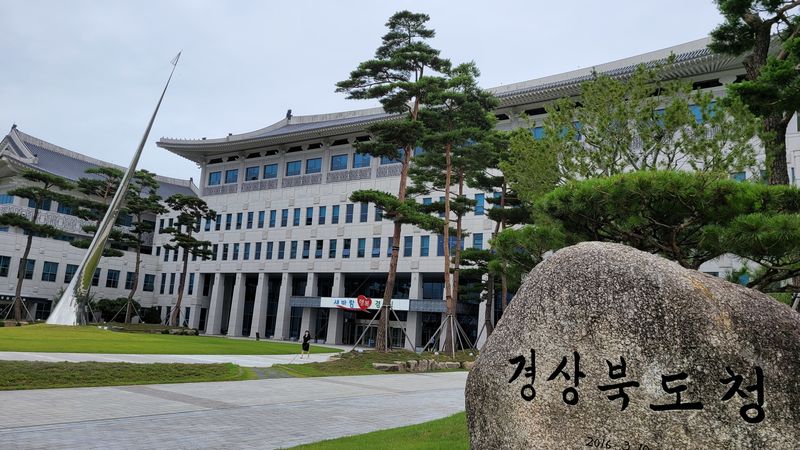
[Financial News, Andong = Kim Jang-wook] Gyeongsangbuk-do Provincial Government is making every effort to systematically rebuild areas devastated by the massive wildfires and to establish a stable income base for forest owners and forestry workers.
To that end, it has completed the designation of 'one forest management special zone per city or county' in five wildfire-hit cities and counties.
According to the province, it designated areas in Yeongdeok-eup, Hwachon-ri, Yeongdeok County, and Deokcheon-ri, Pacheon-myeon, Cheongsong County, as forest management special zones on July 30. It then added and officially announced another area in Hwamae-ri, Seokbo-myeon, Yeongyang County, on August 31.
As a result, forest management special zones have now been designated in all five wildfire-hit cities and counties, starting with Uiseong County in March as the first, Andong-si in June as the second, followed by Yeongdeok County as the third, Cheongsong County as the fourth, and Yeongyang County as the fifth. This will allow forest restoration tailored to local conditions to move forward in earnest.
Choi Soon-go, director of the Forest Resources Bureau, said, "Now that the designation of 'one special zone per city or county' has been completed, we will carry out each special zone project in a substantive way so that forest restoration and income generation can be felt in practice by forest owners and forestry workers."
The forest management special zone, introduced nationwide for the first time by the province, is a system designed to rebuild forests as a new source of income and a foundation for the local economy, moving beyond the traditional focus on simple logging and reforestation. The special zones will receive comprehensive support, including specialized planting centered on income-generating and landscape species, the creation of production bases for forest products such as specialty crops and wild vegetables, expansion of forest management infrastructure such as forest roads, and facilities for processing, distributing, and selling forest products.
In Yeongdeok County, the special zone will establish income-generating tree species such as chestnut trees to replace the pine mushroom production base damaged by the wildfire, while also creating cultivation complexes for wild vegetables such as deodeok and gosari. It also plans to expand cold storage, processing, and packaging facilities to raise the added value of forest products.
The special zone in Cheongsong County will combine landscape species such as sawtooth oak and maple trees with wild vegetables including mountain garlic and eoseori. In particular, it will create a forest using royal azaleas, which represent Juwangsan, linking it with local tourism resources to promote forest tourism and revitalize the regional economy.
The newly designated special zone in Yeongyang County will create a large-scale themed forest centered on birch and Acer pictum subsp. mono trees, forming a distinctive forest landscape that blends with nearby wind power complexes. It also plans to boost forest owners' income through the production of maple sap.
Starting in September, the province will hold on-site briefings for forest owners in the five wildfire-hit cities and counties, with participation from residents and relevant agencies. It plans to gather local opinions, refine detailed project plans for each special zone, and make every effort to secure national funding for smooth implementation.
Meanwhile, a large wildfire broke out at 11:24 a.m. on March 22 last year in Goe-san-ri, Anpyeong-myeon, Uiseong County, North Gyeongsang Province. Additional fires also broke out simultaneously at 1:57 p.m. in Geumseong-myeon, Cheongro-ro, and at 2:39 p.m. in Angye-myeon, Yonggye-ri.
The fire spread from inland Uiseong County to Yeongdeok County on the East Sea coast, with the total burned area estimated at about 99,490 hectares (994.9 sq. km). This is the largest burned area of any wildfire since the establishment of the Republic of Korea government and is a massive blaze that exceeds the 23,794 hectares (237.94 sq. km) burned in the East Coast wildfire in April 2000, long regarded as the worst wildfire in South Korea.
[email protected] Kim Jang-wook Reporter