SK Advanced, Burdened by Hundreds of Billions of Won in Borrowings, Faces Lower Profitability in the Second Half [fn Market Watch]
- Input
- 2026-08-31 14:04:33
- Updated
- 2026-08-31 14:04:33
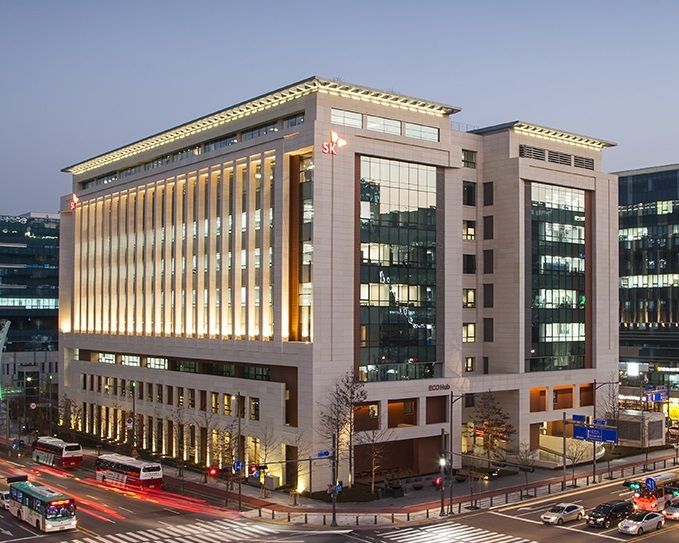
[Financial News] SK Advanced, which relies on propylene as its sole product for earnings, has entered a period of weaker profitability in the second half while carrying a debt burden approaching KRW 500 billion. The improvement in the propylene-propane spread that drove a brief profit in the first half is seen as the result of temporary supply constraints, raising questions over bond refinancing and liquidity management as a wave of maturities approaches this year.
SK Advanced, facing four years of operating losses and support pressures
According to the investment banking industry on the 31st, SK Advanced's total borrowings rose from KRW 203.4 billion in 2021 to KRW 631.2 billion in 2024, before standing at KRW 475.8 billion at the end of June this year. Net borrowings came to KRW 444.7 billion, and the debt ratio reached 55.6%.
In particular, KRW 416 billion, or 87.4% of total borrowings, consists of short-term debt, while cash and cash equivalents amount to only KRW 31.1 billion. As of the end of July, about KRW 213.9 billion in corporate bonds are also due within the year. SK Advanced is reportedly in talks with multiple financial institutions over funding for refinancing.
Kim Seo-yeon, senior researcher at NICE Investors Service, assessed that "repayment capacity is limited by internally generated operating liquidity alone, and dependence on external refinancing is high, leaving liquidity buffers insufficient."
The financial strain stems from years of losses. From 2022 through last year, SK Advanced posted cumulative operating losses of KRW 467.6 billion over four years. It has also injected a cumulative KRW 161.6 billion into its joint investment company Ulsan PP since 2018, adding to its funding burden.
Profitability in the second half is another variable. NICE Investors Service said the recovery in first-half results was driven by temporary supply constraints rather than a structural improvement in industry conditions. It expects propylene supply pressure to rise again in the second half as PDH facilities in China restart and new capacity comes on stream. In fact, SK Advanced's operating profit and loss in July reportedly swung back to a loss due to higher raw material costs.
Cash generation is also limited. Operating cash flow in the first half came to just KRW 3.9 billion, while free cash flow posted a deficit of KRW 4.8 billion, leaving the company's own financial capacity to reduce borrowings still weak.
SK Gas's burden snowballs...expectations for an early sale of SK Advanced weaken
With the merger, SK Advanced's debt burden will move onto SK Gas's separate financial statements.
As of the end of June, SK Gas directly held a 70% stake in SK Advanced and is set to absorb the remaining 30% held by its wholly owned subsidiary, securing full ownership. Because this is a merger without new share issuance, existing shareholders will not be diluted. SK Gas will apply the simplified merger procedure, while SK Advanced will use the small-scale merger process, allowing both companies to replace shareholder approval with board resolutions.
According to Korea Ratings Corporation, if the two companies' financial statements are simply combined, total borrowings are estimated at KRW 3.5412 trillion and net borrowings at KRW 1.6884 trillion.
The debt ratio and dependence on borrowings would rise to 131.2% and 44%, respectively, up 13.9 percentage points and 1.6 percentage points from SK Gas's separate basis. However, SK Gas sold a 49% stake in Ulsan GPS in the second quarter and secured KRW 1.2212 trillion, reducing separate net borrowings by 47.4% from KRW 2.3645 trillion at the end of last year to KRW 1.2437 trillion at the end of June. As a result, the post-merger debt burden is expected to remain lighter than last year's level.
Meanwhile, opinions in the investment banking industry are divided over the merger.
On the one hand, expectations for an early sale or business restructuring of SK Advanced have faded. On the other, some say SK Gas can use its stronger credit profile to lower funding costs and cut interest expenses. SK Gas plans to streamline decision-making from propane procurement through propylene production and sales, improve operating efficiency, and reduce financing costs through integrated financial management.
An investment banking industry source said, "SK Gas appears to have decided to continue capturing synergies from the PDH and propane businesses," adding, "If market conditions improve, that will be positive. But if the industry weakens again, SK Gas will bear the burden directly. So rather than the merger itself, whether the PDH business can sustain earnings improvement after the second half will determine financial stability."
[email protected] Kang Gu-gui Reporter