The Semiconductor Division-of-Labor Ecosystem Revives Amid a Semiconductor Supercycle
- Input
- 2026-09-02 17:22:11
- Updated
- 2026-09-02 17:22:11
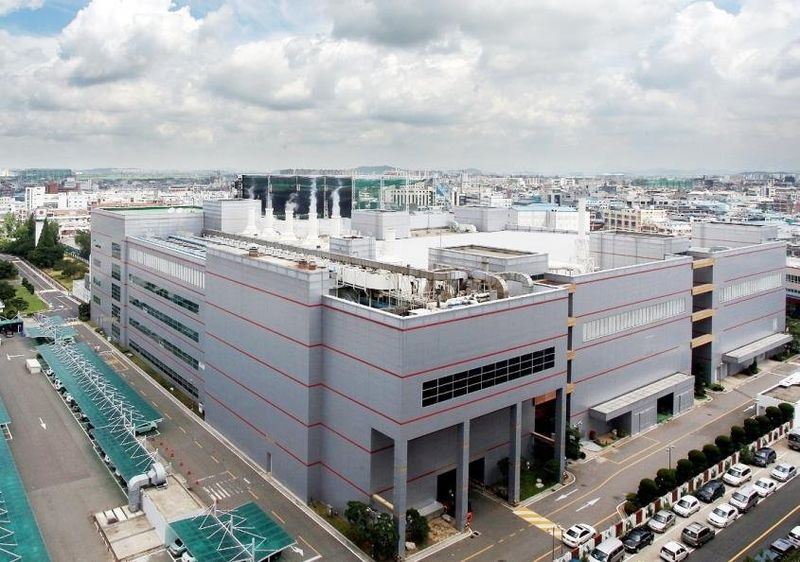
[Financial News] The semiconductor supercycle triggered by artificial intelligence (AI) appears poised to transform the structure of South Korea’s system semiconductor industry. As improved performance among fabless companies (design) spreads to foundries (contract manufacturing) and back-end companies involved in packaging and testing, the country’s system semiconductor ecosystem is showing signs of revival. It had long been considered weaker than the memory semiconductor sector.
According to the World Semiconductor Trade Statistics (WSTS) on the 2nd, the global semiconductor market is expected to exceed $1.5 trillion this year, up from $796 billion last year. WSTS’s official forecast issued in June was $1.511 trillion, representing a 90% increase from the previous year. A simple calculation incorporating actual second-quarter results has since raised the possibility that the market could expand to $1.655 trillion this year. Investments in AI data centers and surging demand for high-bandwidth memory (HBM) and AI accelerators are driving the market’s expansion.
This unprecedented boom is also stimulating South Korea’s semiconductor division-of-labor ecosystem, which spans fabless companies, foundries, packaging firms and testing houses. As related companies continue to improve their performance this year, the country’s semiconductor growth engine—previously concentrated among major memory chipmakers—could increasingly expand into the system semiconductor sector.
Fabless companies focus on semiconductor design and development while outsourcing production to external foundries. Compared with integrated device manufacturers (IDMs) such as Samsung Electronics and SK hynix, which handle everything from development to production, assembly and testing in-house, fabless firms face a lower capital investment burden and can respond more quickly to market changes. These advantages are becoming even more prominent in the AI era, when new sources of semiconductor demand are emerging rapidly in data centers, mobile devices, humanoid robots and drones.
As the fabless market grows, foundries and back-end companies also expand alongside it. NVIDIA is a prime example. When NVIDIA, the U.S. fabless company that dominates the global AI accelerator market, designs a new product, Taiwan Semiconductor Manufacturing Company (TSMC) manufactures it, while Advanced Semiconductor Engineering (ASE) and Amkor Technology handle packaging and testing. In this way, the expansion of the AI semiconductor market drives growth across the entire industry ecosystem, from design and production to back-end processes, rather than benefiting only a single company.
What is notable is that this division-of-labor ecosystem is growing simultaneously in South Korea, driven by the semiconductor supercycle. Jeju Semiconductor, a fabless company, posted second-quarter revenue of 289.9 billion won this year, up 467% from the same period a year earlier. Operating profit surged 2,745% to 121.9 billion won. Foundry company DB HiTek also reported revenue of 414.5 billion won for the same period, an increase of 23%, while operating profit rose 43% to 105.2 billion won.
[email protected] Reporter Kang Kyung-rae and Lim Soo-bin Reporter