U.S. Successfully Launches Next-Generation Space Telescope 'Nancy Grace Roman'
- Input
- 2026-08-31 06:44:39
- Updated
- 2026-08-31 06:44:39
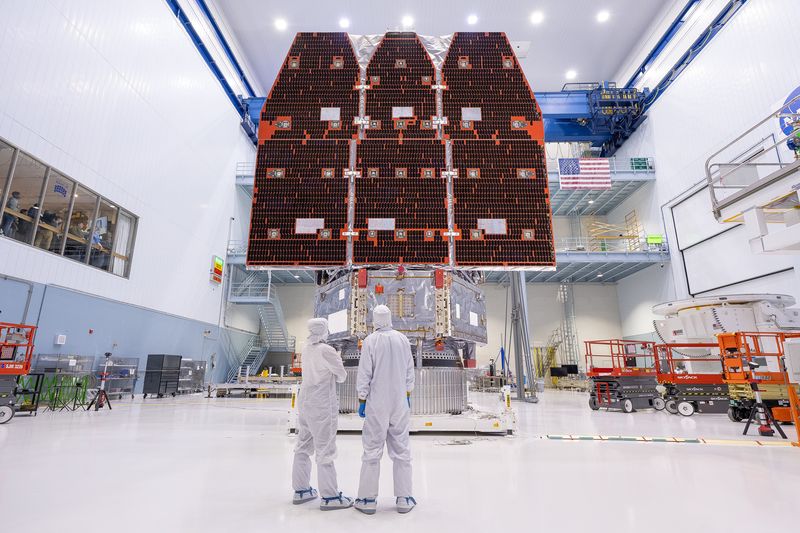
[Financial News] The National Aeronautics and Space Administration (NASA) successfully launched its next-generation space telescope, the Nancy Grace Roman Space Telescope, on the 30th local time. It is expected to take at least three months to reach its destination.
According to local media, including CBS, NASA launched the telescope aboard SpaceX's Falcon Heavy rocket from the John F. Kennedy Space Center in Florida at 7:26 a.m. Eastern Time on the 30th.
Its destination is Lagrange Point 2 (L2), an observation point about 1.6 million kilometers from Earth, and it is expected to take more than three months to arrive. L2 is four times farther from Earth than the Moon. NASA's James Webb Space Telescope (JWST), launched in 2021, was also placed near L2.
The bus-sized Nancy Grace Roman Space Telescope is named after the late Nancy Grace Roman, NASA's first chief astronomer. Known as the "mother of the Hubble Space Telescope," Roman recognized the importance of placing telescopes above Earth's atmosphere and pioneered the concept of space-based astronomical observation.
Development took 10 years and cost an estimated $4.3 billion, or about 5.94 trillion won. The Nancy Grace Roman Space Telescope is more than 1,000 times faster than the Hubble Space Telescope, the first U.S. space telescope launched in 1990, and has a field of view more than 100 times wider.
Equipped with a 300-megapixel infrared camera and 18 4K detectors, it will image the universe and observe light distortion to reveal the presence of dark matter spread throughout space.
Nicola Fox, NASA's science mission chief, explained that if the Hubble or James Webb telescopes were like looking at the universe through a keyhole, the Roman telescope would be like kicking the door open. She added, "This telescope will discover thousands of supernovae, tens of thousands of planets, billions of galaxies, and hundreds of billions of stars." She said its vast field of view will allow scientists to do things that were never possible before. The first images captured by the telescope are expected to be delivered to Earth early next year.
CNN reported that the Nancy Grace Roman Space Telescope could uncover galaxies, exoplanets, and even rogue planets that have never been observed before. U.S. President Donald Trump called Jared Isaacman, NASA administrator, during a NASA press briefing on the 30th to congratulate him on the successful launch and said the United States was "the hottest country in space." He also wrote on Truth Social, "Congratulations to Isaacman and the great patriots at NASA on a successful launch. This is America's golden age."
[email protected] Park Jong-won Reporter