Food Prices Surge Ahead of Chuseok as Agricultural and Processed Food Costs Rise
- Input
- 2026-08-30 19:39:14
- Updated
- 2026-08-30 19:39:14
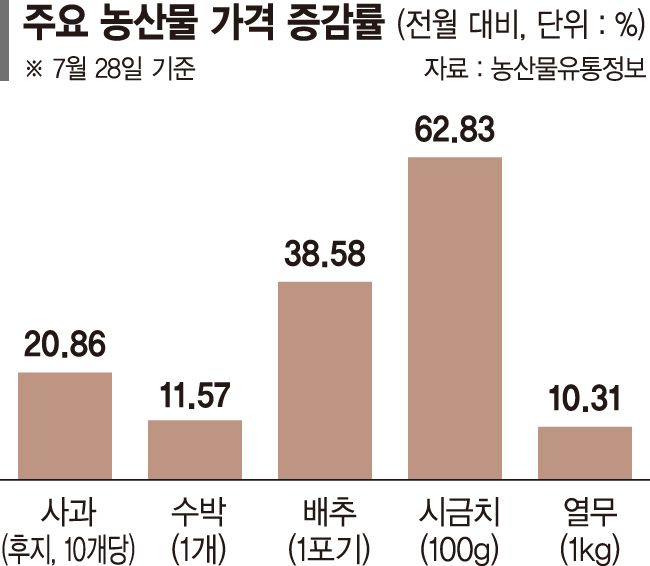
According to agricultural product distribution data from the Korea Agro-Fisheries & Food Trade Corporation (aT) on the 30th, the retail price of 20 kilograms of rice stood at 61,238 won as of the 28th, up 2.58% from a year earlier. Compared with the average year, it was 10.82% higher. It was down 0.28% from the previous month. Prices of fruits and vegetables, which are essential for ancestral rites, rose even more sharply. As of the same day, the retail price of 10 Fuji apples reached 30,962 won, jumping 20.86% in just one month. The retail price of 10 Asian pears was 45,910 won, down 4.15% from the previous month, but still 23.85% higher than the average year. A watermelon cost 25,947 won, up 11.57% from the previous month, while the retail price of 10 white peaches rose 0.04% month on month to 18,140 won. A head of napa cabbage cost 5,291 won, up 38.58% from the previous month, and 100 grams of spinach rose 62.83% to 2,195 won. In addition, prices rose over the past month for yeolmu radish greens by 10.31%, green onions by 7.48%, and cucumbers by 2.64%.
To make matters worse, prices of processed foods and major holiday gift items are also rising one after another. Major food companies have been raising product prices this month, citing higher raw material costs and increased logistics expenses.
Dongwon F&B has decided to raise the prices of tuna cans and other flagship holiday gift items by 9% to 10% starting on the first day of next month. CJ CheilJedang has also raised the prices of major processed foods, including Hetbahn, by an average of 8%, while Pulmuone Foods has decided to increase prices by an average of 6.7%.
Nongshim and BR Korea, which produce staple foods such as ramen and bread, have also raised prices by 5.8% and 6.5%, respectively. As the prices of everyday essentials and processed foods such as ramen, bread, Hetbahn, and canned goods rise, consumers are feeling even greater inflation pain.
In response, the government plans to push ahead with price-stabilization measures ahead of Chuseok, including supply adjustments and discount support. It says it will make every effort to keep holiday prices in check by sharply increasing the supply of seasonal goods and expanding discount support for agricultural, livestock, and seafood products.
However, it remains uncertain whether these measures will translate into price stability that ordinary households can actually feel. In addition to structural factors such as lower agricultural output caused by the heat wave, the impact of already underway price increases by food companies has spread across the market.
[email protected] Kim Seo-yeon Reporter