[Editorial] Cabinet reshuffle must show results on national agenda, not just change the mood
- Input
- 2026-08-30 18:35:48
- Updated
- 2026-08-30 18:35:48
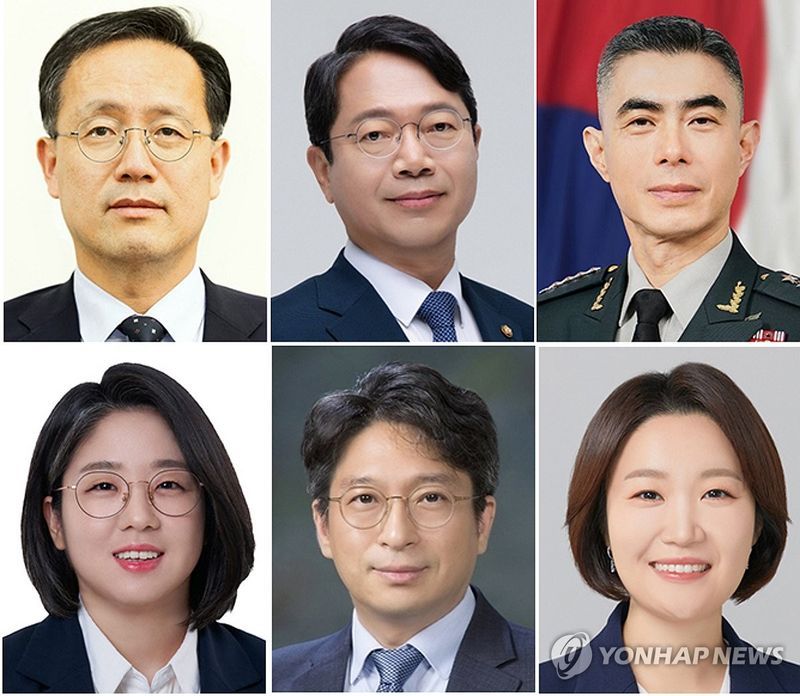
This personnel move appears to be more than a one-off attempt at renewal. It is better understood as a broader reorganization of the government’s overall governing framework. Replacing nearly half the cabinet at once, including the deputy prime minister for economic affairs, goes beyond the usual idea of a mid-level reshuffle. In that sense, it can be interpreted as a significant political gamble by Lee.
At first glance, the reshuffle seems designed to shift the political mood. The administration is entering its second year, and after the June 3 local elections, there is greater pressure to build momentum in state affairs. The challenge now is to turn that momentum into tangible results. The problem is that the government’s approval rating has recently remained stuck in the 40 percent range. For that reason, some view the reshuffle as an effort to change the stagnant atmosphere in state affairs. The launch of the new leadership of the Democratic Party of Korea also appears to have created a need to rebuild the ruling party-government-presidential office lineup. Likewise, it seems that Lee himself has concluded that it is time to change the way he has carried out state affairs over the past year.
The danger, however, is that the significance of the second reshuffle could be reduced to a mere attempt to break out of a politically sluggish phase. If the first cabinet was about setting the philosophy and direction of state affairs, then a reshuffle in the second year of a term must play a far more important role in securing new momentum and producing real outcomes. In fact, second-year reshuffles under previous administrations have generally followed a similar pattern. While the first cabinet of a new administration tended to focus on assembling a team of political allies and figures who shared the president’s governing philosophy, the second reshuffle usually shifted the emphasis toward practical results and policy execution.
This reshuffle is also positive in that the government appears to have prioritized execution ability over mere policy proposals when selecting candidates. The tasks facing the second phase are far from easy. The administration must prove the direction it set in its first phase through actual results. Major national agenda items remain, including Judicial Reform, housing supply, and the AI Top 3 Power Strategy. These are issues of great weight, with the potential to reshape South Korea’s future standing. That is why the new team has been given the heavy responsibility of ensuring that the initiatives launched in the first phase do not end in empty promises, but are carried through to implementation.
Some also say the reshuffle, which covers both ministers and presidential aides, reflects an attempt at cooperation by appointing figures outside the Democratic Party of Korea. Opening the door to talent from a pragmatic perspective is desirable, but others argue that it is also a political move aimed at the next general election two years from now. In other words, the reshuffle may be being used as a way to reverse approval ratings through political expansion.
The success of this second reshuffle will depend on whether it can clear the first hurdle: confirmation hearings in the National Assembly. It is not enough to simply say that capable people have been chosen. There must be a process to verify how concretely they can deliver results. The National Assembly should rigorously examine the candidates’ qualifications and practical capabilities during the hearings.