Expansionary Fiscal Policy and Growth Drive Accelerate as Revised Tax Reform for Non-Resident Single-Home Owners Draws Attention [Lee Administration's Mid-Level Cabinet Reshuffle]
- Input
- 2026-08-30 18:27:14
- Updated
- 2026-08-30 18:27:14
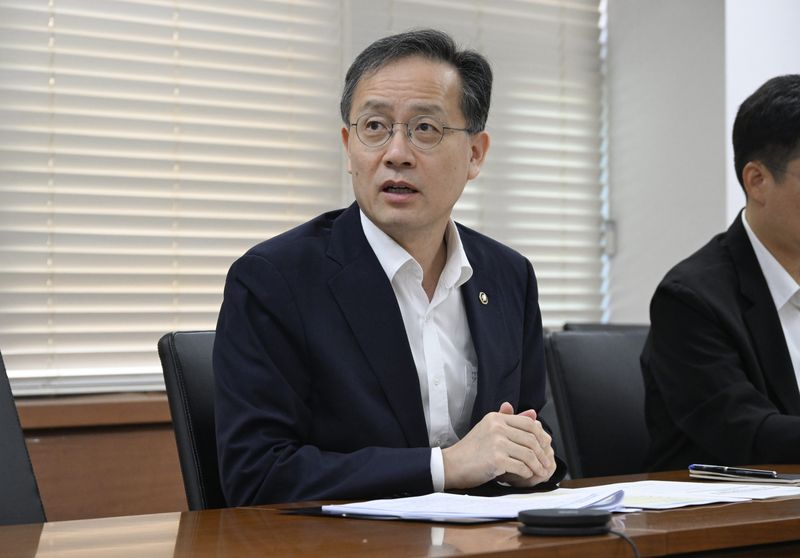
President Lee Jae-myung carried out a mid-level Cabinet reshuffle on the 30th and abruptly replaced the nation's economic command center. His nomination of Lee Hyoung-il, first vice minister at the Ministry of Economy and Finance, as the new Deputy Prime Minister for Economic Affairs and Minister of Finance and Economy is being seen as a move aimed at accelerating and maintaining continuity in expansionary fiscal policy and growth-oriented economic policy.
The second economic team, led by the nominee, is expected to focus its policy capacity on infrastructure investment to support the swift implementation of the government's semiconductor mega-project. It is also likely to prioritize stabilizing the broader economy beyond semiconductors, which has been enjoying a lone boom, by addressing inflation, employment, housing stability and domestic demand.
In particular, the appointment is unusual because a vice minister at the Ministry of Economy and Finance is being promoted directly to minister, the first such case in 20 years. That is expected to further strengthen Cheong Wa Dae and the ruling party's control over the economic team. As a result, their influence is likely to grow in recent policy disputes, including the tax reform plan. Attention is now on how the 'young' deputy prime minister in his mid-50s will wield his influence as the economic control tower.
Lee is regarded as the bureaucrat who knows the administration's economic policy best, having been deeply involved in designing initiatives such as the 3·4·5 Vision, which calls for a 3% potential growth rate, a place among the world's top four exporters and per capita income of $50,000. On the day of his nomination, he said, "I will work to create new investment and growth opportunities through the three major mega-projects and lay the foundation for a rebound in potential growth."
Despite the grand vision for an economic leap forward, the second economic team faces many difficult tasks. It must first find a compromise on the government's revised real estate tax reform plan, which has drawn backlash from non-resident single-home owners. Lee's views are likely to be reflected more strongly, given his direct involvement in tax reform so far. Major parts of the government's proposal, including the Comprehensive Real Estate Holding Tax and the Capital Gains Tax base rate, which have been cited as direct causes of backlash within the ruling party and falling approval ratings, may be substantially revised.
Stabilizing prices is also urgent. Inflation, which rose into the 3% range in May and June, eased somewhat to 2.8% last month. However, prices are being held down through strong administrative measures such as the maximum oil price system, bans on hoarding and related regulations, and discount events funded by the government. That means prices could rise again once those measures end. In particular, service prices for meals, dining out and insurance have risen more than real wages, leaving the public's perceived inflation far higher than the official figure. If fiscal spending expands and more money flows into the market, it will inevitably add further pressure to prices.
Employment is also not being properly addressed. With conditions worsening in most major industries except semiconductors, as well as in construction and manufacturing, jobs have been shrinking for more than two years. As the labor market slump drags on, young people are being hit hardest. Last month, youth employment fell by 190,000, marking 45 straight months of decline.
The second economic team must also prepare for broader shocks to the economy, including tax revenue shortfalls from expansionary fiscal policy after the semiconductor boom ends, continued growth in mandatory spending, and the entrenchment of a weak won, high inflation environment. Labor deregulation and industrial restructuring are also key tasks.
Koo Yun-cheol, who is stepping down after 1 year and 1 month in office, contributed to the design and stabilization of economic policy in the early phase of the administration. He was sometimes criticized for confusion in responding to the weak won, high inflation and U.S. tariff pressure, but he is also credited with managing macroeconomic conditions relatively well thanks to the semiconductor boom.
However, his standing was damaged recently as the real estate tax reform, intended to normalize taxation, instead fueled public anger and worsened sentiment amid a housing supply shortage and surging jeonse and monthly rents. Strong dissatisfaction within the ruling party also poured in. Many now believe the reshuffle is not unrelated to that backlash.
[email protected] Jung Sang-gyun Reporter