British young people flock to bookbinding and metalworking apprenticeships with hands AI cannot replace
- Input
- 2026-08-31 04:20:00
- Updated
- 2026-08-31 04:20:00
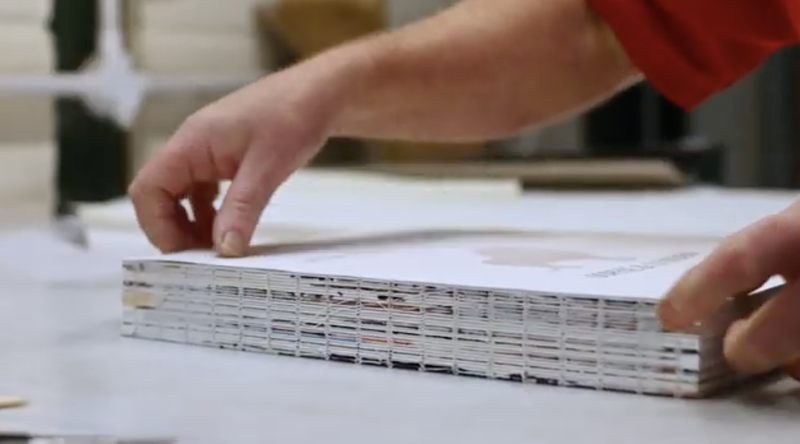
[Financial News] As Artificial Intelligence (AI) rapidly takes over white-collar tasks once handled by accountants, software engineers and lawyers, young people entering the job market are turning to centuries-old hand skills. Instead of sitting in front of a computer after graduating from college, they are choosing to learn skills that have been passed down for hundreds of years, such as binding books by hand, hammering metal or making stage props.
The analysis is that so-called "AI-proof" jobs, which require human judgment, manual dexterity and years of experience, are emerging as a new alternative because they are difficult for AI to replace.
On the 29th local time, The Guardian reported in an article titled "Young workers are ditching the digital world for traditional crafts" that young applicants have recently been flooding apprenticeship programs in traditional crafts such as bookbinding and metalworking.
Twenty-seven-year-old Erin Rowley chose a path different from her major in political science. She is currently working as a second-year bookbinding apprentice at Ludlow Bookbinders in Shropshire, England.
The way the work is done has changed little over the centuries. Using a Victorian era press, a gold-blocking machine and glue brushes, most of a book is still completed by hand.
Rowley said, "Spending too much time looking at screens was not good for me. I always wanted to do something more tangible." She added, "I think there is something inherently more valuable about things made by people."
Traditional skills that were once at risk of disappearing are now finding new workers thanks to AI.
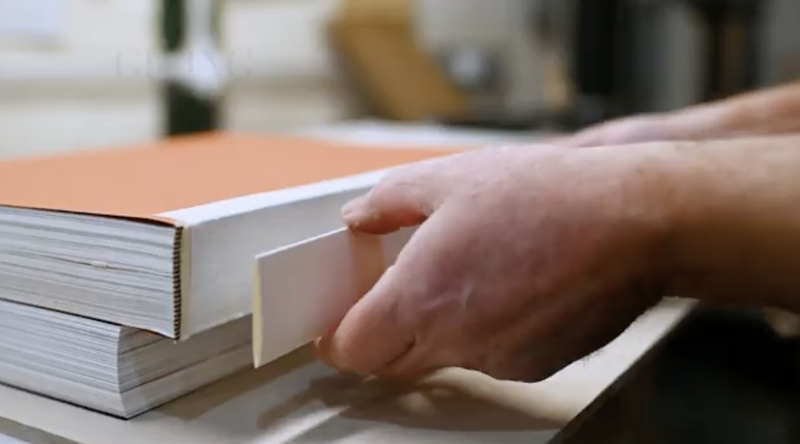
Britain's traditional bookbinding craft has earned a global reputation, but training in the field declined through the 1950s to 1970s, and by the early 1980s most formal apprenticeship systems had disappeared.
Paul Kidson, CEO of Ludlow Bookbinders and a fourth-generation bookbinder, estimates that fewer than 50 companies still do hand bookbinding in Britain.
But the mood has changed recently as more young people have entered the field.
Kidson said, "These days, many people want to feel satisfied by making something with their own hands."
Interest is also rising among young people in fields that require long years of training, including metalworking.
Cox London, a design company specializing in artistic metalwork, launched an apprenticeship program last year. More than 160 people applied for two apprentice positions this year, pushing competition to more than 80 to 1.
Nicola Cox, co-founder of Cox London, explained, "People want to create something, handle the materials themselves and build an intimate relationship with it." She added, "There is something in handmade art that AI cannot catch up with."
Apprentice Lucky Emerson said, "I feel uneasy as AI rapidly encroaches on creative fields." He added, "The physical process of touching materials and finishing an object is difficult to replace."
A similar trend is emerging at the National Theatre of Great Britain in London. The theater runs apprenticeship programs in a wide range of fields, from IT to traditional wig making, costumes, stage props and metalworking. Some traditional skills are now at risk of disappearing as experienced workers age. All of the metalworkers currently employed there are in their 50s or older, and it is difficult to find skilled workers for traditional wig making.
Prop-making apprentice Sarah Ray-Dobson, 27, said, "Over the past two years, I have been barely affected by AI. That is mostly because the work involves handling materials and making things."
The popularity is explosive. In the past, a position that drew about 100 applicants was considered popular, but recently one opening attracted as many as 728 applicants. An ironic situation has also emerged. Young people seeking to learn hand skills to avoid AI were reportedly submitting applications that appeared to have been written by AI.
[email protected] Seo Yunkyung Reporter