LNG Prices Hit a 3-Year High as POSCO Expands Long-Term Contracts to Boost Operational Stability
- Input
- 2026-09-01 06:59:00
- Updated
- 2026-09-01 06:59:00
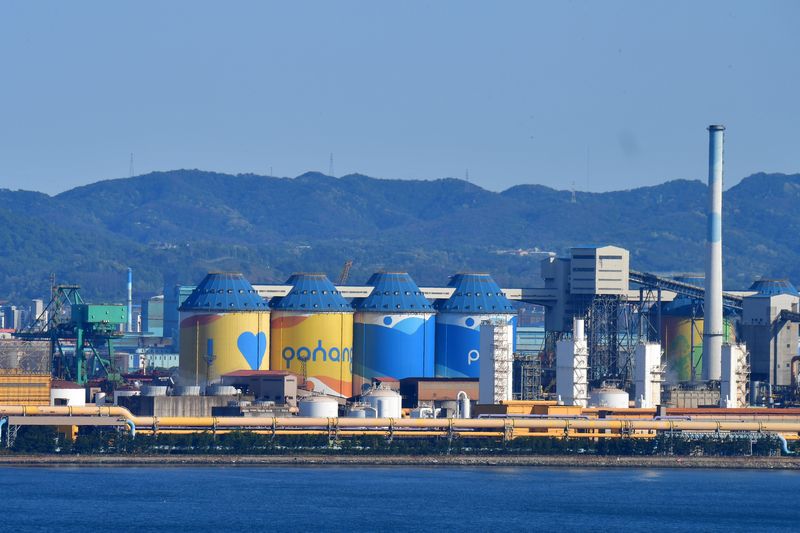
[Financial News] As global liquefied natural gas (LNG) prices climb to their highest level since the energy crisis, POSCO is expanding its long-term LNG procurement. Rather than trying to avoid price swings, the company is securing needed volumes over a longer period to reduce reliance on the spot market during supply disruptions and improve the stability of energy procurement at its steelworks.
According to the industry on the 1st, recent LNG prices in Asia have risen above $22 per million BTU (MMBtu), reaching their highest level since the 2022-2023 energy crisis. The International Energy Agency (IEA) said that before the conflict, LNG shipments passing through the Strait of Hormuz accounted for about 20% of global supply. From March to June, LNG production in Qatar and the United Arab Emirates (UAE) fell by about 80% from a year earlier.
Higher output from North America and Africa has offset much of the decline in Middle Eastern supply, but uncertainty in supply and demand remains. The IEA said the impact of damage to Qatar's LNG liquefaction facilities and delays in capacity expansion could continue into next year, pushing back the expected easing of the global LNG market.
Against this backdrop, POSCO is increasing its long-term LNG procurement. According to POSCO's semiannual report, the company signed a 15-year contract with POSCO International's Singapore unit to buy 370,000 tons of LNG annually starting in November. It also signed a deal with QatarEnergy Trading to purchase 300,000 tons a year from 2027 to 2030.
When both contracts are in effect from 2027 to 2030, POSCO's long-term contracted volume will reach 670,000 tons a year. That is about 22% more than the 550,000 tons a year under its existing main long-term contract for Tangguh LNG.
The key point of the expanded long-term contracts is supply stability rather than price. By securing a certain volume for a long period, the company can improve the predictability of energy procurement needed to run its steelworks.
LNG is used at POSCO's steelworks for both process operations and power generation. The company also recycles byproduct gases such as blast furnace gas (BFG) and coke oven gas (COG), which are generated during steel production, as fuel for its processes and power plants, while operating its own natural-gas-based power generation facilities.
According to the POSCO Sustainability Report, the company generated 88% of the electricity used at its steelworks on its own last year by recovering byproduct gases and reusing waste heat. It uses byproduct gases as fuel for both processes and power generation, while also using directly imported LNG for those same purposes. POSCO is also developing technology to predict the real-time generation and use of byproduct gases, and is carrying out facility upgrades and R&D to reduce gas flaring and increase recovery.
[email protected] Lee Dong-hyuk Kim Mi-hee Reporter