Defense Minister’s Dramatic Comeback as a Four-Star General in a Shake-Up; Ahn Gyu-back Falls Amid Draft-Dodging Controversy
- Input
- 2026-08-30 14:32:51
- Updated
- 2026-08-30 14:32:51
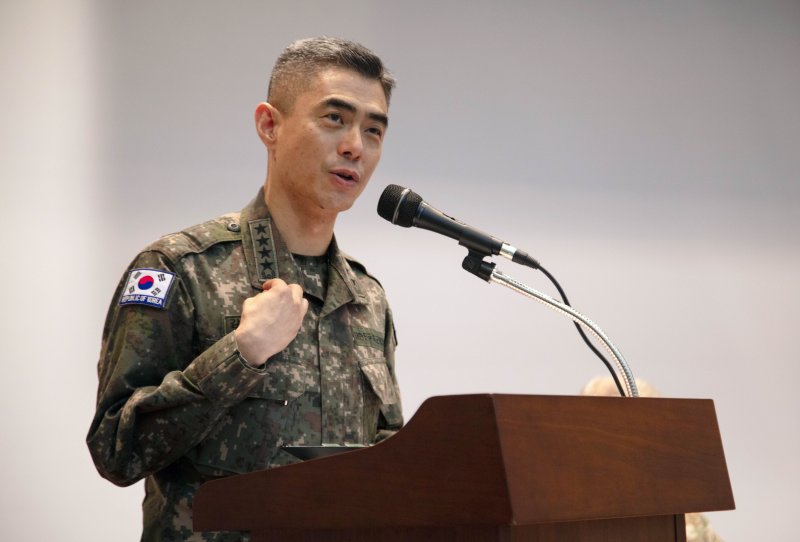
S. Combined Forces Command, was nominated on the 30th as the next Minister of National Defense in a surprise personnel move. Having dealt closely with ROK-U. S.
alliance issues, he is expected to focus on stable management of key security matters, including the transfer of wartime operational control (OPCON). Kang, a Korea Military Academy graduate and a career four-star general, left the military last September amid an unprecedented shake-up that removed all seven active-duty generals. The move also led to the retirement of the Air Force chief of staff and the Navy chief of staff.
However, President Lee Jae-myung brought Kang back in January this year as ambassador extraordinary and plenipotentiary to Saudi Arabia. Lee reportedly valued his strong expertise in security strategy, built during his service as a security and defense strategy secretary at the Office of National Security. Now, little more than a year after leaving the military, he has been tapped again as a nominee for defense minister.
Kang has held top posts in both field operations and policy, including director of operations at the Republic of Korea Joint Chiefs of Staff (ROK JCS), deputy commander of the Republic of Korea Army Ground Operations Command, and deputy commander of the ROK-U. S. Combined Forces Command.
There are also expectations that he may help ease internal military tensions that surfaced during the Lee Jae-myung administration’s push to reorganize military structures. Kang has experience handling ROK-U. S.
alliance matters closely through his service as deputy commander of the Combined Forces Command. He is expected to play a key role in carefully coordinating sensitive diplomatic and security issues, including OPCON transfer. In a YouTube appearance last December, Kang said, "An alliance should prepare like a pessimist and dream like an optimist.
" He added, "It is dangerous to believe only that the ROK-U. S. alliance will last forever, but it is also harmful to doubt too much like a pessimist.
The two must go together. " Attention is also focused on the fact that Kang, a KMA graduate, was selected at a time when the government is pushing to integrate the Army, Navy and Air Force academies. By contrast, Ahn Gyu-back, the Minister of National Defense, was unable to overcome allegations that he deserted during his time as a defense auxiliary police conscript, along with a series of security setbacks, and will step down after about a year in office as part of the Cabinet reshuffle.
Ahn has exposed his limits in failing to control the organization and lacking expertise, and he will bear the disgrace of becoming the first civilian defense minister in 64 years to leave office early. The opposition People Power Party had strongly pushed to impeach Ahn, and the number of signatories to a National Assembly impeachment petition reached 330,000. As criticism grew that he had caused cracks in the ROK-U.
S. combined defense posture, public calls for his dismissal surged amid concerns over lax military discipline. In a briefing on the day, Chief of Staff to the President Kang Hoon-sik said, "As a four-star general who served in key posts such as director of operations at the Joint Chiefs of Staff, he is expected to strengthen self-reliant defense capabilities for future warfare based on the solid ROK-U.
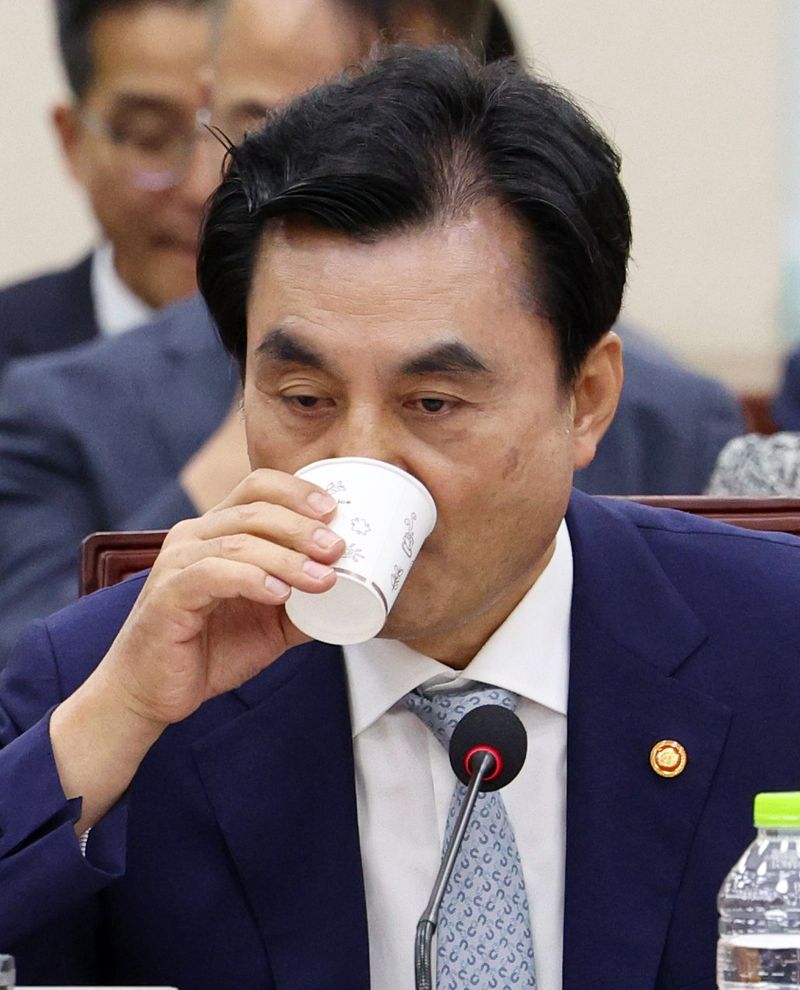
S. alliance and boldly open a new path for defense reform, including the integration of the military academies. " Minister of National Defense Ahn Gyu-back drinks water during a plenary session of the National Assembly’s Defense Committee on the 20th.
[email protected] Kim Kyung-soo Reporter